
I checked Google's official docs before writing this, because AI model articles get stale weirdly fast. As of July 2, 2026, gemma 4 ai is not just another model name to keep in your mental junk drawer. It is a product decision.
Elin here. If you have an AI app idea, Gemma 4 can sound very tempting: open models, reasoning, coding, multimodal input, agentic workflows, and deployment options from edge devices to heavier server setups. Lovely. But, not the whole story. Because if you do not want to manage GPUs, model weights, API fallbacks, safety testing, monitoring, and deployment scripts, the real question is not "Can I use Gemma 4?" The real question is: "Does Gemma 4 help me launch a better app, or am I just giving myself a more complicated engineering project?"
Gemma 4 may give builders more control. It does not remove the work of turning an idea into something people trust, use, and pay for.
What Gemma 4 Means for AI App Builders
For an AI app builder, Gemma 4 changes the conversation from "Which hosted API should I call?" to "Where should this intelligence live?"
That could mean:
- running a smaller model locally for privacy-sensitive tasks
- using a larger model for reasoning, coding, or agent workflows
- fine-tuning an open model for a niche workflow
- keeping a hosted model for the hard parts and using open models where control matters
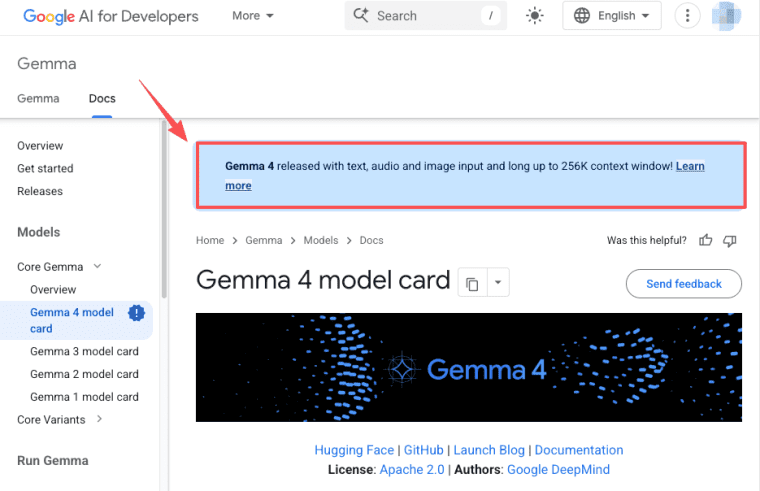
Google's current Gemma 4 model card says the family supports text and image input, with audio support on E2B, E4B, and 12B models. It also lists long context windows, function calling, coding, and multimodal capabilities.
That sounds exciting. It is also where founders can get distracted. The question is not "Can I run the model?" The better question is: "Does this help my app get launched, used, trusted, and paid for?"
Why Open Models Matter for Product Ideas
Open models matter because they give builders more control over where the intelligence runs, how data moves, and how much of the system depends on one hosted API provider. An open model app may help with private document workflows, internal knowledge tools, offline assistants, localized apps, or niche SaaS products where model behavior needs to be tuned around a specific workflow.
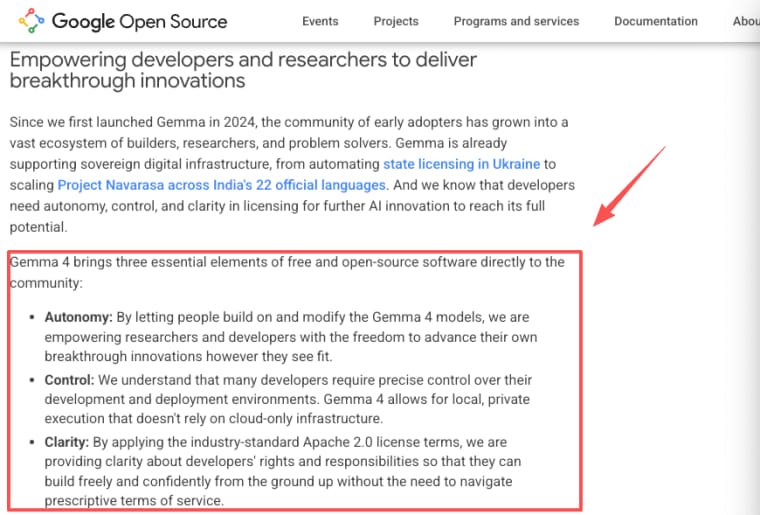
Google also moved Gemma 4 under Apache 2.0. The Google Open Source Blog explanation of Gemma 4 licensing frames this around autonomy, control, and clearer rights for builders. That is important for commercial use, because vague licensing is not a fun surprise three weeks before launch.
Still: open does not mean effortless.
Local control, cost planning, and deployment tradeoffs
Local control sounds clean. Sometimes it is. If your app handles sensitive files, needs offline access, or serves users in environments where cloud latency is painful, local or self-managed deployment may be worth it.
But cost moves around. Hosted AI bills show up as API usage. Open model costs show up as compute, engineering time, monitoring, updates, fallback logic, and the occasional "why is this suddenly slower?" afternoon.
Before choosing an open model app path, ask:
| Decision | What to check |
| Privacy | Does user data need to stay local or inside your own cloud? |
| Latency | Does the app need instant responses? |
| Cost | Will compute be cheaper than API calls at your expected usage? |
| Maintenance | Who owns model updates and deployment failures? |
| Quality | How will you test outputs before users rely on them? |
This is where I see non-technical builders get stuck. They start with the model architecture before they have validated the product. I get it. The model feels concrete. The business risk is softer and more annoying. But the business risk is usually the one that gets you.
Gemma 4 vs Hosted AI Models
A hosted model is still the simpler first choice for many AI app ideas. You can build faster, test the workflow, and see whether users care enough to come back. That matters more than owning the model on day one.
The case for google gemma 4 gets stronger when control is part of the product promise. If your app needs local processing, custom model behavior, predictable data boundaries, or specialized deployment, Gemma 4 becomes more than a technical preference.
| Option | Better for | Main risk |
| Hosted AI model | Fast MVPs, low setup, managed scaling | Vendor dependency, pricing changes, data routing concerns |
| Open model app | Control, privacy, customization, local deployment | Infrastructure and maintenance |
| Hybrid setup | Start fast, move sensitive tasks local later | More architecture decisions |
The model card is useful for narrowing technical options, but it will not tell you whether users want the product, whether the workflow is worth paying for, or whether your team can maintain the deployment.
E2B, E4B, 12B Unified, 26B A4B, and 31B model choices
The gemma 4 model you choose should follow the job your app needs to do. Google lists E2B and E4B as smaller effective-parameter models aimed at efficient local and edge use. The same model card lists 26B A4B as a Mixture-of-Experts model, while gemma 4 31b is the larger dense option.
My product read is simple:
| Model path | Better fit |
| E2B / E4B | Lightweight local flows, mobile-style use cases, faster experiments |
| 12B Unified | Mid-size multimodal apps that need text, image, and audio without jumping straight to heavy deployment |
| 26B MoE | Stronger reasoning with an efficiency-oriented architecture |
| 31B Dense | Quality-sensitive reasoning where heavier deployment is acceptable |
| Hosted fallback | Reliability-sensitive tasks where managed infrastructure wins |
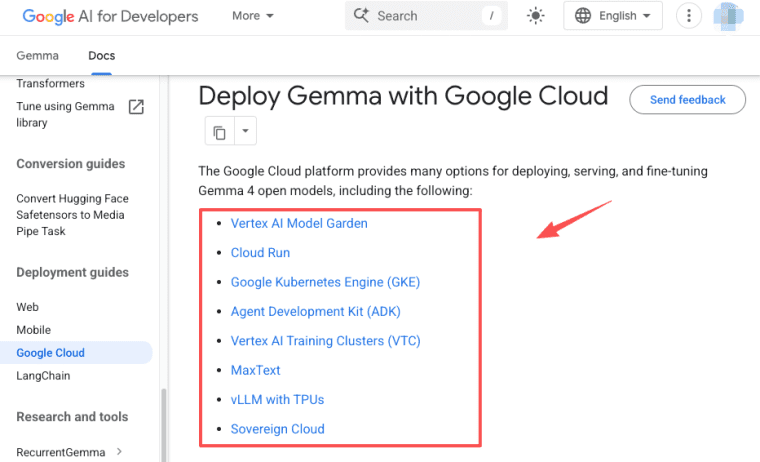
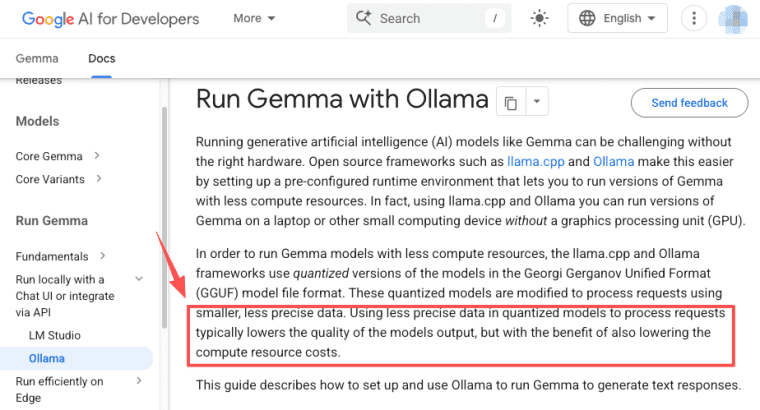
For deployment, Google documents Gemma on Google Cloud, including Vertex AI Model Garden, Cloud Run, and GKE. For local experimentation, Google also documents running Gemma with Ollama, including quantized models that reduce compute needs but may reduce output quality.
That last part matters. Smaller and easier is not always better. It is just easier.
My bias here is practical: I would not choose Gemma 4 just because it is open, powerful, or new. I would choose it when the product promise actually depends on control: local data handling, lower vendor exposure, custom behavior, offline use, or deployment in a specific customer environment. If none of those are central to the product, a hosted model is usually the cleaner way to validate demand first.
What Founders Should Verify Before Building
Before building around gemma 4 ai, verify the boring things. The boring things decide whether your app survives real users.
Check:
- License terms and commercial-use assumptions.
- Hardware and hosting needs for your chosen model.
- Real prompts from your actual workflow.
- Failure behavior when the model is slow, wrong, or unavailable.
- Data handling, logging, retention, and user consent.
- Safety boundaries for regulated or sensitive topics.
- Total cost after retries, monitoring, and fallback models.
- Whether users even need local or open-model control.
This is where an AI app builder can be the better starting point. Not because it magically removes model decisions, but because it keeps the work centered on the actual product: user flow, data, payments, SEO, launch, and iteration.
A model helps the app think. It does not decide whether the app should exist.
Explore More Topics:
FAQ
What is Gemma 4?
Gemma 4 is Google DeepMind's open model family released in 2026, with Apache 2.0 licensing and versions aimed at edge, local, workstation, and cloud deployment. The safest source for current capabilities is the official model card, because model sizes, integrations, and limits can change.
How can app builders use Gemma 4?
App builders can use Gemma 4 for private assistants, document workflows, coding helpers, internal tools, agentic flows, or AI features inside a larger product. The practical move is to test one workflow first, then decide whether local, cloud, or hybrid deployment makes sense.
Is Gemma 4 better than hosted AI models?
Not automatically. gemma 4 ai may be better when control, privacy, customization, or local execution matters. Hosted models are often better when speed, managed scaling, and fewer infrastructure decisions matter more.
What risks come with open model apps?
The main risks are maintenance, safety testing, hosting cost, quality drift, unclear fallback behavior, and weak monitoring. Open models give you more control, but they also make you responsible for more of the system.
When should founders choose an AI app builder instead?
Choose an AI app builder when your hardest problem is turning an idea into a usable app, not managing model infrastructure. If you still need structure, user flows, data, payments, SEO, publishing, and iteration, start there. You can revisit Gemma 4 once the product has earned the complexity.


