
If you are asking "how much does it cost to make an app," the honest answer is: it depends less on the app idea and more on the route, risk, and maintenance plan. A simple prototype, a client portal, a subscription SaaS, an AI workflow app, and an iOS marketplace do not share one fixed price.
A better question is: what does it cost to get the app into users' hands, keep it working, and change it after the first real feedback? That is the budget founders usually underestimate.
The Short Answer Depends on Your Build Route
The cost to build an app changes by build route. Agency or custom development usually costs more upfront, but can offer deeper control. A freelancer or small product team may reduce cost, but puts more coordination on the founder. No-code and AI app builders can lower the first-build cost, but subscriptions, credits, integrations, support, and future rebuild risk still count.
So if someone asks, "how much does it cost to create an app," the practical answer is not one number. It is a model: discovery cost plus build cost plus launch cost plus maintenance cost. If the app uses AI, add model usage, retries, storage, review, and support.
For early budgeting, use ranges as a sanity check, not as quotes. A simple prototype built with no-code or an AI app builder may start with a subscription, credits, and a few hundred to a few thousand dollars of setup help. A freelancer-built MVP often lands in the low five figures when the scope is clear. A custom agency build can move from tens of thousands into six figures once the app needs multiple roles, payments, integrations, mobile distribution, security review, or long-term maintenance.
| Build route | Rough planning range | What the range usually includes | Main hidden cost |
| DIY no-code or AI app builder | Subscription, credits, and optional setup help | Prototype, simple workflow, basic launch path | Founder time, platform limits, rebuild risk |
| Freelancer or small product team | $5,000–$50,000+ | Scoped MVP, simple backend, integrations, handoff | Continuity, QA, documentation, maintenance |
| Agency or custom development | $25,000–$150,000+ | Product discovery, design, engineering, testing, launch support | Change requests, project management, post-launch fixes |
| Complex SaaS or marketplace | $150,000–$500,000+ | Multiple user roles, payments, admin, security, mobile/web, scale work | Compliance, infrastructure, support, ongoing product team |
These ranges are deliberately wide. The point is not to make a founder trust a table. It is to stop treating "build an app" as one price category.
Four Cost Buckets Every App Budget Needs
Discovery and Product Definition
Discovery is the work before building: user research, feature scope, data model, business rules, risk review, MVP definition, and acceptance criteria. Skipping it often makes the build look cheaper while making the revision phase more expensive.
For a founder, this bucket should answer who uses the app, what they submit, what they receive, what must be saved, who can access it, and what counts as success. If those answers are vague, the cost of creating an app will drift because every builder is guessing.
Design, Build, and Testing
Design and build include screens, flows, database setup, authentication, admin tools, integrations, AI prompts or model calls, testing, and bug fixes. Testing should include realistic data, not only happy-path demos.
For AI apps, add evaluation time. Does the output meet the user's standard? What happens when the input is messy? Does a human need to review high-risk outputs? Those are product costs, even if the model call itself is cheap.
Launch, Distribution, and Customer Operations
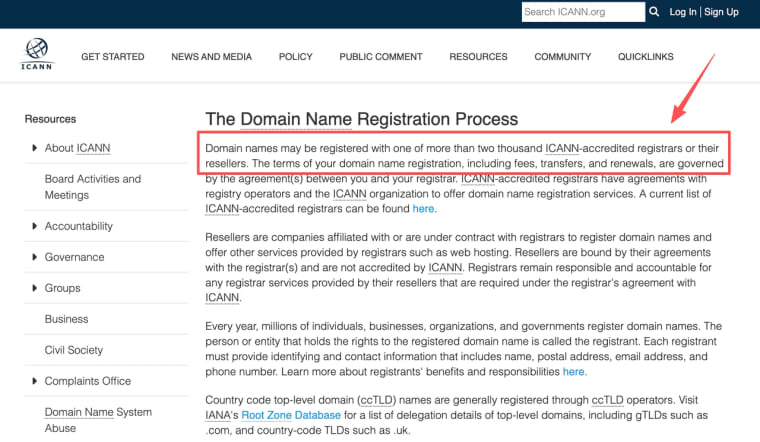
Launch cost includes domain, hosting, app store accounts, payment setup, analytics, privacy copy, support inbox, onboarding, SEO pages, and customer communication. Domain pricing is not universal because registration fees and renewals are governed through registrars or resellers.
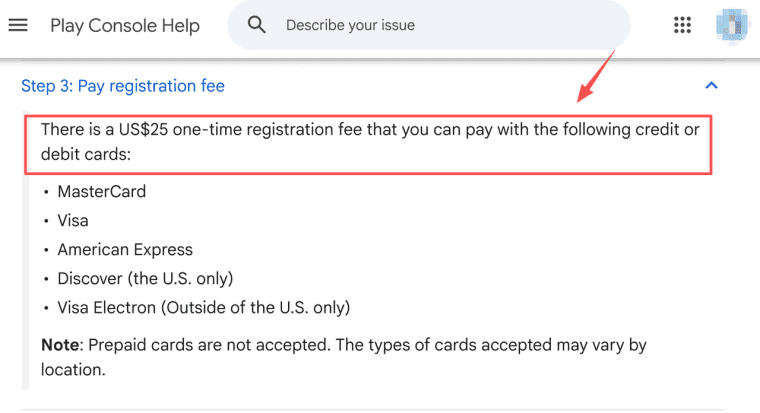
Mobile distribution adds its own fees and rules. As of August 20, 2026, Apple lists the Developer Program at 99 USD per membership year, while Google Play lists a US$25 one-time Play Console registration fee. These are not full launch costs. They are only distribution entry costs.
Maintenance, Usage, and Change Requests
Maintenance includes bug fixes, hosting, API usage, storage growth, security updates, support, content updates, analytics review, payment disputes, and feature changes. This is where many founders discover how expensive it is to create an app after launch.
A serious budget should include a monthly maintenance allowance. Even a small app needs changes: a field label, a new plan, a failed payment state, a role update, a broken integration, or a support issue after a customer uses the app differently than expected.
Compare the Main Ways to Build an App
Agency or Custom Development
Custom development works best when the app needs complex logic, unusual integrations, regulated data, deep performance control, or long-term technical ownership. The trade-off is higher discovery effort, longer timelines, and more project management.
The founder should ask for milestones, acceptance criteria, source code access, deployment ownership, data ownership, and maintenance terms. A low quote can become expensive if it excludes testing, admin tools, documentation, or post-launch fixes.
Freelancer or Small Product Team
A freelancer or small team can be a strong middle path. It may cost less than an agency and move faster if the founder has a clear scope. It also works well when the first version is narrow, such as a customer portal, internal dashboard, booking flow, or AI-assisted report generator.
The risk is continuity. If the freelancer leaves, who understands the app? Who owns the repository, server, domain, database, analytics, and payment account? The handoff plan should be part of the cost to build an app, not an afterthought.
No-Code and AI App Builders
No-code and AI app builders can reduce the cost of reaching a working first version. They are especially useful when the founder needs to validate one workflow before committing to custom engineering. If the app idea is still changing, this route can protect time and budget.
But builder cost is not only the subscription. It may include credits, database usage, automation runs, file storage, AI generation, custom domain setup, payment processing, and limits that appear only after real users arrive. For tool-route comparison, a founder can use HappySeeds' AI app builder comparison hub as a starting point, then verify the current plan terms on each vendor's own site.
Estimate the Cost of Your Own App
Define Users, Data, Permissions, and Payments
Start with a simple worksheet. List user types, such as visitor, customer, admin, reviewer, and billing owner. Then list the data each user creates, views, edits, and deletes. Next, list payment moments: subscription, one-time purchase, deposit, usage credits, refund, cancellation, or invoice.
Payment costs should be modeled separately. As of August 20, 2026, Stripe's standard US pricing lists 2.9% + 30¢ per successful domestic card transaction. Your actual cost may differ by country, payment method, international card mix, currency conversion, disputes, tax setup, subscription structure, or platform model.
Separate the MVP From Later Enhancements
The MVP should prove one paid or repeatable outcome. Later enhancements can include team roles, mobile apps, advanced analytics, multiple languages, referral systems, templates, automations, and enterprise permissions.
A useful rule: if a feature does not help a first user complete the core workflow, move it out of the MVP.
Add a Contingency for Unknowns
Every app budget needs contingency. Unknowns include unclear requirements, bad data, changing platform rules, third-party API limits, security review, unexpected support volume, and user feedback that reveals missing functionality.
Instead of guessing one final number, build three scenarios: lean MVP, launch-ready version, and maintained product. The lean MVP proves the workflow. The launch-ready version adds payments, privacy, analytics, support, and distribution. The maintained product includes monthly changes and usage growth.
Where HappySeeds May Fit the Cost Model
HappySeeds may fit when a non-technical founder wants to reduce the cost and uncertainty of turning an app idea into a usable AI app workflow. Its role in the budget is conditional: it may cover part of the build path, planning path, and launch workflow, but it does not eliminate all costs.
HappySeeds pricing uses credits for AI generation, and the current HappySeeds pricing and credit terms should be checked before budgeting. As of August 20, 2026, the pricing page explains that generation requests consume Credits based on complexity and resource usage, unused Credits do not roll over, subscriptions renew automatically, and payments are processed by Stripe. The HappySeeds terms of service should also be reviewed for account, subscription, content, and platform-use boundaries.
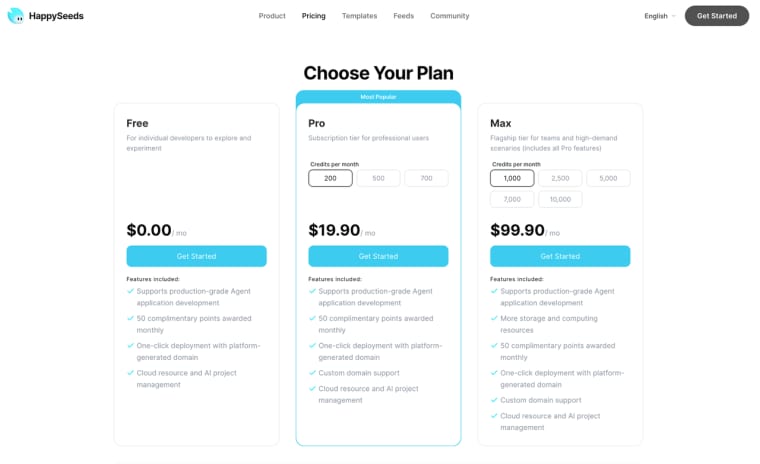
In a cost model, treat HappySeeds as one route among several. Add the subscription, credits, custom domain, payment provider fees, third-party services, support time, and any professional review your app needs. That is more honest than saying an AI builder makes the app free.
Cost Risks and Trade-Offs
The biggest cost risk is building the wrong thing. A founder can spend less on development and still waste money if users do not need the workflow. Another risk is underestimating maintenance. A cheap MVP can become expensive if every customer needs manual support.
Fixed-price quotes can also hide risk. If the scope is unclear, the builder may either cut corners or charge for change requests. Usage-based apps have another risk: the more users engage, the more the app may cost to run. That is good only if pricing scales with usage.
Regulated data, health claims, financial outputs, minors, legal advice, employment decisions, or sensitive customer records can raise review and compliance costs. This article is general information, not legal, tax, compliance, or funding advice. Contractor ownership, grant applications, regulated data, and contract terms should be checked with qualified professionals.
Budget for the App You Can Maintain
The real cost of creating an app is not only the first build. It is the cost of defining the right workflow, launching it safely, supporting users, and changing it without losing the business logic. Start with the smallest version that can prove value, price the operating costs honestly, and choose the build route that matches the app you can afford to maintain.
Fact note: Last reviewed on August 20, 2026. Pricing and platform details can change quickly, especially when an app depends on credits, hosting, payment providers, app stores, or third-party APIs. Confirm the latest terms before you commit money or quote a customer.
Explore More Topics:
FAQ
Who owns an app prototype created by a contractor?
Ownership depends on the contract, tool terms, source materials, jurisdiction, and whether payment has been completed. Founders should make ownership, repository access, design assets, AI-generated outputs, third-party licenses, and handoff materials explicit before work starts. Do not rely on verbal assumptions.
Does changing builders always require a full rebuild?
No, but it can. The answer depends on whether you can export code, data, assets, user records, environment variables, workflows, and payment configuration. A simple marketing site may move easily. A data-heavy SaaS with roles, payments, automations, and AI logs may require partial or full rebuilding.
Can presales help fund an app MVP?
Yes, but presales should match a clear delivery promise. A paid pilot, deposit, or founder-led service version can prove demand before full build cost. The risk is overpromising timelines or features before the app is validated. Keep the scope narrow and written.
When should a founder reject a fixed-price quote?
Reject or pause a fixed-price quote when the scope is unclear, acceptance criteria are missing, ownership is vague, maintenance is excluded, regulated data is ignored, or the quote does not explain assumptions. A cheap quote without boundaries can become the most expensive path.


