The AI agent economy is not just a bigger chatbot market. The more important shift begins when software can represent intent, find a service, request permission, pay, receive the result, and leave an auditable record. That does not mean agents are already roaming the internet as fully autonomous buyers. It means the rails for controlled agent action are starting to form.
For founders, the opportunity is not "build an agent and let it do everything." The better question is where humans still need control, trust, receipts, limits, and a useful interface around agent-driven work.
What the AI Agent Economy Means
Assistant agents represent users while service agents represent businesses
The clearest definition starts with two sides. Assistant agents represent users, teams, or companies that want something done. Service agents represent businesses, APIs, tools, content providers, marketplaces, or workflows that can fulfill that request.
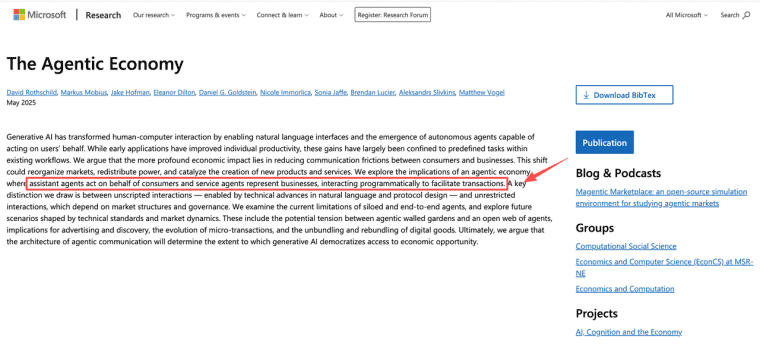
Microsoft Research frames the agentic economy around assistant agents acting for consumers and service agents representing businesses. That distinction turns a vague AI trend into a transaction model: one agent expresses demand, another offers supply, and value moves when they can verify intent, deliver, and settle.
This is different from traditional automation. A scheduled script runs a known task. An agent transaction may involve discovery, policy checks, service selection, and receipts before the work is complete.
What Changes When Agents Can Pay and Act
Software can discover, authorize, buy, receive, and account for digital services
When agents can pay and act, software starts to behave less like a passive interface and more like a delegated operator. A research agent might pay for a data source. A coding agent might buy a short-lived testing service. A logistics agent might purchase route data. A marketing agent might compare content APIs and select one within a budget.
The keyword is "delegated." The human or business still needs to define intent, limits, approval rules, and accountability. Without identity, spend controls, and receipts, machine commerce becomes a risk surface, not a product category.
Consumer agentic commerce is one version: an assistant helps a person find and buy products. Machine-to-machine resource payments are another: software pays for APIs, files, inference, tools, or data during execution. They are related, but not the same business problem.
The Layers Behind an Agent Transaction
Discovery, identity, intent, authorization, payment, delivery, and receipts
A real agent transaction needs layers. Discovery lets an agent find eligible services. Identity tells the service who is asking. Intent explains the goal. Authorization defines what the agent may do. Payment transfers value. Delivery returns the result. Receipts preserve proof.
Cloudflare's agentic payment work shows one emerging pattern: an agent requests a resource, receives an HTTP 402 payment challenge, fulfills payment, retries with payment credentials, and receives the resource with a receipt. That request, challenge, credential, verification, and receipt flow is a useful founder model.
Cloudflare Wallets adds account wallets for humans and virtual wallets for agents, with allowances, allow lists, maximum transaction size, and human override paths. Those virtual wallet guardrails for agent spending show why agent identity is part of authorization and auditability.
Startup Opportunities in the Agent Economy
Agent-readable services, trust signals, spend governance, observability, and marketplaces
The first startup opportunities may look like plumbing. Businesses will need agent-readable catalogs, clean service descriptions, permission-aware APIs, signed receipts, usage caps, status callbacks, and support records.
Service agents also need trust signals. If an assistant agent is choosing between five data providers, the buyer may care about accuracy, refund policy, latency, jurisdiction, privacy handling, and uptime. That creates room for agent marketplaces, reputation layers, and verification tools.
Spend governance is another wedge. A company may allow one agent to spend $20 per week on research APIs, another to spend $500 on cloud testing, and a third to require approval for every purchase. Observability matters because finance, security, and operations teams will ask what the agent bought, why, from whom, and whether the result was used.
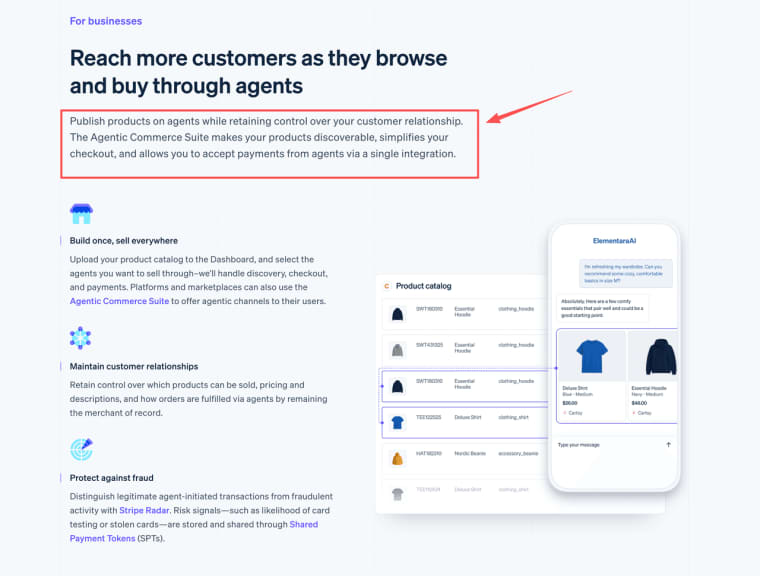
Stripe's agentic commerce work points to retail and marketplace adoption: products can be discovered through agents while merchants retain control over pricing, descriptions, fulfillment, and customer relationships. That commerce layer for agent-discovered buying and merchant control is different from low-level resource payment.
How Founders Can Choose a Defensible Product Wedge
Repeated demand, clear buyer authority, measurable delivery, and manageable risk
A defensible wedge starts with repeated demand. If an agent completes the task once, the product may be a feature. If the task repeats weekly across a team, it may become a business.
Buyer authority matters because agents can create spend. A product aimed at employees may fail if finance, IT, or legal will not approve it. Measurable delivery matters because agent transactions need proof: the API returned data, the file was delivered, the task was completed, and the customer accepted the result.
Risk should be manageable. Do not start with high-liability actions where authorization, dispute handling, and compliance are unclear. Better wedges include low-value metered services, internal research workflows, agent-readable SaaS add-ons, controlled procurement tools, or marketplaces where spend limits and receipts are central.
What Is Real Today and What Remains Emerging
Working payment protocols and pilots exist while adoption, standards, and liability are still evolving
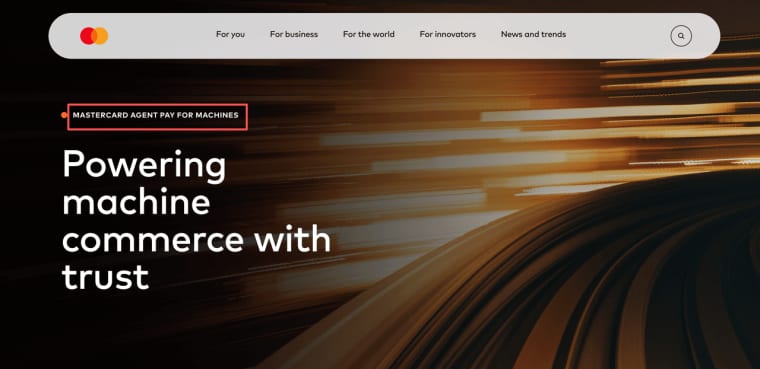
Real rails and pilots exist. Cloudflare, Stripe, Mastercard, and others are building payment, wallet, discovery, and settlement infrastructure for agents and machines. Mastercard's Agent Pay for Machines focuses on credentialing, permissioning, high-frequency transactions, and settlement for machine commerce.
What remains emerging is equally important. Adoption is early. Standards may fragment. Liability is not settled across every transaction type. Consumer protection, procurement rules, tax treatment, refunds, chargebacks, identity portability, and record retention still depend on contracts, jurisdictions, and provider terms.
Founders should avoid saying agents can universally buy anything. A more accurate claim is that agent-capable payment and commerce infrastructure is moving from concept toward controlled deployment.
When HappySeeds May Be Worth Considering
Prototyping the human-facing control panel or service experience around an agent workflow
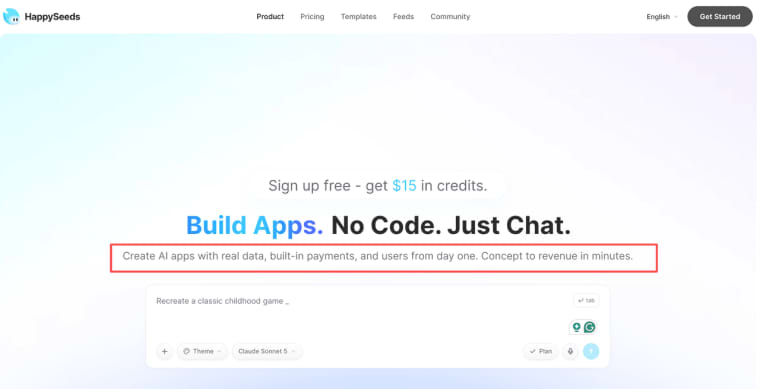
HappySeeds should not be positioned as an agent identity provider, wallet, payment rail, or compliance system. It may be worth considering when a founder needs to prototype the human-facing control panel around an agent workflow.
A founder might need screens where a user defines an agent's task, reviews service options, sets spending limits, sees approvals, tracks receipts, and gives feedback after delivery. HappySeeds' app-building workflow with real data, payments, users, and planning can help explore that product experience before the founder commits to a specific agent rail.
The useful prototype is a controlled service experience: who requested the work, which agent acted, what it could spend, which service delivered, and what record remains.
Risks and Trade-Offs
Unauthorized actions, fraud, protocol fragmentation, unclear responsibility, and regulatory exposure
The agentic economy creates new failure modes. An agent may buy the wrong service, overspend, use a fraudulent endpoint, misunderstand a user's intent, or trigger actions that no single party fully reviews.
Fraud also changes shape. A bad actor may impersonate a service agent, manipulate discovery signals, or trick assistant agents into paying for low-value resources. Protocol fragmentation can make it harder for marketplaces, wallets, agents, and merchants to interoperate.
Responsibility is still the hardest layer. If an agent acts under a human's budget but chooses a harmful vendor, who is accountable? If a service agent delivers bad data downstream, where does liability stop? This article is general information, not legal advice. Contract history, record separation, inheritance, and ownership after a business sale require qualified review.
Build the Control Layer Before the Market Gets Loud
The AI agent economy is forming around a simple idea: software can act only when identity, authorization, payment, delivery, and receipts become reliable. Founders do not need to predict the winning protocol. They need to choose a narrow workflow, build trust around the transaction, and make every agent action visible enough for humans to approve, audit, and improve.
Explore More Topics:
FAQ
Can an agent keep the same public identity after changing providers?
Only if the identity layer is portable across providers or controlled by the business rather than the vendor. Avoid tying public agent identity only to a single platform login if customers, merchants, or service records depend on continuity.
What happens to open service requests when an agent is retired?
Open requests should move into a human-review state before retirement. The system should preserve request status, payment state, delivery obligations, and customer notices. Do not simply delete the agent if unfinished work or receipts remain.
Can a human inherit an agent's contract history?
A human may inherit access to records, but that depends on the contract, account structure, permissions, and data policy. Product teams should separate "view history" from "assume responsibility" because those are different questions.
How should parent companies separate records for subsidiary agents?
Each subsidiary agent should have its own identity, budget, authorization rules, receipts, and audit trail where possible. Shared infrastructure can still exist, but records should make clear which legal entity requested the action.
Who owns an agent-generated purchasing profile after a business is sold?
Ownership depends on the sale agreement, vendor terms, privacy commitments, and applicable law. Treat the profile as a data asset that needs explicit transfer rules.