Hi everyone, I'm Elin. The founder hears "FLUX 3" and the first thought is obvious: maybe this is the model that makes a new creative app possible. Images, video, audio, editing, references, and multimodal handoff all sound like product material. But the dangerous part is moving from model excitement to launch plans too quickly.
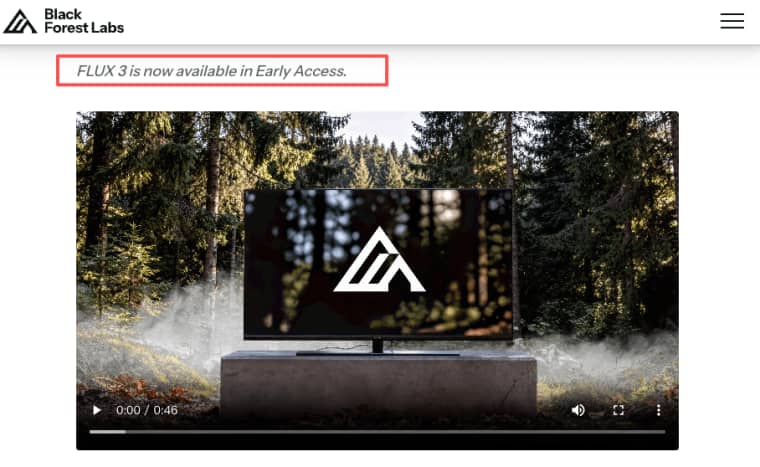
As of July 27, 2026, FLUX 3 is in Early Access, with FLUX 3 Video available through early access and FLUX 3 Image still moving through Black Forest Labs' stated rollout path. That makes it worth watching, testing, and planning around. It does not make it a stable commercial foundation by default.
For non-technical founders, the better question is not "Can I build a FLUX 3 app?" It is: what workflow would users repeat, pay for, review, export, and trust even if the model access, price, or rules change later?
What FLUX 3 Current Signals
Early Access status, multimodal direction, and official details still to verify
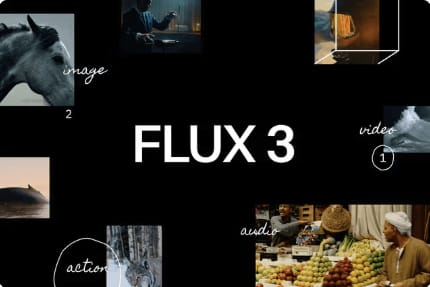
FLUX 3 signals a shift from a pure image model discussion to a broader multimodal AI app conversation. Black Forest Labs describes FLUX 3 as a model trained across image, video, and audio, with capabilities that include text-to-video, image-to-video, video-to-video, audio-aware generation, image synthesis, and image editing. RAG layers often start with Milvus with Codex.
The most interesting part for founders is not a benchmark claim. It is the shape of the workflow. A user may start with a product image, generate a short video with sound, adjust a scene, create a still variation, and send the result for review. That points toward creative operations, not just prompt boxes.
Still, the official boundary matters. Video is already in early access, while Image is described as opening in the following weeks. API access, pricing, availability, commercial terms, output rights, public display rules, and private weight access need to be checked against the latest BFL materials before any production commitment.
Pick the App Workflow Before the Model
Image editing, video-audio generation, asset review, or multimodal creative handoff
A build FLUX 3 app plan should start with the buyer's job. If the buyer is an ecommerce founder, the app might turn owned product photos into short launch clips. If the buyer is a creative agency, the app might organize client-approved references, generate concept directions, and preserve feedback. If the buyer is a creator team, the app might turn a campaign idea into a reviewable asset pack.
That is different from building a generic FLUX 3 AI app where users type anything and hope for a good result. Generic prompt tools are easy to try and easy to abandon. A stronger workflow has a known input, a clear output, a review moment, and a reason to come back next week.
For example, "create campaign assets" is too broad. "Upload three approved product images and generate five 10-second social video drafts for review" is closer to an MVP. The model is only one component. The product is the repeatable path from raw material to approved deliverable.
Product Layers Founders Still Need
Uploads, projects, credits, export queue, user accounts, payments, and support
An AI image app builder still has to build the product shell around the model. Users need accounts, project folders, upload limits, saved references, generation history, credit balances, payments, export queues, failed-job states, and support records.
These layers are not administrative clutter. They protect the business. If a user spends credits and the job fails, the app needs a refund or retry rule. If a team rejects an output, the app needs to remember why. If a client asks which source asset produced a final video, the app needs a traceable project record.
For a FLUX 3 API app, credits should connect to visible actions rather than hidden model calls. A founder can price "one reviewed video draft" more clearly than "some number of tokens or compute units." Export queues also matter because video, audio, and image outputs may take different amounts of time. A serious multimodal AI app should show status, preserve drafts, and prevent users from losing work during retries.
Launch Risks and Trade-Offs
API timing, pricing, model changes, rights policy, abuse review, and fallback
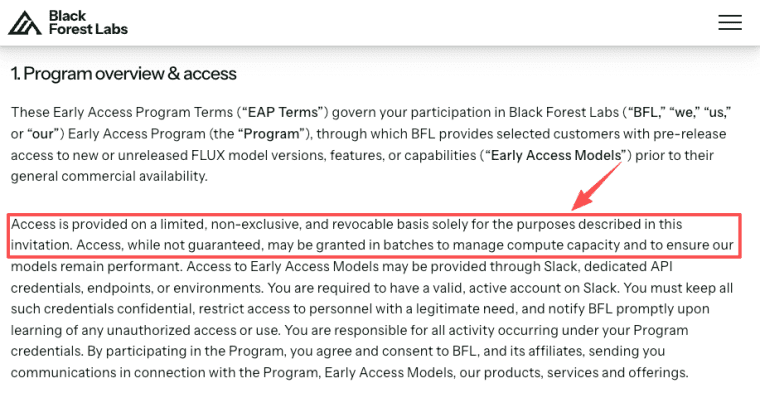
Early access can be valuable for learning, but it is not the same as public production readiness. BFL's Early Access terms describe access as limited, non-exclusive, and revocable, and restrict early-access models to evaluation, testing, and development purposes only unless BFL agrees otherwise in writing.
That changes the founder decision. You can design the workflow now. You can interview buyers now. You can prototype around owned media and placeholder model paths now. But you should not promise customers a production FLUX 3 app until your access terms, pricing, usage rights, and operational limits are clear.
Model changes are another risk. BFL's API terms include language around changes to the API or models, which means founders should expect integration work over time. A fallback plan should cover provider routing, saved outputs, user messaging, support refunds, and rollback if output quality changes.
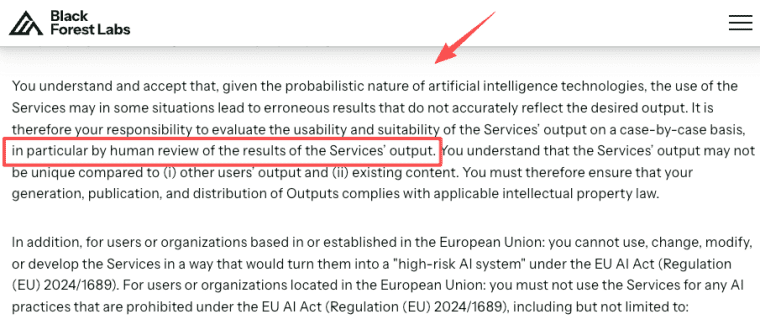
Rights and abuse review also need product-level handling. BFL's usage rules put responsibility on users to avoid harmful, misleading, infringing, or prohibited uses, and they emphasize human review of outputs. For founders, that means uploading ownership checks, public-use warnings, moderation triggers, takedown handling, and reviewing steps for people, brands, minors, regulated claims, or political content.
MVP Workflow for Non-Technical Founders
One buyer, one input, one output, one payment reason, one feedback loop
The cleanest MVP is narrow enough that users understand it in one sentence. Start with one buyer, such as ecommerce teams preparing product launches. Choose one input, such as owned product images. Choose one output, such as short social video drafts with export-ready formats. Choose one payment reason, such as reducing the cost of first-round creative production. Choose one feedback loop, such as approved, edited, rejected, or regenerated.
This is where an AI startup becomes real. The founder is no longer asking whether FLUX 3 is impressive. They are asking whether users will upload assets, wait for results, review variations, spend credits, export final files, and return with the next campaign.
The MVP should also define stop points. Low-quality uploads should not burn credits without warning. Outputs with uncertain rights should be held for review. Failed generations should create support logs. Users should be able to compare versions, restore older drafts, and understand what changed.
A useful founder test is simple: if the model disappeared tomorrow, would the workflow still describe a real customer pain? If yes, the app idea may be worth de-risking. If no, the plan is probably just riding model hype.
Build Around the Workflow, Not the Model
FLUX 3 may become an important foundation for creative products, but founders should not treat early access as a launch shortcut. The safer path is to validate one repeatable workflow, protect user projects and rights, price the task clearly, and wait for confirmed production terms before promising a commercial FLUX 3 app at scale.
Explore More Topics:
FAQ
Who should control early-access credentials?
Early-access credentials should belong to the company, not a personal founder account. Access should be limited to people who need it for testing, and credentials should never be exposed in frontend code or shared with clients. If an NDA applies, keep a record of who accessed the environment and which pilot assets were used.
Can outputs appear in investor decks?
Only if the applicable early-access terms, NDA, and public display rules allow it. Investor decks can still count as external disclosure. If the deck includes unreleased outputs, model behavior, pricing assumptions, or capability claims, get written approval before sharing.
How should NDA limits affect demos?
Demos should use owned, non-sensitive inputs and avoid revealing non-public model details. For customer pilots, separate internal tests from public marketing assets. If a demo must be shared outside the company, keep the audience limited and document what was shown.
Where should pilot feedback be stored?
Pilot feedback should live in your own product or research system, not only in chat threads. Each record should connect the input, output, user reaction, error state, and next action. This makes it easier to decide whether to keep FLUX 3, add fallback models, narrow the workflow, or pause launch plans.