
A Grok Bot product can sound simple at first: let the Bot do the work, then sell the result. The harder question for founders is whether that work can become a customer offer your team can explain, review, support, and migrate.
As of August 13, 2026, Grok Bot is a beta product, not a public API, white-label agent platform, or guaranteed resale infrastructure. That boundary matters because Grok Bot productization is less about "can the agent act?" and more about "what can the customer safely buy?"
Why a Grok Bot Is Not Yet a Customer Product
Internal task execution does not by itself create a customer-facing value proposition
Internal task execution can help a team move faster, but customers do not buy "a Bot did work." They buy a clear outcome. A customer-facing offer needs a job, input, output, review path, support boundary, and responsibility model.
This is the core agent product boundary. If Grok Bot researches leads, checks a website, or updates tools behind the scenes, that may support delivery. It does not automatically create a Grok Bot business.
What Grok Bot Contributes
The beta provides cloud-based agent work across tools, websites, and apps
The official launch describes cloud-based Bots with their own computer working across apps, tools, websites, inboxes, and existing accounts. It also frames Bots as able to continue work after a user steps away, learn routines, coordinate with other Bots, and return for approval.
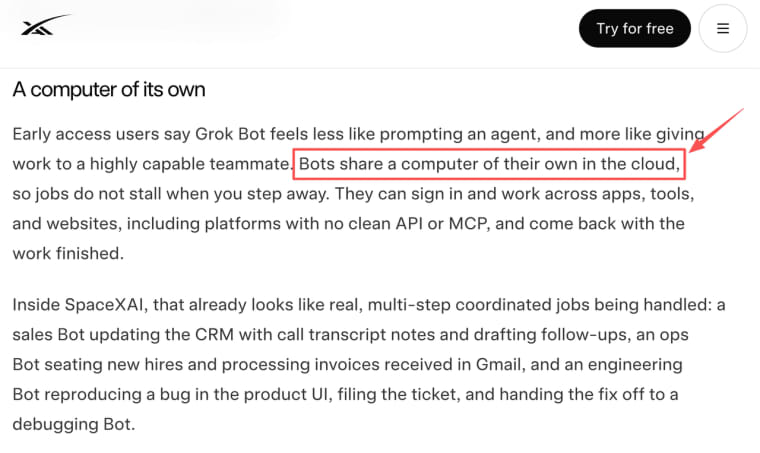
That is useful for an AI agent managed service because it suggests an operating layer behind research, support, operations, or admin tasks. But beta access, subscription eligibility, and product behavior still need current verification before any customer promise.
What the Product Layer Adds
A defined customer job, visible experience, review path, outcome, and support boundary turn work into an offer
The product layer turns agent work into something a customer can understand. It defines what the customer submits, what they see, what they approve, what they receive, and who handles problems.
For agent product strategy, this may mean an intake form, status screen, approval queue, delivery history, support route, and human review rule. Without those pieces, the founder has an internal helper, not a product.
Three Ways Grok Bot Can Sit Behind an Offer
Internal operations, service-assisted delivery, and an external dependency behind an app create different product shapes
The first route is internal operations. Grok Bot helps the team deliver faster, while the customer only sees the finished result.
The second route is service-assisted delivery. The customer joins a guided workflow, such as uploading a brief, approving a draft, or reviewing a report.
The third route is an external dependency behind an app. The app has its own interface, accounts, data, and support layer, while Grok Bot performs some work outside the product. This route needs the most caution.
How the Customer Experience Changes Across Each Route
Customers may receive only a finished result, join a guided workflow, or use a separate interface
If Grok Bot stays internal, the customer experience can remain simple. If the offer is service-assisted, customers may see checkpoints, comments, and approvals. If the Bot sits behind an app, customers may expect login, history, roles, status, and support.
These routes should not be mixed casually. "Agent-assisted service" is a safer promise than "self-serve Grok Bot product" if customers cannot inspect status or recover from failures.
What Founders Should Learn Before Choosing a Route
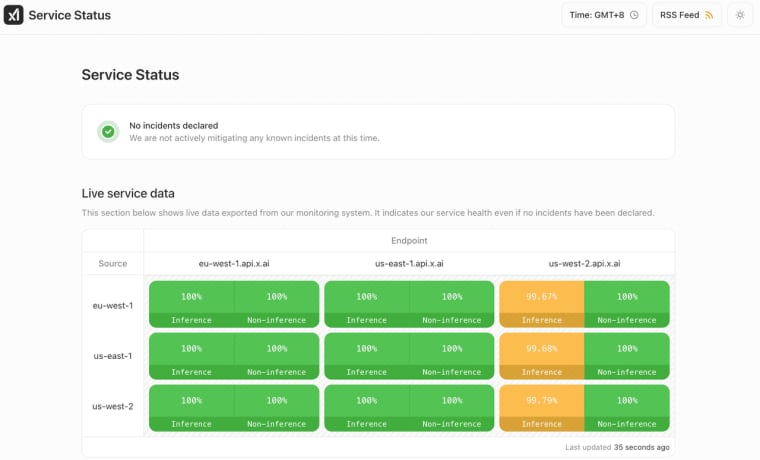
Access, control, evidence, support, and migration questions reveal what still needs validation
Before choosing a route, founders should answer five questions: who controls access, what needs approval, what evidence is saved, who supports failures, and what happens if Grok Bot access changes. For customer-facing offers, xAI's service status surface can support incident checks, but the product still needs its own customer communication path.
When HappySeeds May Support the Customer Layer
It may help explain and prototype the visible workflow while Grok Bot remains external
HappySeeds should not be described as a native Grok Bot connector, agent identity layer, or compliance system. A safer fit is customer-layer prototyping.
A founder could use HappySeeds' AI app-building workflow to explore how customers submit a job, review outputs, track status, and receive support, while Grok Bot remains an external operational tool. That keeps the claim grounded: HappySeeds helps shape the visible workflow, not the Grok Bot infrastructure.
Limits and Trade-Offs
Beta access, provider dependence, credential exposure, and unclear product control limit what founders can promise
Grok Bot beta access limits what founders can promise. Do not claim public API access, resale rights, white-label capacity, stable SLA, fixed pricing, or permanent availability unless current terms confirm it.
Credential exposure is another risk. If a Bot works through connected accounts, the team needs permission rules, audit records, and revocation steps. Customer promises, refunds, credentials, and third-party terms should be checked against current xAI legal materials and qualified advice before launch.
Make the Agent Work Explainable Before You Sell It
A Grok Bot product becomes credible when founders separate internal Bot work from the customer promise. Use Grok Bot where it helps delivery, but build the visible product around a clear job, review path, support boundary, and migration plan.
Explore More Topics:
FAQ
Does a Grok Bot product need a public status page?
Not always. An internal managed service may only need internal incident notes. A customer-facing app or paid workflow should have a visible support or status path.
How much human review should a Grok Bot product include?
Review should match the risk. Research drafts may need light checks, while customer messages, account changes, or sensitive workflows may require approval before action.
Should a Grok Bot product charge for the agent work or for the customer outcome?
Charging around the customer outcome is usually easier to explain than exposing internal Bot usage as the product itself. A founder might price per completed report, workflow, account, project, or subscription tier while treating Grok Bot usage as part of delivery cost. The pricing model should still leave room for retries, manual review, and provider-cost changes.
When should founders migrate away from Grok Bot?
Migration may make sense when customers require stronger uptime, programmatic access, auditability, or deeper control over execution.


