
Hi guys, I'm Elin. The wrong way to read the Muse Image news is: "Cool, another image generator. What can I copy?" The useful way is quieter: Meta is pushing AI image creation closer to social workflows, where people already make, remix, approve, and share visuals every day. That matters to founders. The best Muse Image app ideas will not be generic prompt boxes. They will be repeat campaign workflows for brands, creators, ecommerce teams, and agencies that need faster visual output without losing consistency or approval control.
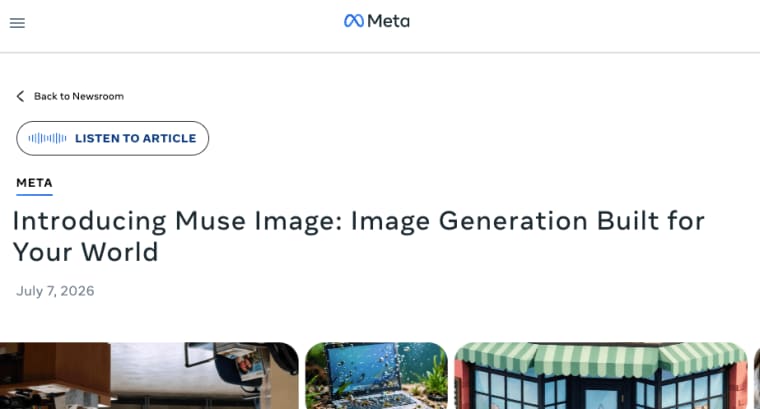
Current reporting says Muse Image is being used across Meta surfaces such as Meta AI, Instagram, and WhatsApp, with features around generation, precise editing, composing from multiple references, drawing directly on photos, and sharing to feed, story, or chat. The Verge describes Muse Image as part of Meta's new AI image push, including Instagram-connected creation. Still, founders should verify region, subscription status, Meta policy, commercial-output terms, and API access before building a paid product around it.
Where Muse Image Creates Paid Workflow Clues
Muse Image is interesting because it sits near social creation, not because it automatically becomes a business opportunity. Social content already has repeat pressure: campaigns, drops, launches, posts, story sets, ads, creator packs, and client approvals.
Presets, editing, multi-photo blending, markup, and sharing reduce friction in social creation
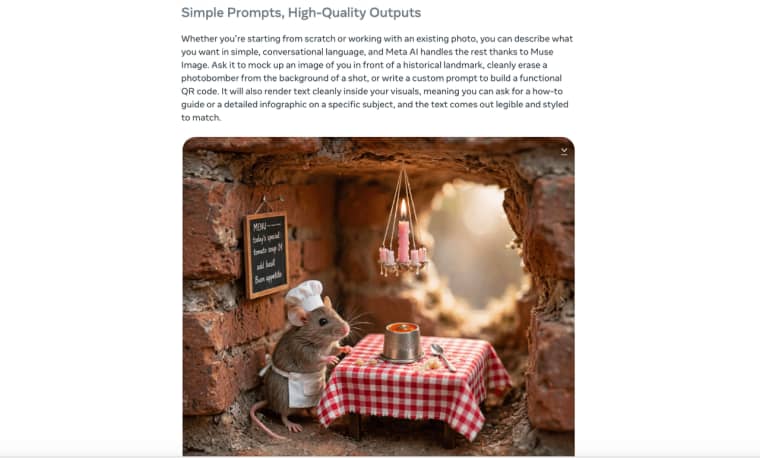
Presets reduce blank-page friction. Editing helps users revise instead of starting over. Multi-photo blending can turn brand assets, product shots, creator photos, and campaign references into new visual directions. Markup makes feedback easier. Sharing connects output to a real destination. For a founder, those features point toward workflow apps. A social image generator should not only generate an image. It should help a user produce a full campaign-ready asset set, keep the brand style stable, support review, and remember what was delivered.
That is the gap between a fun Instagram AI image and a product someone might pay for.
App Ideas by Paying Buyer
The buyer matters more than the model. A creator, agency, ecommerce operator, and brand marketer may all want images, but they pay for different reasons. A creator pays for speed and consistency. An agency pays for concept volume and client review. An e-commerce team pays for reusable product visuals. A brand team pays for control.
Brand campaign kits, creator media packs, agency concept boards, and ecommerce social variants
A brand campaign kit app could turn brand-owned inputs into campaign-ready visual sets: launch post, story background, square image, banner, teaser graphic, and internal review board. This works best when the brand already has approved colors, product shots, slogans, and visual rules.
A creator media pack app could help solo creators package a new video, product, newsletter, course, or event into repeatable visuals. Think thumbnail options, story assets, profile graphics, post backgrounds, and sponsor-friendly variations.
An agency concept board app could help teams move faster before a client meeting. The paid value is not the final image alone. It is fast exploration, saved directions, review comments, and handoff clarity.
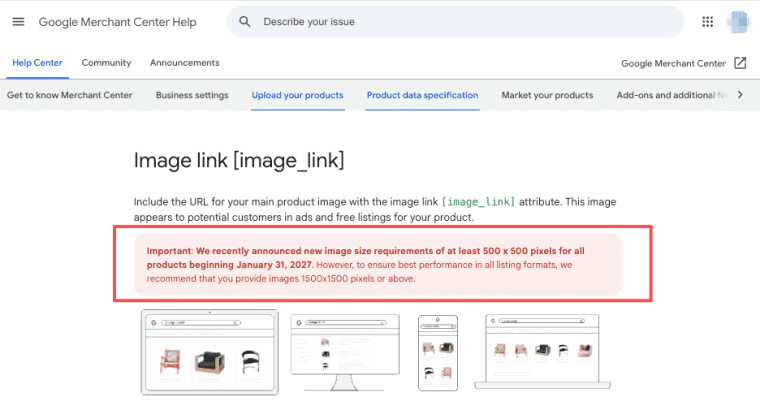
An e-commerce social variant app could create product-led visuals for campaigns. Product images often need to meet channel and listing expectations; Google Merchant Center's image_link requirements show that product images used in ads and free listings must meet specific image rules, so ecommerce visual apps need channel-specific delivery checks. That is why e-commerce visual apps need more than good taste. They need compliance-minded delivery.
Score Each Idea by Repeat Value
A pretty generated image is not a business. Repeat value is the business. When scoring ideas, ask whether the workflow happens again and whether the buyer cares enough to save, approve, reuse, or pay for the output.
Campaign frequency, brand consistency, approval burden, output reuse, and buyer urgency
| Factor | Strong signal |
| Campaign frequency | The buyer needs assets weekly, monthly, or per launch. |
| Brand consistency | The same colors, product rules, tone, and layouts must repeat. |
| Approval burden | A manager, client, sponsor, or legal reviewer must approve the visual. |
| Output reuse | Assets can be reused across channels, campaigns, or variants. |
| Buyer urgency | The visual is tied to a launch, ad spend, content calendar, or client deadline. |
A creator pack might score high on frequency. An agency board might score high on approval burden. An e-commerce social workflow might score high on reuse. A brand visual tool is strongest when consistency and review matter more than novelty.
Turn the Idea into a Product
This is where many founders get too thin. They think the app is done when the image appears. It is not. The paid product begins when the user can organize work, reuse brand inputs, invite review, and deliver assets without rebuilding the same context every time.
Saved libraries, brand templates, team roles, approval states, and delivery bundles
Saved libraries are the first payment reason. Users should store logos, product shots, creator photos, approved backgrounds, campaign references, and past winners. If every session starts from zero, the app is easy to abandon.
Brand templates protect consistency. A user should be able to save aspect ratios, color rules, tone notes, banned visual styles, approved captions, and output formats.
Team roles matter when the buyer is an agency or brand. A designer, account manager, founder, client, and publisher may need different permissions. Approval states turn messy chat feedback into product structure: draft, needs review, approved, rejected, exported, or archived.
Delivery bundles make the product easier to price. Instead of selling "images," sell a launch pack, product drop pack, creator media pack, or ad concept bundle.
This is also where an ad creative app becomes more valuable than a generic image tool. It saves work around the image, not just the generation step.
Cold-Start Recommendation
Start with brand-owned inputs. That is the safest and cleanest path for an MVP.
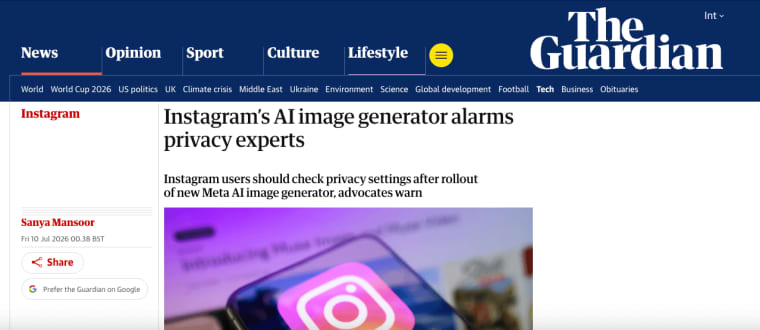
Do not cold-start with third-party face remixing, public-profile references, or identity-heavy use cases. Current coverage of Muse Image has already raised privacy concerns around public Instagram content and reuse. The Guardian reported criticism around how public profile material may be reused, which is a signal founders should take seriously.
Start with brand-owned inputs and one repeated campaign output
A good cold-start MVP might ask users to upload their own product photos, logo, approved brand references, and campaign brief. Then it produces one repeated output: weekly social pack, launch kit, creator thumbnail set, ecommerce post set, or agency concept board.
Keep it narrow. One buyer. One asset family. One repeat trigger. One delivery bundle. That gives the founder cleaner trust boundaries, easier onboarding, and a clearer paid promise. It also avoids building the whole product around identity-sensitive content before the trust layer is ready.
Risks and Stop Signals
Muse Image may create attention, but attention can hide weak business fundamentals. Founders should watch for stop signals before overbuilding.
One-time novelty, Meta-surface dependence, weak differentiation, moderation cost, and identity sensitivity
One-time novelty is the first danger. If users generate one funny image and leave, that is not a paid workflow.
Meta-surface dependence is another risk. If the product only works because of one Meta surface, feature, or policy assumption, it may be fragile. Verify API access, terms, region availability, subscription requirements, and commercial usage before promising anything to customers.
Weak differentiation is common. "AI social image generator" is too broad. "Weekly product-drop social packs for Shopify sellers" is clearer. Moderation costs can grow quickly. Social visuals may include faces, claims, products, health statements, financial statements, political content, or sensitive identity cues. The app needs review states and escalation paths.
Identity sensitivity is the final red flag. Avoid use cases that depend on pulling in people who did not actively provide the input. Start with owned brand material and explicit user uploads.
Build Around the Repeat Campaign
The best Muse Image app idea is not the flashiest generator. It is the workflow a buyer repeats under a deadline: campaign kit, creator pack, agency board, ecommerce variant, or brand social bundle. Start with owned inputs, preserve review history, and make the output easy to approve, deliver, and reuse. That is where social image generation has a real chance to become a paid product.
Explore More Topics:
FAQ
What happens when a client changes agencies during a campaign?
The app should define transfer rules before this happens. A brand may need access to approved assets, source inputs, comments, export history, and campaign status. The old agency may need to retain records for billing or dispute resolution. A clean product should support ownership transfer, read-only archives, and permission changes instead of forcing teams to rebuild the campaign library.
Can brands require deletion of expired campaign assets?
Yes, if the contract or product terms allow it. The app should separate active assets, archived concepts, exported files, source uploads, comments, and analytics records. A brand may want expired campaign materials deleted from active libraries while the platform keeps limited records for invoices, disputes, or compliance. This should be written into retention settings.
Who approves factual claims inside generated promotional graphics?
A human owner should approve factual claims. If a graphic includes prices, discounts, product claims, performance claims, event dates, or legal disclaimers, the app should route it to the brand, agency, or authorized reviewer. The model should not be treated as the final authority on promotional accuracy.
How should unused concepts be handled after a campaign ends?
Unused concepts should move into an archive or rejected state, not disappear silently. Some may be useful for future inspiration. Others may contain outdated claims, expired offers, or rejected brand directions. The app should let teams tag unused concepts by reason and decide whether they can be reused, hidden, or deleted.
What records should accompany assets delivered to an outside publisher?
A delivery package should include the final files, intended channel, export size, campaign name, approval status, usage notes, and any required disclosure or brand instructions. If the publisher needs proof of approval, the app should include the approval timestamp and reviewer. That is how a creative workflow becomes dependable instead of just fast.


