An app can look convincing in Preview and still fail when two customers use it, a card is declined, or the founder must repair a live account. Reviewed October 5, 2026 for 2027 planning, this official-document-based shortlist applies one paid SaaS brief to every builder. It does not pretend to cover changes that have not happened or present documentation review as hands-on testing.
Quick Picks for 2027 by SaaS Stage
| Founder need | Shortlist | Main reason to test it | First thing to verify |
| Shape a focused Web MVP through conversation | HappySeeds | Planning, building, publishing, data, login, and payment setup can sit in one workflow | Role isolation and failed-payment behavior |
| Control complex logic visually | Bubble | Mature visual control over data, workflows, privacy, and subscriptions | Learning time and workload cost |
| Start with managed app infrastructure | Base44 | Authentication, database, publishing, and user management are included in the build model | Credit use after launch |
| Keep a developer handoff open | Lovable | GitHub synchronization connects AI building with a conventional code workflow | What remains tied to managed services |
| Inspect and edit generated code in the browser | Bolt | Prompting and direct code changes can happen in the same workspace | Token use and repair responsibility |
| Build and run a coded app in one environment | Replit | Agent-assisted creation leads directly into publishing options | Deployment and usage cost |
There is no universal best ai saas builder here. There is a better match for a particular founder, product, and maintenance burden.
What Changed for AI SaaS Builders in 2027
More builders now reach beyond screen generation into databases, authentication, payments, domains, deployment, and code handoff. A founder can choose a no-code SaaS builder that manages much of the stack or an AI coding environment that exposes more implementation. The real 2027 question is who owns the live system after the first build.
What an AI SaaS Builder Must Deliver
Repeatable Customer Value Beyond a Demo
A credible SaaS MVP builder must support one repeatable exchange. Here, an agency client creates a workspace, uploads a monthly report, receives an AI-assisted summary, invites a colleague, and subscribes. If payment fails, premium work pauses without deleting saved reports. This brief tests value, identity, tenant boundaries, billing recovery, and support.
Compare the Shortlist on One Paid Workflow
Accounts, Data, and Tenant Boundaries
Create two fictional companies. Company A must never retrieve Company B's reports through search, URLs, exports, or admin views. Test invitations, removed members, and owner changes. Login proves authentication, not tenant isolation.
Billing, Usage Limits, and Failed Payments
An AI subscription app builder should distinguish active, past-due, canceled, and manually comped accounts. Test a declined card, renewal failure, cancellation, and recovery. Stripe processes events; your product still needs an entitlement policy.
Domain, SEO, Analytics, and Support
Check the domain, public acquisition pages, event tracking, logs, rollback, and support visibility. Support should identify an account state without casually exposing private customer content.
HappySeeds - A Focused Web MVP With Login and Payments
HappySeeds suits nontechnical founders who want to describe, revise, and publish a focused Web product without starting in a code editor.
From a Customer Use Case to a Working App
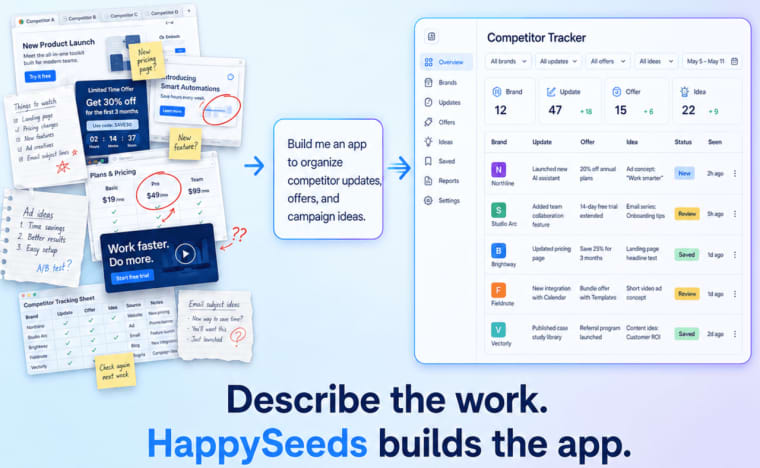
Start with the workspace, report record, roles, entitlement, and recovery behavior, not "build me a SaaS." HappySeeds supports database-backed records and configurable sign-in, checkout, subscriptions, and customer billing. Its authentication and payment workflow still requires external credentials, Stripe webhooks, and live-domain testing. This makes it a practical AI SaaS app builder candidate for a narrow paid workflow, not proof of enterprise tenant governance or private deployment.
Publishing, Domains, and Founder Responsibilities
The founder can preview, publish, and connect a custom domain on an eligible plan. Test sign-out, recovery, role changes, payment failure, and record access live. Monitoring, support, privacy, and refunds remain operator responsibilities.
Pricing, Credits, and Limits to Check
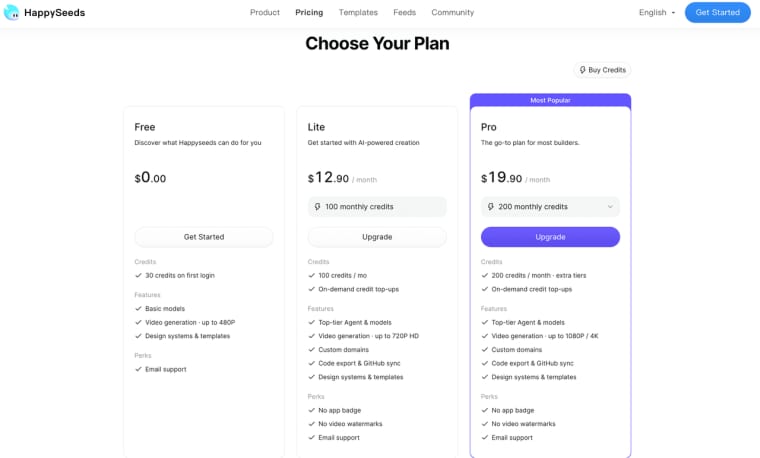
HappySeeds uses credits for AI generation work. Check current plans, credit rules, and billing terms, then estimate the first build, two revisions, and a maintenance month. Included hosting or credits are not the whole operating budget.
Bubble - Keep SaaS Workflows Under Visual Control
Bubble fits founders willing to learn a substantial visual system for detailed control over data, workflows, interfaces, and plugins.
Managing Accounts, Privacy Rules, and Subscriptions
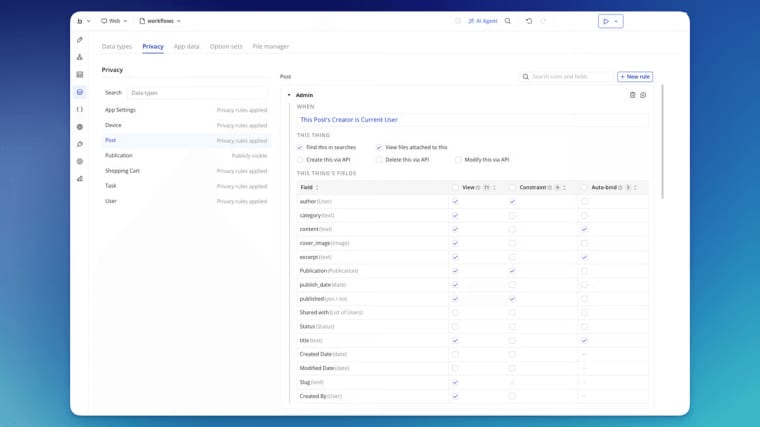
Bubble privacy rules can limit who may find, view, edit, or attach files to data, but only when the data model is sound. Its Stripe plugin supports subscriptions; failures still need explicit handling. Treat privacy rules as testable product logic, not a switch labeled "secure."
The Learning Curve Before Your First Paid Pilot
Bubble's launch plans meter server resources with workload units. Complex workflows, inefficient searches, and traffic can change cost. Learn development versus live data, recurring workflows, logs, and workload before charging users.
Base44 - Start With a Built-In Backend and User Management
Base44 is worth testing when speed matters and the founder prefers managed authentication, database, hosting, and app analytics. The reporting brief can be generated as a connected product rather than assembled from separate services.
Base44 separates message credits used while building from integration credits consumed by live features. Its current plan structure places custom domains, backend functions, and GitHub integration on particular tiers. Run a role change and a month-shaped usage simulation before buying; the first prompt reveals little about maintenance cost.
Lovable - Build an MVP You Can Extend With Developers
Lovable fits a founder who wants prompt-led construction now and developer access later.
How GitHub Sync Supports Developer Handoff
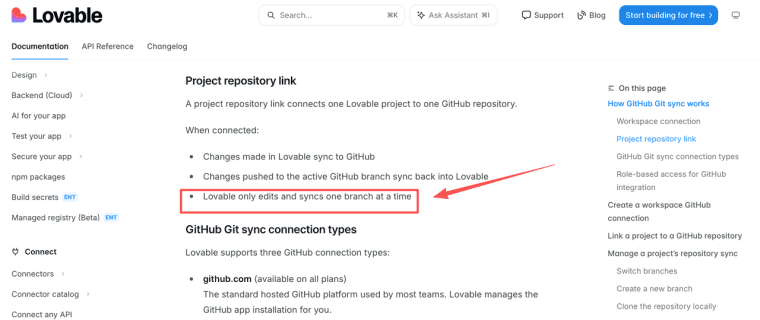
Lovable supports two-way GitHub sync, local work, and outside deployment. Its GitHub connection uses one active synchronized branch at a time, so handoff still needs an owner, environment variables, service accounts, and deployment instructions.
Planning for Maintenance After the First Build
Code ownership is not operational independence. Record every database, auth provider, model, and hosting dependency. Ask a developer to reproduce the build from the repository before the pilot grows.
Bolt - Build in the Browser and Edit the Code Directly
Bolt fits founders working with a technical collaborator or prepared to inspect generated code. Direct edits can be more precise than another prompt.
When to Edit Code Instead of Prompting Again
Bolt notes that Code View edits do not consume tokens, but its building guidance warns that they can break the app. Use version control before touching payment, authorization, or data access. Saving tokens is no bargain if you lose a tested state.
Replit - Take Your App From AI Build to Deployment
Replit is the most code-centered option here, combining agent-assisted building, an editable project, and cloud publishing.
What Running the App Adds to Your Budget
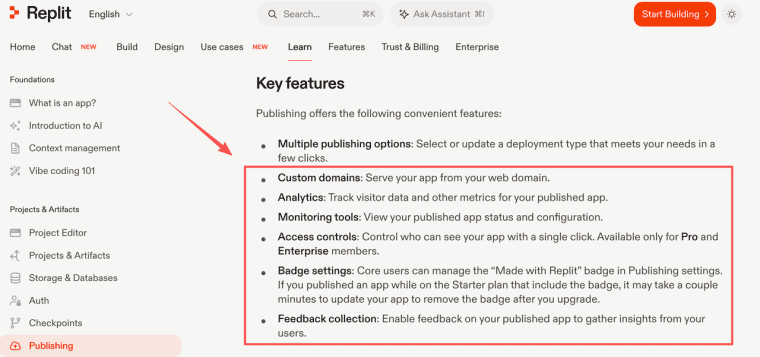
Publishing creates a running snapshot, with autoscale, static, reserved VM, and scheduled options. Replit's publishing model includes domains, analytics, monitoring, and plan-dependent access controls. Budget Agent use separately from compute, storage, database, network, APIs, and maintenance. Current documentation places standard deployments in the United States; verify regional requirements.
Builder-Managed or Code-Export Route
Choose builder-managed when one operating surface matters most. Choose code export when developer takeover is likely and the team can maintain dependencies, secrets, and deployment. Test either route with a handoff rehearsal: can a second person restore service from the brief, credential inventory, billing map, and recovery steps?
Which Option Fits a Founder MVP?
Pick HappySeeds for a focused conversational Web workflow; Bubble for deep visual control; Base44 for managed infrastructure; Lovable for GitHub handoff; Bolt for browser code inspection; and Replit for a code-centered build-and-run environment. That is more useful than asking for the easiest way to build SaaS with AI. Easy in hour one and manageable in month six are different things.
Costs and Operational Trade-Offs
Model builder fees, credits or tokens, deployment, storage, model calls, email, payment fees, monitoring, support, and rework. Price a month with ten customers, one hundred jobs, three payment failures, and an urgent fix. Recheck live prices before purchase. This is not legal, tax, or financial advice.
When HappySeeds May Be Worth Considering
HappySeeds deserves a closer look when a founder can describe one paid Web workflow and wants to build, publish, and test it without starting in a code-first environment. Data boundaries, user roles, Stripe behavior, and the published experience still need deliberate testing.
A future developer handoff does not rule HappySeeds out. Code export and GitHub sync are available on eligible Lite and Pro plans; confirm current eligibility on the HappySeeds pricing page before choosing a plan. This allows a project to be exported or synced to a repository controlled by the founder or development team.
That repository improves the handoff path, but it does not guarantee a dependency-free migration or fully independent deployment. If the app may later run outside HappySeeds, ask the receiving developer to verify separately stored data, credentials, environment variables, third-party services, hosting dependencies, and the complete build and deployment process. Private deployment and formal team governance should be evaluated as separate requirements.
Then compare the same reporting workflow in HappySeeds and one contrasting candidate, including the second role change, failed-payment recovery, and developer handoff.
Choose the Builder That Survives the First Failed Payment
The right founder MVP is not the app with the fastest first reveal. It is the smallest paid workflow the team can explain, test, support, and change without losing customer state. Use the six builders above as different operating models. Then make the choice after the role change, billing failure, and handoff test, when the real work has finally shown itself.
Explore More Topics:
FAQ
Can a builder run an invite-only customer pilot without a public signup flow?
Often, through manual accounts, invitation links, an allowlist, or restricted deployment access. Verify the plan and test expired, reused, and forwarded invitations.
Can an AI SaaS builder support usage-based billing as well as subscriptions?
Some builders can connect to payment providers that support metered or usage-based billing, but the builder must also record usage accurately, prevent duplicate events, enforce plan limits, and handle delayed or disputed measurements. Test the complete billing cycle before promising usage-based pricing. A checkout screen alone is not enough.
Can a buyer take over the builder account after an acquisition?
Do not assume so. Check transfer rules for accounts, projects, domains, billing, repositories, and service accounts. A buyer also needs exports, secrets, contracts, and a dependency inventory.
Can a founder move an MVP to another AI SaaS builder later?
Possibly, but rarely through a direct project transfer. Customer records, uploaded files, domains, payment accounts, analytics history, and authentication data may need separate export and migration work. Code export can help, but it does not automatically transfer managed databases, secrets, deployment settings, or platform-specific workflows.
Can one SaaS product use different models for different plans?
Many products can route plans to different models, but they must enforce entitlements, disclose meaningful differences, test fallbacks, and protect tenant data. Include the added evaluation and support burden.