Hi guys, I'm Elin. A founder looking at GLM-5.2 is usually not short on ambition. The pitch is tempting: long context, agent-style work, coding strength, structured outputs, and enough technical depth to imagine research assistants, internal tools, client portals, or coding helpers. But the first product decision is not "Which model is most powerful?" It is "Which user workflow becomes valuable enough to repeat?"
As of July 28, 2026, Z.ai positions GLM-5.2 around long-horizon work rather than short chat. That makes it interesting for an AI startup, especially one dealing with documents, codebases, research, or multi-step operations. It still does not remove the work of building accounts, data flows, permissions, pricing, support, and fallback.
What GLM-5.2 Gives App Builders
Long-horizon tasks, coding and agent-oriented signals, with details to verify
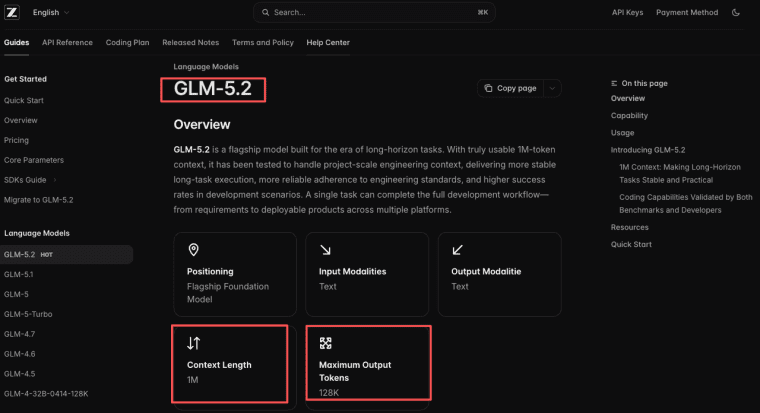
For founders who want to build AI app GLM-5.2 products, the strongest official signal is task shape. Z.ai presents GLM-5.2 around 1M context, 128K maximum output, thinking modes, function calling, context caching, structured output, and MCP-style integrations. In plain terms, it is designed for work that needs memory across a large file set, long instructions, or multiple steps. For editor-side agent work, the Codex Cursor plugin is a practical next step.
That points toward products where the model has to hold context: project audits, legal-style document review, research synthesis, large customer-support knowledge bases, software planning, or internal operations assistants. It also makes GLM-5.2 relevant for founders comparing a Chinese AI model against other providers for language, region, procurement, or technical reasons.
The safe boundary is important. Do not promise benchmark outcomes, latency, perfect code, or universal agent reliability. Treat GLM-5.2 as a model to evaluate against your own user task, not as a guarantee that the product will work.
Choose the Product Workflow First
Research assistant, document workflow, coding helper, internal tool, or client portal
A GLM-5.2 agent idea becomes clearer when the user workflow is specific. "AI research assistant" is still vague. "Upload five competitor reports, extract pricing signals, save the comparison, and generate a client-ready brief" is closer to a product. "Coding helper" is broad. "Review a pull request against the team's architecture rules and produce a structured risk report" is easier to test.
The same logic applies to a GLM API app. A founder should decide the input, the transformation, the output, and the next user action before choosing model settings. If the product is a client portal, the app needs intake forms, source uploads, saved reports, permissions, and export controls. If the product is an internal tool, the app needs role access, audit history, search, and a clear handoff to the human owner.
A common failure pattern looks like this: a founder connects a powerful model to a blank chat box and calls it a research assistant. Early testers try three unrelated prompts, get mixed results, and never return because the app has no saved project, no required input format, and no clear "done" state. The model may be capable, but the workflow gives users no reason to repeat it.
Long context is most useful when the app preserves structure. Dumping everything into a prompt is not a workflow. A better app knows which files matter, which customer record belongs to which project, which output version was approved, and which exceptions need human review.
API Access Is Not the Product
Accounts, data, permissions, payments, credits, analytics, and support
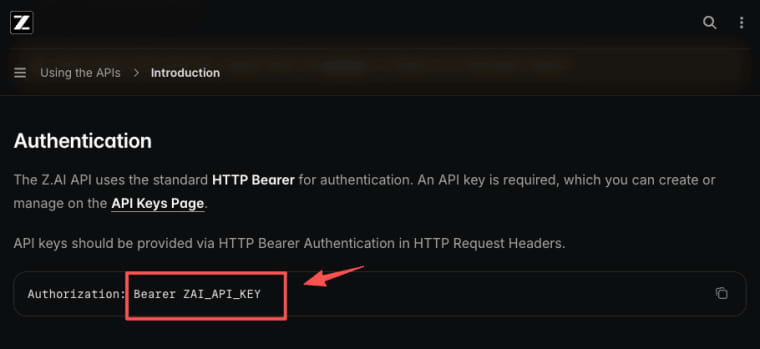
Z.ai provides standard HTTP API access with bearer-key authentication, and that is useful for developers. But API access is only the engine room. The customer does not buy an endpoint. The customer buys a repeatable result.
A sellable AI app builder experience needs user accounts, saved data, workspace permissions, billing, usage credits, analytics, and support. A founder building a document workflow, for example, needs to know who uploaded the file, who can view the summary, whether the output was accepted, and what happens when a user disputes an answer.
Credits should be tied to customer-visible tasks. A "full document review" is easier to price than a hidden mix of tokens, retries, and tool calls. Analytics should track completion, reuse, export, and support tickets, not only model usage. Support should capture the source input, model route, output version, user feedback, and whether a human corrected the result.
Cost and Availability Checks
Pricing, regions, limits, context use, retries, and fallback providers
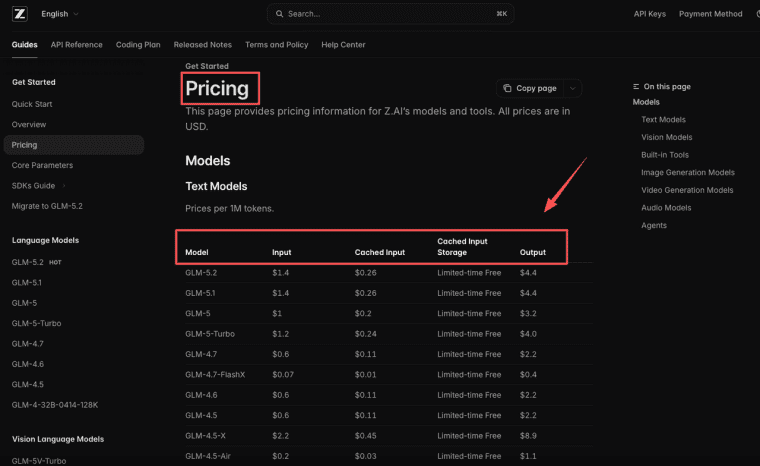
Cost planning should happen before launch copy. Z.ai currently lists GLM-5.2 token rates in USD, including input, cached input, and output pricing. Those numbers should be rechecked before publishing prices, because model pricing and promotions can change.
Long context also changes cost behavior. A task with many files, retries, and long outputs can be much more expensive than a short chat. A founder should test representative jobs, including messy real inputs, failed uploads, regeneration, and human-review paths. Cached input may help, but do not build margins on an assumption until the app logs actual usage.
Availability also needs a sober check. Region access, account eligibility, rate limits, quota policies, and plan rules can affect whether a model belongs in production. If a GLM-5.2 route fails or becomes too expensive, the product should be able to use fallback providers, lower-cost models, cached previous outputs, or a human review queue. The user should experience a managed delay, not a broken workflow.
MVP Path for Non-Technical Founders
One repeated task, one input format, one saved output, and one user feedback loop
The best MVP is narrow enough to explain without a demo. For a research product, choose one repeated task such as weekly market brief creation. Pick one input format, such as uploaded PDFs or pasted URLs. Save one output, such as a structured brief with citations and decision notes. Add one feedback loop, such as accepted, edited, rejected, or needs human review.
A stronger pilot looks smaller. One consulting founder might ask five existing clients to upload the same type of monthly operating report, generate one structured risk summary, and mark each section as useful, edited, or wrong. Even before scaling, that pilot teaches pricing, review burden, input quality, and whether the workflow deserves its own product interface.
This keeps the model evaluation honest. If users do not return, the issue may be weak workflow value, not GLM-5.2 quality. If users return but complain about missing context, the app may need better source organization. If users like the output but refuse to pay, the app may need a sharper buyer or a higher-value deliverable.
For a non-technical founder, the job is not to become an API engineer. The job is to define the repeated business process clearly enough that an AI app builder can turn it into an interface, a database, a credit system, and a supportable launch path.
Conclusion: Build Around the Repeatable Job
GLM-5.2 can be a serious model candidate for long-context and agent-oriented apps, but the product has to stand on its own workflow. Start with one repeated task, prove that users save or earn enough to care, measure real cost, and keep fallback ready before treating the model as the foundation of a commercial app.
Explore More Topics:
FAQ
Who should own provider-account access?
Provider access should belong to the business entity, not a personal founder login. The account owner should control API keys, billing, permission changes, and offboarding. Contractors can help build the product, but production credentials should stay inside a managed access process.
Can procurement teams request model-use records?
Yes. Enterprise buyers may ask which model handled a task, what data was processed, when the output was generated, and whether a human reviewed it. The app should keep model-use records at the project or workspace level so procurement and security reviews do not depend on memory or screenshots.
How should canceled accounts handle retained outputs?
Canceled accounts need a retention rule before launch. Some customers may expect exports to remain available for a period, while others may request deletion. Z.ai's API-related terms place responsibility on builders for end-user systems, data security, content handling, and compliance, so retention promises should match your customer agreement and local rules.
When should model notes be translated for customers?
Translate model notes when customers need to understand provider use, review boundaries, or data handling in their working language. This is especially important for cross-border teams evaluating a Chinese AI model. Do not translate technical claims loosely. Keep capability, limitation, and provider references consistent across languages.