
It's Elin. I built three things this year that worked great right up until a real person touched them. Two were mine. So when someone asks me how to go from a Claude Artifact to an AI app — an actual product with users, payments, and a name that isn't a random URL — my first reaction isn't excitement. It's "okay, wait, what are you about to lose?"
Because there's one thing in this migration that can quietly delete months of work, and almost nobody mentions it until it's already gone. I put it in the second section, before everything else, on purpose.
This isn't a "what are Artifacts" post. You already built one. You already decided a shared link isn't enough. This is the execution path: what to check, what to move, what to rebuild, and how to keep the thing your prototype already proved.
The 30-second version
- Export your data first. Unpublishing an Artifact permanently wipes its stored data. This is the step people skip.
- Audit what the prototype actually validated before assuming all of it transfers.
- Rebuild the boring foundations — identity, durable data, app payments, a custom domain — that Artifacts deliberately don't hand you.
- Don't promise yourself a clean one-click move. Some of it carries over. Some of it you rebuild. Plan for both.
Audit What the Artifact Has Already Validated
The most valuable thing your prototype produced isn't the code. It's the evidence. Before you migrate anything, get honest about what that evidence actually covers. Context-heavy work can use the Codex Context7 path.
User problem, interaction, and evidence
Claude Artifacts are unusually good at proving one narrow thing: did a real person use this, and did the core interaction make sense to them? That's a genuinely useful signal — but it's a smaller claim than "this is a business."
I'd write two columns before touching the migration:
| Probably validated | Probably still assumed |
| The core interaction is understandable | People will pay for it |
| The problem is real enough to click into | It works under load with many users |
| One happy-path flow holds together | Your data model survives real edge cases |
| The output is good enough to share | Retention beyond first use |
The point isn't pessimism. It's that you should rebuild around what's proven and treat the rest as open questions the launch still has to answer. I got this wrong on an earlier project — I treated "people tried it" as "people want it," and the gap cost me a month.
Export and Protect Your Data Before Anything Else
This is the part I move ahead of everything, because it's irreversible and most migration guides bury it in a checklist.
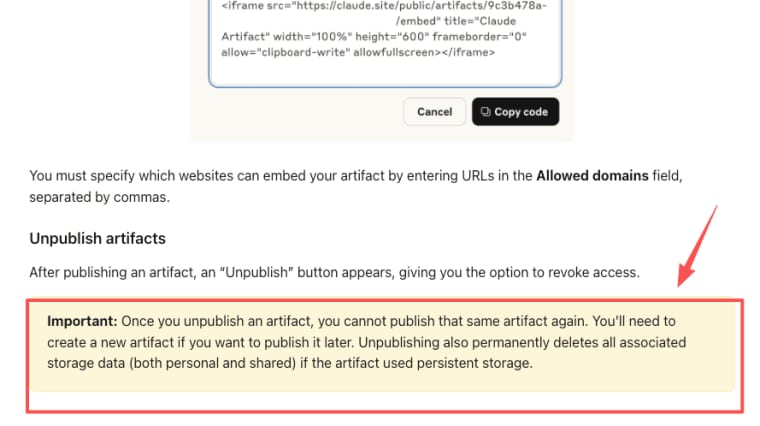
Per Anthropic's official publish-and-share documentation: unpublishing an artifact permanently deletes all associated storage data — both personal and shared — and you cannot publish that same artifact again afterward. There's no undo on either of those.
So the order of operations is non-negotiable: export everything before you unpublish or migrate. Pull the stored data out, save it somewhere durable, confirm it's actually readable, and only then move on.
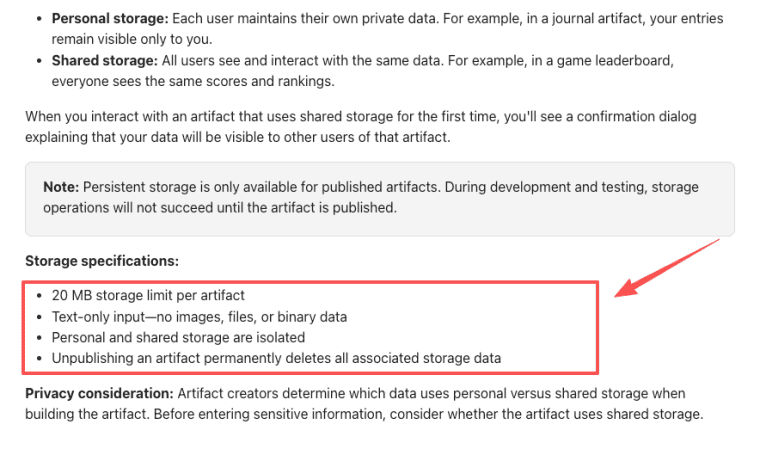
I also re-read the official Claude help center for artifacts before writing this: persistent storage maxes out at 20MB per artifact, text-only, and only works on published artifacts — storage calls silently fail during development. Don't let this catch you in the middle of a migration.
Define the Commercial Product Around It
Here's where the prototype stops being the plan. To monetize an AI app, you have to decide what the product actually is — separate from the demo that got you here.
Five questions I'd answer in writing first:
- Who is the paying user (not the curious clicker)?
- What's the repeat reason they come back?
- What's the access model — free, freemium, gated, per-seat?
- What's your value metric — the thing usage scales with?
- What's the monetization hypothesis, stated plainly enough to be wrong?
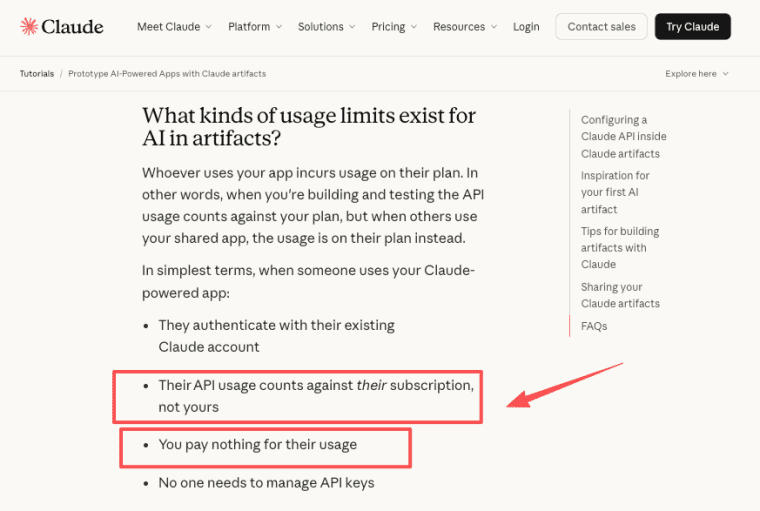
Worth understanding clearly: the Artifact billing model is not a monetization model. Per Anthropic's guide to prototyping AI-powered apps, when someone uses your Claude-powered artifact, their usage counts against their own subscription, and you pay nothing. That's brilliant for free distribution. But it also means you collect nothing. The moment you want revenue, billing becomes your job, not the platform's.
Add the Product Foundations the Business Requires
Artifacts intentionally skip the unglamorous infrastructure. A commercial product can't. This is the layer you're really building.
Identity, permissions, and durable data structures
You need real accounts, real roles, and a data model that won't fall over when usage isn't a single happy path. The prototype's storage was fine for a demo. A product needs proper authentication, permission boundaries (who can see and do what), and a schema designed for the edge cases your audit flagged as "still assumed." Get this layer wrong and everything above it wobbles.
Payments, branding, domain strategy, SEO, and analytics
This is the commercial skin, and each piece is its own small project.
App payments are where most non-technical founders underestimate the work — taxes, refunds, failed charges, subscription state. You don't have to build it from scratch; a provider like Stripe handles the hard parts, and Stripe's billing documentation is honestly worth reading before you design your pricing, not after.
A custom domain is the cheapest credibility upgrade you'll make. A product on yourname.com reads as a real thing; a product on a shared platform URL reads as a side project, fairly or not. Sort this early so your branding, emails, and links all point to the same home.
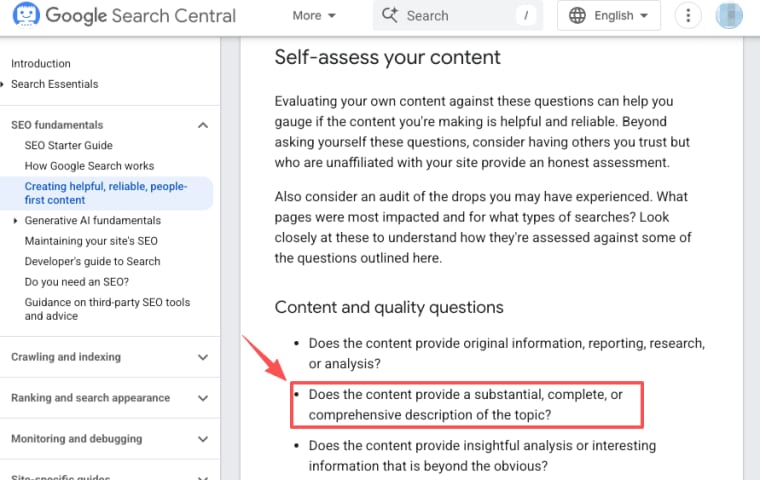
Then SEO and analytics. If you want organic discovery, structure matters from day one — Google's own helpful content guidance leans hard toward content with real experience behind it, which is exactly the kind of thing a tool-with-a-story can offer. And add analytics before launch, not after, or you'll be guessing about the very behavior you migrated to learn.
Decide What to Reuse and What to Rebuild
Anybody promising a lossless, fully-compatible migration is selling you something. Here's how I'd actually sort it.
- Interface and interaction logic — usually the most portable. You can copy the artifact's code out into your own editor and keep the parts that worked.
- Platform-specific glue — the least portable. The Artifact storage API, any MCP connections to external services, and the in-artifact Claude calls are tied to that environment. Expect to re-implement these, not move them.
- User data — portable only if you exported it first (see above). Otherwise it's gone.
- Trust and learnings — fully portable, and the most valuable. What you learned about your users travels even when no single line of code does.
My rule of thumb: reuse what encodes a decision you already validated, rebuild what was only ever scaffolding. I've wasted more time force-fitting old prototype code than I ever saved by reusing it.
Launch Without Losing the Learning From the Prototype
The trap at the AI app launch stage is treating it as a fresh start. It isn't — you already have signal, and you want to protect it.
A staged rollout beats a big-bang reveal here. Bring a small group through first, ideally including people who used the original prototype, and watch where the new version behaves differently. Keep a support channel open and embarrassingly responsive in week one. Treat the first real bug reports as a gift — someone caring enough to report means they cared enough to use it.
On running both versions: be deliberate. If the prototype is still published, decide consciously whether to keep it live during transition or retire it, and tell its existing users which one to use. Anthropic's guide to publishing and sharing artifacts is worth a re-read for exactly how publish and unpublish behave, since link access changes the moment you flip that switch. And don't expect day-one revenue to validate anything — early launch numbers tell you about your launch, not your product. Give it enough runway to mean something.
So what's the actual move?
Going from a Claude Artifact to an AI app isn't one decision — it's a sequence, and the order protects you. Export before you unpublish. Audit before you assume. Rebuild the foundations the demo skipped. Reuse the lessons, not necessarily the scaffolding.
If you only do one thing this week, do the boring one: go export your data and confirm it opens. Everything else in this list can wait a few days. That one can't. The second build is almost always better than the first idea — but only if the first one's hard-won data is still around to learn from.
Platform behavior here was checked against Anthropic's official documentation as of June 2026. Storage limits, publishing rules, and billing details change — verify the latest on the official help pages before making production decisions.
Explore More Topics:
FAQ
How should founders communicate with existing Artifact users during migration?
Reach them before you change anything, not after. Your leverage is the shared link and any channel you collected them through — if you didn't collect contact info, that's a lesson for the new version. Tell them plainly what's moving, what they need to do, and by when. Vague "exciting changes coming" messaging makes people nervous; specifics make them cooperate.
What happens to public links and shared access after unpublishing an Artifact?
Unpublishing takes the public version offline and, as noted above, permanently deletes any persistent storage tied to it. Anyone holding the old link loses access. Because platform link structures have shifted before without much warning, don't treat any existing public URL as a permanent address — which is exactly why a custom domain you control matters for the real product.
Should the original Artifact be kept running after launching the new app?
Only if it's clearly labeled as the old version with a visible pointer to the new one. The risk isn't technical — it's that users split between two "current" versions will assume both are supported, which means you're maintaining two products. A prototype that lingers without a sunset date usually competes with the thing you actually want people using.
How can teams minimize user confusion when running both versions temporarily?
Pick one as the source of truth and say so everywhere. Don't sync features between them — that's a maintenance trap. Put a one-line banner on the old version pointing to the new, set a sunset date, and stick to it. Confusion compounds the longer two "current" versions coexist.


