I clicked "Publish" on my first Claude Artifact at about 11pm, mostly to see what would happen. Twenty minutes later a friend was using the little expense tracker I'd built, on her phone, without a Claude account. That's the moment what Claude Artifacts actually are clicked for me — not a code preview, a thing other people can use.
So here's the honest version. I've broken a couple of these, I went and re-read the official docs before writing this because the rules around storage and publishing changed and I didn't want to hand you a stale number. Hi, Elin here. This walks through what you can build, how publishing and sharing work, what the data limits really are — and the one boundary that matters most: where an Artifact stops and a real product begins.
What Are Claude Artifacts?
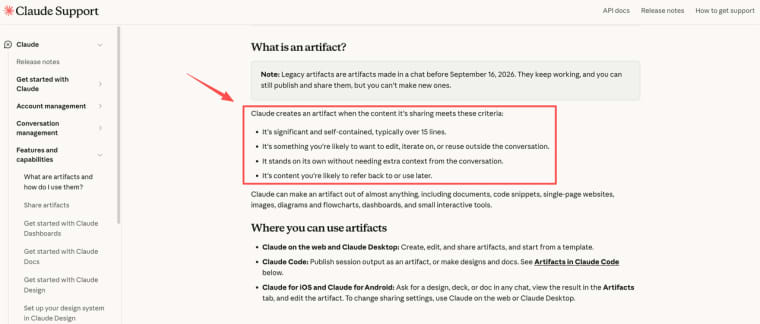
A Claude Artifact is a self-contained piece of content Claude builds and renders in a side panel next to your chat — code, a document, a chart, a webpage, or a working interactive tool. Instead of a wall of text you have to copy out, you get something you can see, click, and edit in place. Claude opens one automatically when the output is substantial and stands on its own (roughly 15+ lines), per the Claude Help Center on artifacts.
More than documents and code previews
This is where most people stop short. They see an artifact pop up, assume it's a fancy code box, and close the tab. But artifacts Claude now generates can hold their own state, call Claude's own intelligence, and connect to outside services. The "what is artifacts" question has a different answer than it did a year ago — it went from preview panel to something closer to a tiny app environment.
What You Can Build With Claude Artifacts
The range surprised me — I went in expecting documents and ended up building a game. Here's what's on the table: documents and data visualizations, HTML pages and React components that actually feel like an app, and calculators, quizzes, games — anything interactive.
Then there's the category that changes the math: AI-powered artifacts. Claude can run inside the artifact as the reasoning engine — a language tutor you chat with, a code reviewer that gives feedback. Anthropic's own guide to prototyping AI-powered apps lays out how: basically, ask Claude to use Claude. No API keys to wrangle.
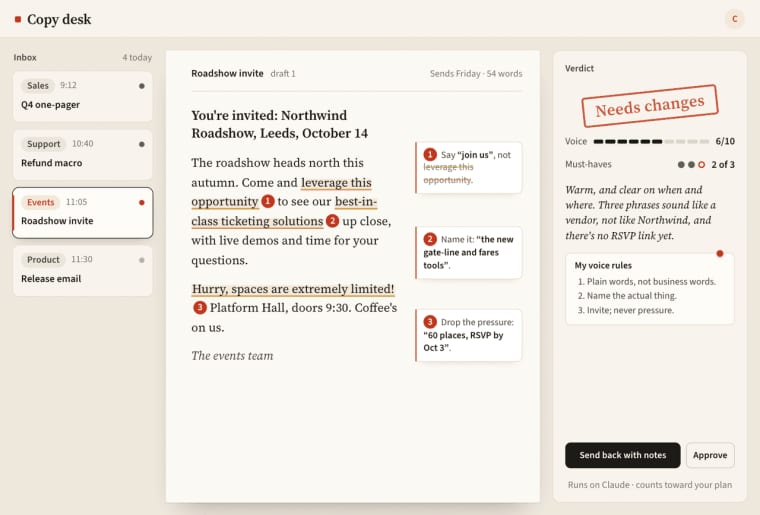
This is the part that makes "Claude app builder" a fair description rather than marketing. You describe a tool in plain English; you get a working one.
How Creating and Iterating Works
To try another direction, edit an earlier message and branch the conversation. Legacy artifacts have code-view and copy controls; template artifacts support direct editing. In docs and Markdown, highlight a section and use "Edit with Claude" to change it. The thing I'd tell past-me: small, surgical prompts beat big vague ones. "Add a pie chart by category" works. "Improve the visualization" sometimes triggers a full rewrite that nukes your working logic.
Publishing, Sharing, and Plan Boundaries
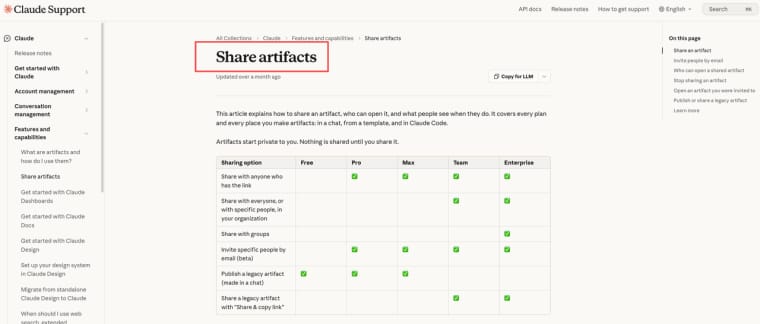
Before sharing, check which kind of artifact you have. Anthropic calls chat artifacts created before September 16, 2026 "legacy artifacts." On Free, Pro, and Max, these still support public links without sign-in for non-AI use. Its sharing guide says new shared artifacts require a Claude account; legacy AI features require one too.
Public publishing vs organization-only sharing
This is where the plan you're on changes what's possible, and it's worth getting right before you build something to share.
| Artifact type | Who can open it? | Claude account needed? |
| Legacy artifact published on Free, Pro, or Max | Anyone with the link | No for non-AI features; yes for AI features |
| New artifact shared through an eligible link setting | People with the link | Yes, according to the sharing guide |
| Team or Enterprise artifact | Organization members by default; eligible external access with owner approval | Yes |
Team and Enterprise keep artifacts inside the organization by default, but an owner can allow external sharing. Check the Share menu: new artifacts that use Claude or connected apps cannot use “Anyone with the link,” even when external sharing is enabled.
For a legacy published chat artifact, unpublishing permanently deletes its storage and prevents republishing that same artifact. Export anything you need first. New artifacts use separate sharing settings.
Data and External Services in Current Artifacts
The old line that artifacts are stateless, isolated toys is just out of date now. Two upgrades changed that.
Persistent storage and MCP connections
Persistent storage lets an artifact remember things between visits — a journal that keeps your entries, a tracker that holds its state. The verified specs, on October 21, 2026: up to 20MB per artifact, text/JSON only, available on Pro, Max, Team, and Enterprise plans. Two flavors: personal (each user's data is private to them) and shared (everyone using the artifact sees the same data pool, like a leaderboard).
The publish-first rule applies to legacy artifacts. New artifacts can save data before publication. For legacy storage, Anthropic says operations won't succeed until publication; it doesn't say they always fail silently. Check that an entry survives a reload before relying on it.
MCP connections
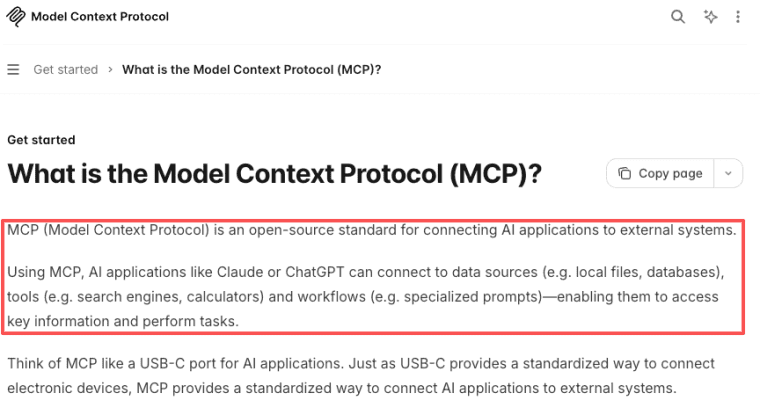
Let an artifact reach external services — Google Calendar, Slack, Asana — on Pro, Max, Team, and Enterprise. The Model Context Protocol documentation explains the standard. Each user authenticates MCP servers independently, even for a shared artifact. They're not piggybacking on yours.
Where Artifacts Fit — and When You Need More Than One
Artifacts are spectacular for the inside-the-conversation loop: prototype, validate, share a link, watch someone use it, iterate. Nothing gets you there faster.
An artifact may be enough for a small shared tool. For a customer product, check how you’ll handle accounts, business records, payments, a domain, and support. Work out which requirements the artifact meets and which need another system.
AI use draws on each viewer's Claude plan limits. That affects access and usage, but doesn't establish whether your tool can be sold. If search traffic matters, check which public pages, URLs, and SEO settings you control.
You Already Know Enough to Break One
That's not a throwaway line. Open Claude and ask for something small — a tracker, a calculator, a dumb little game. Try it with invented data, check what survives a reload, then look at the sharing options. That's where the useful questions start.
Plan availability, storage specs, and publishing rules described here were checked against the official Claude documentation as of publication. These details change; verify the latest on Anthropic's official help center before relying on them.
Explore More Topics
FAQ
When someone uses my AI-powered artifact, whose Claude usage does it consume — mine or theirs?
Theirs. Each viewer authenticates with their own Claude account and the AI usage counts against their subscription limits, not the creator's. On Team and Enterprise, org members can use a shared AI-powered artifact without adding cost to whoever built it. Worth knowing if you're designing a tool for a big audience.
What actually happens to stored data and the link if I unpublish?
For a legacy published chat artifact, unpublishing removes access, permanently deletes personal and shared storage, and prevents republishing. Export first. New artifacts have separate sharing controls.
Can an artifact I make on a Team or Enterprise plan be published publicly?
External sharing may be available with owner approval, depending on the artifact. Outside viewers need Claude accounts. New artifacts using Claude or connected apps cannot use "Anyone with the link," so check the owner policy and available sharing options.
What should I check before putting sensitive data or external connections into an artifact?
Two things. First, whether the artifact uses shared storage — because shared means other users can see that data pool. The creator decides personal vs. shared when building it, so look before you type anything private in. Second, for MCP, remember each person connects their own accounts. For anything genuinely sensitive, treat the official privacy and security documentation as the source of truth, not a blog — including this one.