Elin here. I've started maybe nine little apps this year. Three of them broke in production — two were mine. So when someone asks me whether you can really build an AI app without coding and actually charge for it, I don't say yes or no. I say: depends on whether you treat it like a launch or like a magic trick.
Right now everyone's talking about Codex, and the takes are getting weird — half "coding is dead," half "it's just autocomplete." Neither is the thing you need if you're a founder who's decided you're done managing code and you want to get to a paying user. This isn't a tool roundup. It's the workflow I'd hand someone who wants to go from a rough idea to something real, on a platform built around turning an idea into a publishable app with login, data, payments, and a domain already wired in.
Why "Build AI App Without Coding" Still Needs a Plan
Here's the thing I got wrong the first time. I thought "no coding" meant "no thinking." So I prompted my way into a week of building the wrong thing, because I never decided what the app was actually for.
A plan isn't bureaucracy. It's the difference between "make me an app" and "make me a screen where a coach uploads a client's intake form and gets back a draft plan they can edit." The second one a builder can actually deliver. The first one gives you a pretty shell with no spine.
The better AI app builders front-load a planning step that outlines pages, flows, and acceptance criteria before generating anything. Boring? Kind of. But "acceptance criteria" is just a fancy way of saying what done looks like before you started. That's the step non-technical people skip, and it's the step that decides whether you ship.
What Codex Can Help With and Where It Stops
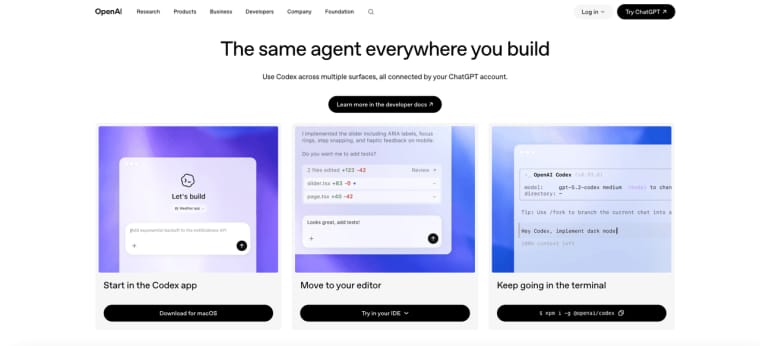
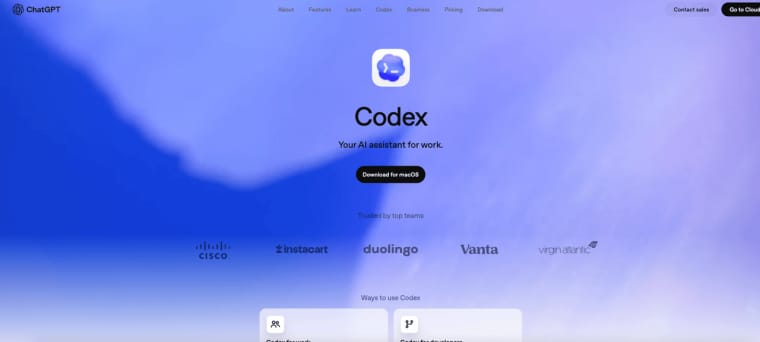
Let me be fair to Codex, because the "it's just a CLI" crowd is wrong. I pulled up OpenAI's own materials before writing this — as of June 2026, Codex runs across the terminal, IDE plugins, the web, and a desktop app, with the desktop version acting as a command center for running multiple agents in parallel on long tasks.It now has more than 5 million weekly active users, up more than six times since OpenAI launched the desktop app in February 2026. And Gartner named it a Leader in the May 2026 Magic Quadrant for Enterprise AI Coding Agents — alongside GitHub Copilot and Cursor, to be precise, but Leader placement in a first-year evaluation is a real signal. This is a serious agentic system, not a toy.
So where does it stop for you?
Codex is an engineering tool. It writes code, runs tests, fixes bugs, opens pull requests. That's its whole world. It doesn't hand a non-coder a hosted app with a payment flow, a login system, a custom domain, and an SEO setup all standing up and talking to each other. You'd still be the person stitching infrastructure together — and if you can't read the code it produces, you can't tell when it's confidently wrong.
That's the honest gap. Codex shortened "writing code." It didn't shorten "becoming a product company." For a founder who wants revenue, the second one is the hard part.
Codex vs AI App Builder: The Core Tradeoffs
| OpenAI Codex | AI App Builder | |
| Primary user | Developers / technical founders | Non-technical founders, creators, consultants |
| Input | Natural language + existing codebase | Natural language description of idea |
| Output | Code diffs, pull requests, test results | Deployed app with frontend + backend |
| Payments | You configure (e.g. Stripe integration) | Usually built-in or guided |
| Hosting / domain | You manage | Usually included |
| Login / auth | You build or import | Usually included |
| When it stops | Code is done; infrastructure is yours | Platform limits on customization |
| Maintenance | You own the codebase | Platform manages infra |
| Best for | Extending a real product, technical teams | Validating ideas, solo founders, fast launch |
As of June 2026. Both categories are evolving fast — verify current capabilities on each platform's official docs.
The Non-Technical Founder Workflow
So here's how I'd actually run it. The whole point of the non-technical founder workflow is to never touch the part Codex is good at, and own the part it can't do for you: deciding what to build and getting it in front of someone who'll pay.
Plan the app before generating anything
Before you generate one screen, answer four things in plain language: who uses this, what's the one thing they do, what data does that need, and what happens when they're done. That's it. If you can't answer them, the prettiest AI app builder on earth won't save you — it'll just generate your confusion faster.
Then start from a template if one fits. I do this constantly. A rough thing that exists beats a perfect idea stuck in my head, and a template gives you something to react to instead of a blank prompt box. Most AI app builders in 2026 ship a template gallery for exactly this reason — use it.
Connect data, payments, and user feedback
This is where "demo" becomes "product." Real data first — not placeholder screens, because placeholder screens lie to you about whether the thing works.
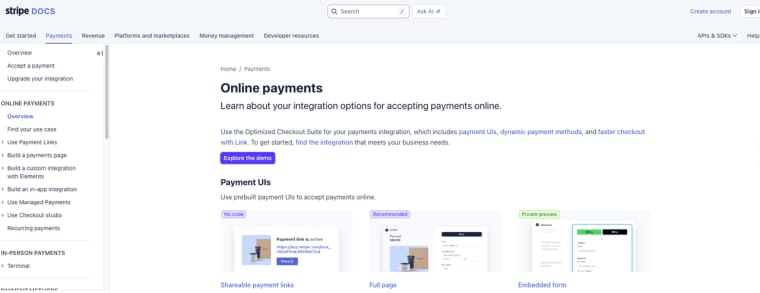
Then AI app payments. I'm going to be careful here, because I haven't stress-tested every payment edge case myself, and payment rules genuinely change. What I'll say is what I checked: most platforms route money through a processor like Stripe, and Stripe's own docs show you can accept online payments with a prebuilt checkout page or a shareable link, even without a full website. Read Stripe's online payments overview so you understand what your platform is actually doing under the hood. Don't just trust the "payments: on" toggle. And build a feedback channel into v1 — your first ten users tell you more than another month of building.
From Prototype to Revenue
The trap here is thinking "it published" means "it makes money." It doesn't. Publishing is the start of the experiment, not the finish line.
Publish, test, price, and iterate
When you publish your AI app, do one annoying thing I almost always rush: open the live public URL in a clean browser tab and click through it like a stranger would. Half my "bugs" were me trusting the editor instead of the live thing.
On pricing: I'm not giving you a number, and not because I'm being coy. Pricing pages move, and I'd rather you check the current one than quote a stale figure. Pick a price, charge real money to a few real people, and watch what happens. That's validation. Free users clapping is not. If you want a framework for thinking about this, the Gartner Enterprise AI Coding Agents market context — a $9.8–11B category as of April 2026 — is a useful reminder that "AI-powered" is table stakes now, not a differentiator. What differentiates you is the specific job you solve for a specific person.
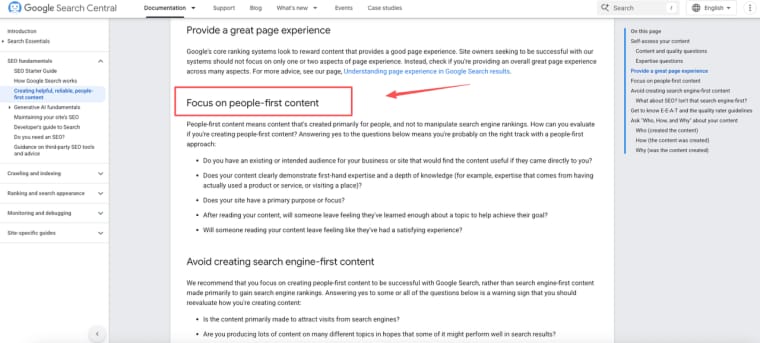
And don't skip SEO and the custom domain — they're how anyone finds the thing without you DMing them. But write the pages for humans. Google's own guidance is blunt that it rewards content showing first-hand expertise — their people-first content page is worth ten minutes. Same logic as your app: real beats polished-but-empty.
Then iterate. Mine are always a little unfinished. That's fine. Finished enough is a real category.
You don't need permission to build an AI app without coding. You need a plan, one paying user, and the patience to fix what breaks after launch. Pick a template this week, define one job for one person, and publish the rough version.
Explore More Topics:
FAQ
Can I build an AI app without coding?
Yes, in the sense that you don't write code. No, in the sense that you stop thinking. You're still the one defining the user, the value, and the business model — the tool can't decide those for you. "Without coding" removes the syntax, not the judgment. The planning step is still yours.
Can Codex handle payments and publishing for me?
No — and this is the misconception worth clearing up directly. Codex is a coding agent: it writes and reviews code across the terminal, your editor, and a desktop app. Hosting, payment setup, domain configuration, and going live are product concerns it doesn't package up for a non-coder. It assumes someone on your team can wire those pieces together. If that's not you, you want an AI app builder, not a coding agent.
What should founders verify before charging users?
The boring legal stuff, and I won't pretend otherwise: terms of service, refund handling, what data you store, and your payment processor's requirements for your country and product category. I'm not a lawyer and platforms differ — confirm this against current official documentation, not a blog (including this one).
When should I use an AI app builder instead of managing code?
Use an AI app builder when your bottleneck is getting to a usable product fast, and move toward managing code when your bottleneck becomes scaling or customizing past what the platform allows. Most founders quit way before they hit that second wall. Validate the business first; you can always graduate to a more technical stack later.