
Elin here. I spent a weekend last month comparing model leaderboards instead of shipping the thing I was actually supposed to ship. Very on brand for me. I had three tabs open on opus 4.8 benchmark scores, a half-finished comparison spreadsheet, and a slow, sinking feeling that I was measuring the wrong thing entirely.
Here's what finally got me to close the tabs: the number that makes a model look good on a chart almost never tells you whether your app will work for the person using it. I've broken enough small products to know the gap between "this model is smart" and "the user got what they came for" is wide. Wider than a leaderboard can show.
So this is the post I wish I'd read before the spreadsheet — what benchmarks tell you, what they quietly leave out, and what to track instead when you're building a product and not writing a research paper.
Short version: Benchmarks measure raw ability on standardized tests. They don't measure whether your app finishes the job your user came to do. For a product, watch task completion, response time, cost per task, and how the model behaves when it fails — not the leaderboard ranking. Check the official numbers, then build a tiny test on your own use case.
Why model scores often mislead product decisions
A benchmark is a standardized exam run under controlled conditions. Your app is not a controlled condition. It's a real person typing something half-formed at 11pm and expecting a useful answer.
One score also compresses a huge amount into a single digit, which hides the trade-offs. A model can be sharper at math and worse at following your exact formatting rules, and the headline number won't tell you that.
And scores move for reasons that have nothing to do with the model getting smarter. The test harness matters as much as the model. In the Opus 4.8 launch notes, Anthropic mentions it changed how it runs one evaluation (OSWorld-Verified) — a bug fix and a methodology adjustment — and updated the previous model's score on that same eval as a result. Same model, different number, depending on which version of the test you're reading. The specific updated figure is in the official system card footnotes, and that's the only place I'd trust it. That alone should make you cautious about reading too much into any single figure.
I checked, and the actual Opus 4.8 benchmark figures live in Anthropic's official Opus 4.8 system card — that's the source to trust, not a third-party table. I'm not reprinting scores here, partly because they shift between versions and harnesses, and partly because they won't answer the question you actually have. Some people search for the Claude Opus 4.8 benchmark, expecting one clean verdict. There isn't one.
Metrics that actually matter for AI apps
The AI app success metrics worth your attention are the ones that predict whether people come back. Even the researchers don't trust a single accuracy score: Stanford's Holistic Evaluation of Language Models project grades models across multiple dimensions — accuracy, calibration, robustness, efficiency, and more — precisely because one number hides too much. If Stanford won't rely on a single figure, your product shouldn't either.
Task completion, response time, failure recovery
| What benchmarks measure | What your product actually needs |
| Correct answers on standardized coding tasks | Task completion on your real user inputs |
| Performance under lab conditions | Latency your users will tolerate |
| Raw capability ceiling | Cost per completed task, including retries |
| Answer accuracy | Failure mode — does it say "I'm not sure" or fabricate? |
| A model's general intelligence | Whether users come back and pay |
Task completion. Did the user get the outcome they wanted? Not "was the response technically correct" — did the job get done. This is the metric that maps most directly to whether someone keeps paying.
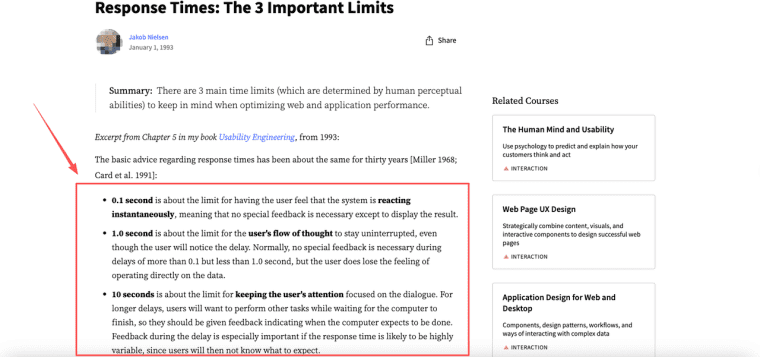
Response time. People feel slowness before they feel intelligence. The Nielsen Norman Group's response-time thresholds still hold: about 0.1 second feels instant, 1 second keeps your flow, and past 10 seconds attention drifts and people leave. LLM apps blow through these constantly, which is why streaming output and honest loading states matter more than a couple of benchmark points.
Failure recovery. Models fail. The real question is what happens next. I once shipped something that worked 95% of the time and still felt broken — because the other 5% failed silently instead of retrying or just saying "I'm not sure." A graceful fail beats a confident wrong answer, every time.
Watch cost per task too. I always re-check the pricing page before I quote a number, because it changes — but the point stands: a slightly better model that costs several times more per call can quietly wreck your unit economics.
How to evaluate a model for your specific use case
Here's the honest answer to how to evaluate an AI model for a product: stop reading leaderboards and build a tiny eval from your own use case. Twenty to fifty real examples — your actual messy inputs, not benchmark-style clean ones — run through each candidate model, graded against your own definition of "good."
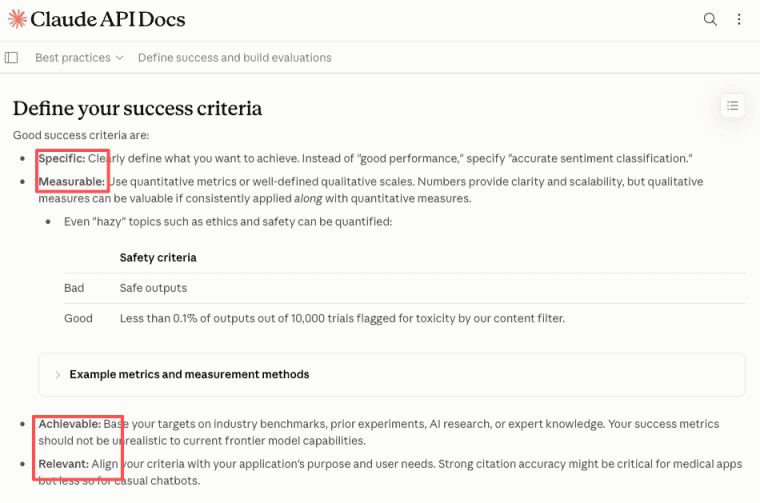
This isn't me being fancy. Anthropic's guide to defining success criteria says the same thing in more formal language: be specific, be measurable, mirror your real task distribution, and don't forget the edge cases. Task completion rate and A/B testing against a baseline are right there in their own list.
Common benchmark traps founders fall into
So, do benchmarks matter for apps at all? Yes, as a rough first filter to rule out models that are clearly out of their depth. No, as the thing you base a build decision on. The traps are where people get burned:
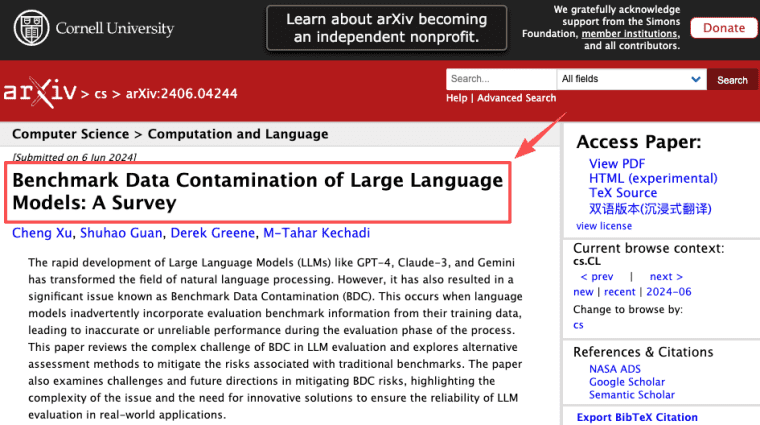
- Contamination. When test data leaks into training data, scores inflate without real ability improving. A 2024 survey on benchmark data contamination catalogs how widespread this problem has become, enough to make some model comparisons unreliable. A high score can mean memorization, not skill.
- Harness shopping. Labs tend to report the test setup that flatters their model. In its own Opus 4.8 footnotes, Anthropic notes a rival model scores 83.4% on a coding eval under a different harness than the one used in the main table — same task, different framing, different number.
- Wrong domain. A coding benchmark tells you nothing about whether a model summarizes legal documents well. Match the benchmark to your job, or ignore it.
- Version chasing. Newest isn't automatically best for your task. Sometimes a cheaper, older model clears your bar and saves you money.
A practical evaluation process for busy founders
You don't need an ML team for this. Here's what I do:
- Write down what "done right" means for one core task, in one sentence.
- Collect 20–30 real inputs from actual or expected users.
- Run two or three candidate models at the same settings.
- Grade each on completion, latency, cost, and failure behavior.
- Ship the cheapest one that clears your bar. Re-run the test when a new version drops.
That's it. It takes an afternoon and tells you more than a week of leaderboard reading.
Treat every number — including any opus 4.8 benchmark figure you see quoted, here or anywhere — as something to confirm against the official system card before you stake a decision on it. Scores age fast, and they shift with the test setup. Your eval, on your own use case, doesn't. That's the one I'd trust.
Explore More Topics:
FAQ
What changed in prompt caching for Opus 4.8?
The minimum cacheable prompt length dropped to 1,024 tokens. Shorter repeating instructions now qualify for up to 90% savings. This helps more agent loops and RAG setups reduce repeated input costs significantly.
Can I update instructions mid-task without losing cache?
Yes. Opus 4.8 supports mid-conversation system messages in the Messages API. You can inject new instructions or context updates without breaking the prompt cache or restating the full system prompt.
How should I factor retries into my model evaluation?
Always include retry logic and failure recovery in your test set. A model with slightly lower raw accuracy but better self-correction often delivers lower total cost per successful task than one that fails silently.
Does benchmark performance translate to lower real-world costs?
Not always. A higher benchmark score can mean longer, more expensive outputs. Track cost per completed user task rather than raw accuracy. Sometimes a slightly weaker but more concise model saves more money at scale.


