Hi, my friends, I'm Elin. A useful Grok 4.6 vs DeepSeek V4 Pro comparison should not start with "which model wins?" Product builders need a narrower answer: which model fits the workflow, data shape, budget, review process, and user promise you are actually testing?
One source detail changed after the original brief: DeepSeek V4 Pro moved from its April 24 Preview release to an August 13, 2026 GA release in DeepSeek's own change log. That does not create a universal winner. It simply means the comparison should use current official status and still treat pricing, access, licensing, regional availability, and production contracts as launch-time checks.
What Each Model Offers Product Builders
Official access, inputs, context, reasoning, and tool support define the starting point
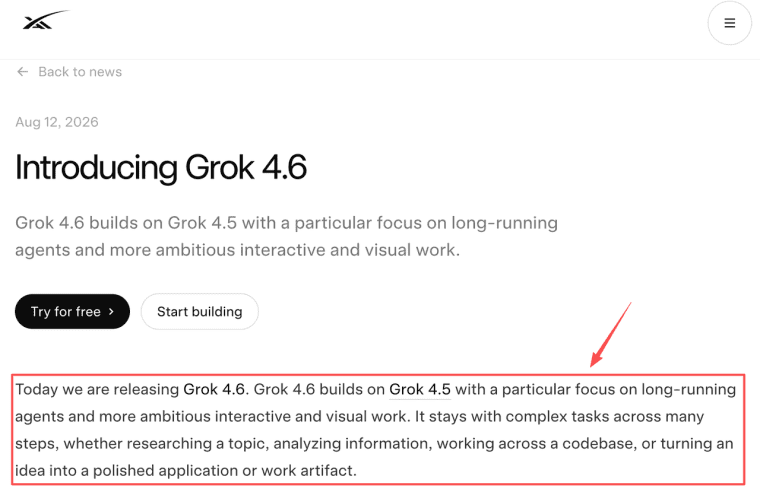
Grok 4.6 is positioned by xAI for long-running agents, coding, knowledge work, and more ambitious interactive or visual projects. The Grok API model materials list text and image input, a 500,000-token context window, function calling, structured outputs, reasoning, cached-token pricing, and regional model details for grok-4.6.
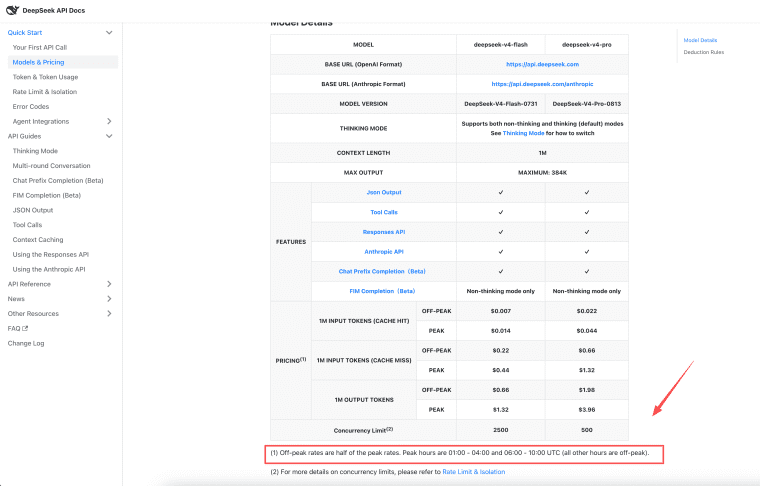
DeepSeek V4 Pro is now listed as DeepSeek-V4-Pro-0813, with 1M context, a maximum output of 384K, thinking and non-thinking modes, JSON output, tool calls, Responses API support, Anthropic API support, and OpenAI-format base URL support. DeepSeek also notes that the API calling method remains unchanged for deepseek-v4-pro.
| Product question | Grok 4.6 | DeepSeek V4 Pro |
| Inputs | Text and image | Text-focused API materials reviewed here |
| Context | 500,000 tokens | 1M context |
| Tool support | Function calling and structured outputs | Tool calls, JSON output, Responses API, Anthropic API |
| Product signal | Agentic coding, visual and interactive work | Long-context agent workflows and API compatibility |
| Cost check | Token pricing plus higher context behavior | Token pricing, cache hit/miss, peak/off-peak change from August 16 |
Where Product Requirements Create Different Trade-Offs
Visual inputs, long text, agent workflows, deployment control, and budget change the fit
Grok 4.6 may be more natural to test when the app needs visual inputs, product screenshots, interactive prototypes, or coding work that benefits from seeing images. The Grok 4.6 launch framing around visual projects and long-running agents makes that a reasonable product hypothesis.
DeepSeek V4 Pro may be more natural to test when the app depends on very long text, large documents, lower-level API compatibility, or agent workflows where 1M context changes the product design. Its V4 Pro release history from Preview to GA is also important for teams tracking model stability.
The difference is not "visual versus text only" in a simplistic way. The real issue is what your users submit, what they expect back, how expensive mistakes are, and whether the app needs deployment control outside the model provider.
Compare Costs With a Shared Usage Scenario
Token mix, caching, long-context tiers, and expected volume need one dated method
Do not compare costs by copying two price rows into a spreadsheet and calling it done. Use one shared scenario. For example: 100 customer workspaces, each running 20 document reviews per month, with 80,000 input tokens, 8,000 output tokens, one retry in 10 percent of runs, and 30 percent cache reuse where supported.
Then price the same scenario against both models using the current official pricing pages. Grok 4.6 needs standard input, cached input, output, and higher-context pricing after 200K tokens. DeepSeek V4 Pro needs cache-hit input, cache-miss input, output tokens, 1M-context usage, the 500 concurrency limit, and the peak/off-peak rates that took effect on August 16, 2026. The point is not to compare sticker prices; it is to calculate cost per completed task under the same workload.
The point is not to declare it cheaper. The point is to find which model keeps margins workable for your exact volume, retry rate, output size, and review process.
Design a Two-Model Product Pilot
Representative tasks, quality criteria, failure checks, and human review keep the test useful
A fair pilot should use the same tasks, same inputs, same expected output format, and same review rubric. Pick five to ten representative jobs. Include easy, average, messy, and risky cases.
Define quality criteria before testing: factual accuracy, completeness, structure, refusal behavior, tool-use reliability, citation usefulness, latency, cost per successful task, and correction effort. Add failure checks: missing context, overconfident answers, wrong tool calls, malformed JSON, privacy-sensitive output, and poor recovery after user correction.
Human review is part of the pilot, not a patch after failure. If the app will serve paying users, the pilot should show who reviews outputs, what gets logged, and when a task becomes unsupported.
Read Pilot Results Without Declaring a Universal Winner
Product-specific evidence matters more than unrelated headline scores
Headline scores rarely map cleanly to an app. A model that wins a coding benchmark may still be weaker for your customer documents. A model with a longer context window may still fail if users upload low-quality files or ask vague questions.
Read results by product outcome. Which model produced more accepted outputs? Which needed fewer edits? Which failed more clearly? Which cost less per completed job after retries? Which created support risk your team can actually handle?
A fair AI model comparison should end with a fit statement, not a universal ranking. "Use Grok 4.6 for this visual prototype pilot" is more useful than "Grok wins." "Use DeepSeek V4 Pro for this long-context document workflow" is more useful than "DeepSeek wins."
When HappySeeds May Fit the Product Layer
Build the user workflow separately while the model choice remains under evaluation
HappySeeds should not be described as natively supporting either model unless that is verified in the current product. A safer role is the user workflow layer. A founder can prototype intake, saved outputs, review states, payments, customer access, and feedback while the model route remains under evaluation.
For teams comparing model selection for AI apps, HappySeeds' app-building workflow may help separate the customer experience from the model decision. That way, the pilot tests the product job, not only the provider logo.

Limits and Trade-Offs
Preview status, vendor claims, regional access, licensing, and changing prices limit certainty
Preview status still matters historically and across specific features. DeepSeek V4 Pro was Preview on April 24 and GA on August 13, while related beta features, pricing changes, and model-family updates still require current checks. Grok 4.6 access, regional pricing, rate limits, partner availability, and policy rules should also be verified before launch.
Vendor benchmarks should not be stitched into a winner table. Regional access, enterprise data agreements, open-weight licensing, procurement approval, dataset reuse, and model disclosure are general verification areas, not legal, contract, procurement, compliance, or security advice. Actual decisions should follow vendor agreements, model licenses, customer contracts, organizational policies, and qualified professional review.
Choose the Model After the Product Test
Grok 4.6 vs DeepSeek V4 Pro is not a universal contest. It is a product-fit exercise. Use the same tasks, the same cost method, the same review rubric, and the same user workflow before deciding. The better model is the one that makes your specific app more reliable, reviewable, and economically workable.
Explore More Topics:
FAQ
Which model is better for products that need visual inputs?
Grok 4.6 officially supports text + image input, making it a natural fit for product screenshots, prototypes, and interface understanding. DeepSeek V4 Pro's publicly documented materials are primarily text-focused. If your users upload images or screenshots, start the pilot with Grok 4.6. If inputs are almost entirely text, both models are worth testing.
How do tool calling and API compatibility differ?
Grok 4.6 supports function calling and structured outputs. DeepSeek V4 Pro supports tool calls, JSON output, Responses API, Anthropic API compatibility, and an OpenAI-format base URL. If you already have an agent framework built around OpenAI or Anthropic styles, DeepSeek V4 Pro may reduce migration friction. If you prefer native xAI capabilities, prioritize Grok 4.6.
How should costs be compared fairly?
Do not compare list prices alone. Use one shared scenario—for example: 100 workspaces, 20 document reviews per month, ~80,000 input tokens + 8,000 output tokens per run, 10% retry rate, and 30% cache hit where available. Calculate the full cost for Grok 4.6 (input, cached input, output, and any higher-context behavior) against DeepSeek V4 Pro (cache hit/miss, output, context length, and the peak/off-peak pricing change from August 16). The key metric is cost per successfully completed task, not the sticker price.
What types of tasks should a product pilot prioritize?
Select 5–10 representative jobs that cover easy, average, messy, and high-risk cases. Focus on factual accuracy, completeness, structure, tool-use reliability, refusal behavior, long-text handling, visual performance (if relevant), latency, and human correction effort. Use identical inputs and the same review rubric for both models so the comparison stays fair.