
Science learning app
A subject broken into clues and cards, so a student arrives at the fact instead of reading it.
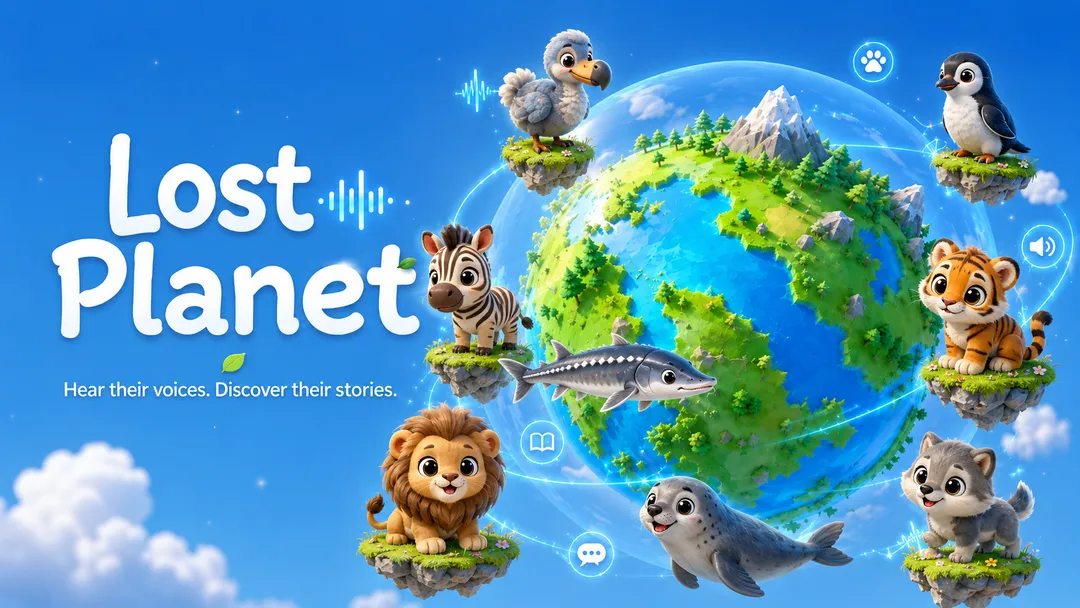
Lost Planet is a science exploration template built around clues, research cards, and a globe you can turn. Swap the extinct-animal story for astronomy, ecology, or history. Use it for a lesson, a museum exhibit, or a science project.
Most science explainers hand you the facts and hope you stay interested. Lost Planet hides them: a clue on the globe, a research card behind it, a conversation with an animal no one can study anymore. A textbook can tell a class the animal is gone; this lets them ask it what happened.
Remix this template Get a working copy — nothing to install or deploy.
Decide who it's for A lesson, a museum exhibit, and a science channel share mechanics but not wording.
Replace the subject and the cards Swap extinct animals for volcanoes, ecosystems, or any topic built around investigation.
Check sources, then publish Verify accuracy and usage rights, then go live on your own domain.
A subject broken into clues and cards, so a student arrives at the fact instead of reading it.
One investigation with a beginning and an end — closer to a documentary than a wiki.
Map each card to a lesson objective and hand out one URL.
A standalone site for a single topic, indexed and shareable.
A path through the subject, not a wall of text.
The detail behind each clue, in a readable block.
Markers placed on the globe where they belong.
Content unlocks in order, so a visit has a shape.
Swap the subject, the text, the images, and the sources.
Hear the subject and ask it questions directly.
Yes. Change the subject, clues, research cards, discovery stages, images, and visual style.
No. Describe the changes you want, review the app, and publish when it is ready.
Yes. The format also works for marine biology, ecology, history, and other topics built around investigation.
Yes. You can map each clue or research card to a lesson objective and share the app with students by URL.
Yes. Add text, images, references, and links to supporting material. Check the accuracy and usage rights before publishing.
Yes. You can use a custom domain and add SEO-ready supporting pages, depending on your plan.