I'm Elin. I lost most of a Saturday last month to one stupid question: should I build my next little tool with OpenAI Codex, or with an AI app builder like Lovable? Eleven browser tabs open. Zero of my actual problems closed. So this is the codex vs ai app builder breakdown I wish someone had handed me before I burned the weekend.
One note on sourcing: I went and read OpenAI's actual docs for the Codex section rather than going off memory, and I'll tell you where I'm guessing.
Why Founders Compare Codex and AI App Builders
Here's the thing nobody says out loud. These two tools get compared because they feel like the same purchase — "AI makes my software for me" — and they are absolutely not the same purchase. For API reference generation, try Mintlify with Codex.
Codex is a coding agent. An AI app builder is a path from idea to a thing people can pay you for. The overlap is real, because both involve AI writing code somewhere. But the gap shows up the moment you want a stranger to sign up and hand you money.
I got this wrong the first time. I assumed "it writes the code" meant "it ships the product." It does not. Code sitting in a repo is not a launched app — the same way flour on a counter is not bread.
What OpenAI Codex Is Built For
Codex is OpenAI's agentic coding system. As of April 23, 2026, it's powered by GPT-5.5, OpenAI's latest frontier model. According to OpenAI's official Codex page, it's built to work where developers already work: reading a codebase, fixing bugs, running tests, opening pull requests.
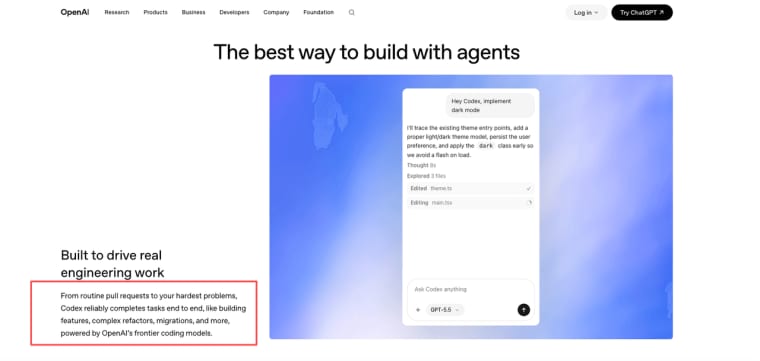
That last part matters more than it sounds. Codex assumes you have a codebase. It assumes git. It assumes you'll read and approve a diff. If those words make you a little tense, that's a useful signal — not that you're not smart enough, just that Codex was designed for a different person than a non-technical founder.
Agentic coding across CLI, IDE, ChatGPT, GitHub, and mobile surfaces
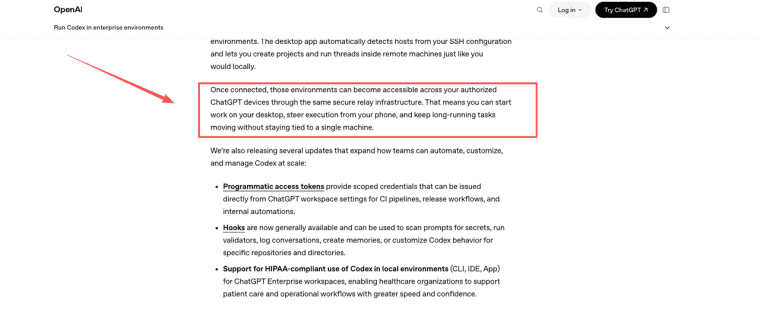
The reach is genuinely impressive. Codex runs in your terminal (the CLI), inside IDEs like VS Code and Cursor, on the web, through a GitHub bot, in a desktop app for macOS and Windows, and via the ChatGPT mobile app on iOS and Android.
That mobile piece is worth clarifying: Codex on mobile isn't running natively on your phone — it's remote control. Your files, credentials, and local setup stay on the desktop machine where Codex is operating; your phone lets you review outputs, approve commands, and manage threads from anywhere in real time. Think of it as a cockpit for your desktop, not Codex in your pocket. The announcement is covered in OpenAI's "work with Codex from anywhere" update.
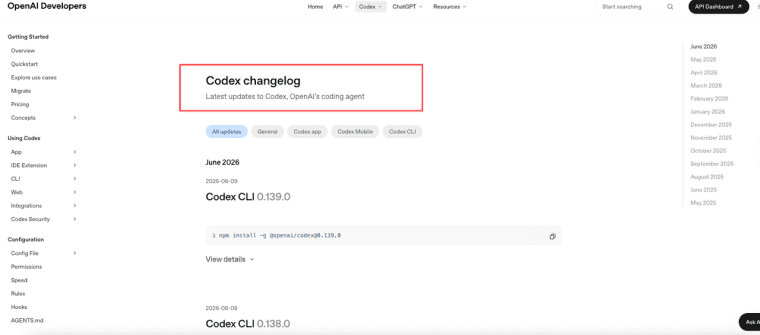
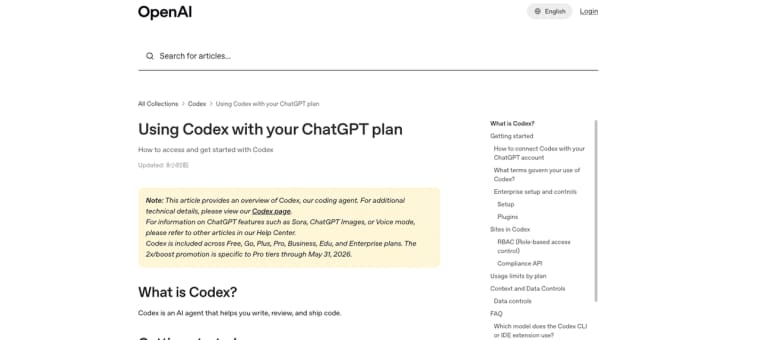
It's bundled into paid ChatGPT plans rather than sold as a standalone product. I'm not going to quote you a price or a usage limit, because OpenAI changes those and I don't want to hand you a stale number — the Codex changelog is where I'd check what's current.
So: powerful, broad, fast-moving. But notice that every one of those surfaces is a developer surface. That's the whole personality of the tool, and it's the thing the marketing won't lead with.
What AI App Builders Are Built For
An AI app builder starts from the opposite end. You describe what you want in plain language, and it tries to get you to a working, deployed app — frontend, backend, database, auth, sometimes payments and a custom domain — without you ever opening a terminal.
The honest version, though: not all of them go the full distance. A lot of tools in this category are excellent at generating a beautiful interface and then quietly asking you to "connect Supabase" or wire up your own services. That's the exact moment a non-technical founder gets stuck. I've watched someone lose three days to a database permissions setting they didn't know existed, convinced their form was broken.
From idea to app, data, payments, and publishing
The version that actually helps a non-technical builder is the one that treats shipping as the product, not the prototype. Real data. A way to take payments. A published URL. And the part people forget — being findable. An app nobody can discover isn't really shipped; Google's own guidance on helpful content is a decent reminder that "live" and "found" are two separate jobs.
This is the lane a no-code AI app builder lives in: getting a commercial builder from "I have an idea" to "someone paid me" without first assembling a dev team. Whether a given tool delivers on that is something you should test before trusting it.
Codex vs Lovable, Bolt.new, Replit Agent, and HappySeeds
Let me lay out how I actually think about these. I've put real hands-on time into app builders; my Codex understanding is more "read the docs, poked at the CLI," so weight that honestly.
| Tool | What it's really for | Who it fits |
| OpenAI Codex | Agentic coding inside an existing codebase | Developers and technical teams |
| Lovable | Prompt-to-app, clean React output, ships full-stack | Non-technical founders OK paying for polish |
| Bolt.new | Browser-based full-stack prototyping, framework flexibility | Builders who want control and don't mind technical edges |
| Replit Agent | Autonomous building inside a full cloud IDE | People learning to code or wanting a glass-box setup |
| HappySeeds | Idea → live, monetizable app with data, payments, SEO | Non-technical commercial builders |
The pattern? Codex sits off to one side. Lovable, Bolt.new, and Replit Agent are all "describe it, get an app" tools with different amounts of code showing through — Replit Agent shows the most (full IDE), Bolt.new sits in the middle, Lovable hides more of it. The further left you slide on the technical comfort scale, the less Codex looks like a competitor and the more it looks like a different category entirely.
I'm deliberately not linking anyone's signup or pricing pages here. Go compare those yourself when you're actually ready to buy. The point of this section is positioning, not sending you to a checkout.
When Codex Fits Better
I don't want to do the thing where the app-builder blog pretends Codex is bad. It isn't. There are real cases where it's the right call:
- You already have a codebase and want an agent to maintain and extend it.
- You're comfortable reviewing diffs and you actually want to own the code.
- Your "app" is really internal engineering work — refactors, test coverage, bug triage.
- You have a developer on the team, even part-time, who'll drive it.
If you can read the Codex usage and plan details without your eyes glazing over, Codex might genuinely be the better tool for you. That's not a dig. It's just a different starting point than "I have a business idea and zero engineers."
The codex vs ai app builder decision really comes down to one question: do you want code, or do you want a launched product? Codex gives you the first, brilliantly. If you want the second without becoming a developer first, an AI app builder is the more honest fit.
Explore more topics:
FAQ
What is the difference between Codex and an AI app builder?
Codex is an agentic coding tool — it writes and edits code inside a codebase. An AI app builder takes you from an idea to a deployed, usable app, often without you touching code at all. Different starting points, different finish lines.
How do founders use Codex to build apps?
Usually by treating it like a fast junior engineer: you describe a task, Codex works in a sandbox or your repo, and hands back a diff you review and merge. It assumes you — or someone on your team — can read and approve code.
Can Codex launch a sellable app by itself?
Not in the "ready to charge customers" sense. It can generate the code for one, but turning that into a live product with hosting, auth, payments, and a domain is still on you. Generating code and launching a product are genuinely two different jobs.
What should non-technical founders check before choosing Codex?
Whether you're comfortable with git, diffs, and deployment — and the current pricing, usage limits, and data policies, which change often. For anything about plans, limits, or how your data is handled, treat the official OpenAI documentation as the source of truth and confirm the latest version before you commit.
When should founders choose an AI app builder instead?
When your goal is a launched, monetizable product and you don't want to manage code or infrastructure. If "Lovable, Bolt.new, Replit Agent, or HappySeeds" sounds more like your world than "open a terminal," that's your answer.