Elin here. I've broken three production apps this year. Two of them were mine. So when someone messages me asking for a Momen alternative for their AI app MVP, my first reaction isn't to fire off a tool name. It's to ask what they're building — because "best app builder for startups" is the wrong thing to search if you don't know what kind of MVP you need yet.
Most "X alternative" posts skip that part. They list ten tools, slap a comparison table on top, and let you guess. I've made enough wrong tool calls to know that the guessing is exactly where people lose two weeks.
So this isn't a top-ten list. It's the thinking I'd walk a friend through.
What Kind of MVP Are You Trying to Launch?
Here's the thing nobody tells you: "MVP" is not one thing.
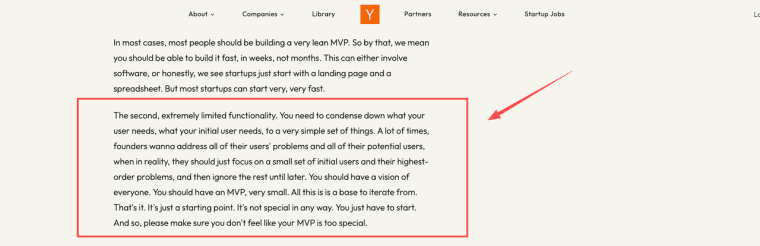
An internal tool that five people on your team use is a completely different build from a public app that strangers pay for. Same word, totally different requirements. See the OpenCodex setup for a lighter agent path. YC's Michael Seibel has a solid breakdown of how to plan an MVP that I still re-read — his whole point is that your MVP exists to learn one specific thing, not to be impressive.
So before you compare tools, answer this: who touches this app, and do they pay?
If it's internal, you optimize for speed and clean data handling. If it's customer-facing, you suddenly care about payments, a public URL, SEO, and being able to change things fast once real people show up. Those needs pull you toward different tools.
What Momen Is
Let me be fair to Momen, because it's a capable tool.
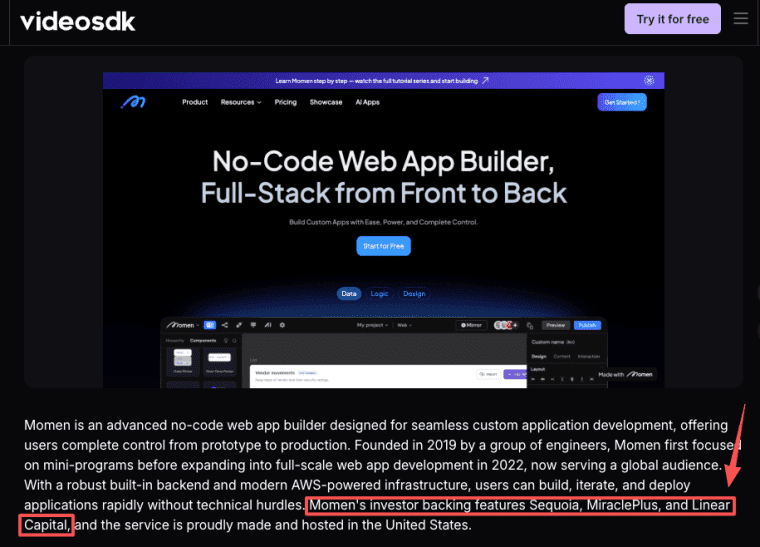
Momen is a full-stack no-code app builder — and I mean full-stack. According to Momen's own docs, it's not just a UI layer: you get a built-in relational database, visual backend logic (they call it Actionflow), and an AI agent builder where you can plug in your own models. It handles payments through Stripe, has native SEO and Google SSO, and uses project-based pricing, so your monthly cost is more predictable than usage-metered platforms.
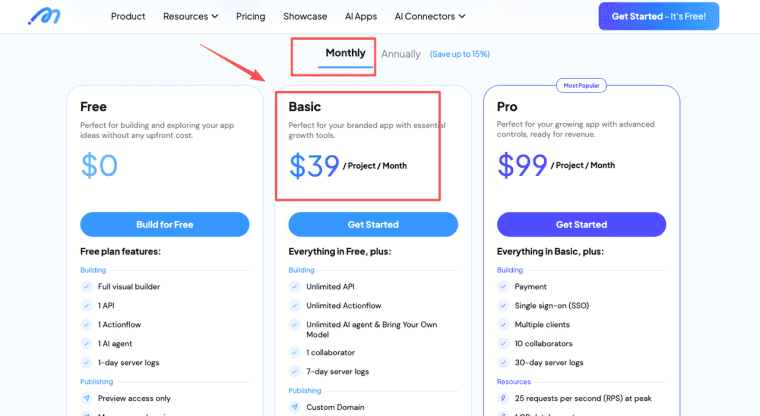
I pulled up their pricing page before writing this: as of May 2026, the Basic plan is $39/month (or $33/month billed annually), with a free tier that lets you publish to web. The Pro plan pricing — confirm on Momen's pricing page before you commit, because these numbers move.
I've seen Momen described in a few places as backed by investors including Sequoia, MiraclePlus, and Linear Capital, and as being made and hosted in the US — worth noting if data residency matters for your use case. I'm flagging this one as something I read rather than something I verified against a primary source (Momen's own site doesn't list investors prominently), so if funding or hosting location is a dealbreaker for you, I'd ask their team directly before relying on it.
That's a real strength. If you're building something data-heavy — a marketplace, an internal SaaS, something you expect to scale and want fine control over — Momen is built for that. It even lets you drop into custom code as you grow, which helps if you're worried about lock-in.
Where it gets heavier: that full-stack power comes with a learning curve. Reviewers keep noting that new users find it a lot at first. If your MVP is small and you mostly want a paid, AI-powered thing in front of users this week, some of that depth is capability you're paying for but not using yet.
How Founders Use No-Code App Builders for MVPs
Broadly, I see two jobs people hire these tools for.
Internal workflow MVPs
This is the "we're drowning in spreadsheets" build. An ops dashboard, a mini CRM, a client intake form, an approval flow. Nobody outside the company sees it. You care about reliable data, permissions, and not babysitting infrastructure.
Momen, Bubble, and Glide all live comfortably here. The bar is "does it work and can my team use it," not "is it beautiful and discoverable." For internal tools the choice honestly matters less — most of them get the job done.
Customer-facing AI app MVPs
This is where it gets interesting, and where the wrong tool actually hurts.
A customer-facing AI app MVP has to do things an internal tool never worries about. It needs a public launch. It needs to take money on day one — not "we'll wire up Stripe later." It needs constant iteration, because the first version is always at least a little wrong (mine always are). And it needs real data, not placeholder screens, or you learn nothing you can trust.
What Commercial Validation Requires
Here's the reality check. Building the app was never the hard part — and it's getting easier every month.
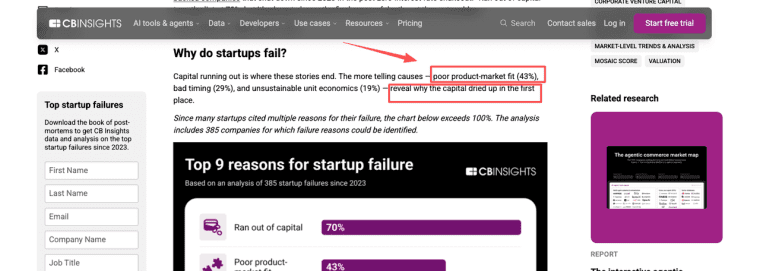
The latest CB Insights analysis of failed startups (March 2026, covering 431 companies that shut down since 2023) found poor product-market fit behind 43% of failures. "Ran out of cash" topped the chart, but PMF is the root cause sitting under it. Translation: nobody fails because their MVP wasn't pretty enough. They fail because they built something people didn't want — or never got it in front of enough paying people to find out.
Comparing the Main Options
Here's how the main tools stack up for a customer-facing AI app MVP specifically — not for all use cases, just this one:
| Tool | Best for | Payments built-in | AI agent builder | Learning curve | Pricing model |
| Momen | Data-heavy apps, scalable SaaS | ✅ Stripe | ✅ Yes | Steeper | Per project/month |
| Bubble | Complex logic, established no-code | ✅ Stripe | ⚠️ Plugins | Steeper | Per app/month |
| Lovable | Fast UI-first builds, founders | ✅ Stripe | ⚠️ Limited | Gentle | Credits-based |
| Glide | Internal tools, simple data apps | ✅ Yes | ⚠️ Limited | Gentle | Per user/month |
| Bolt.new | Browser-based full-stack builds | ❌ Self-configured | ❌ No | Technical | Credits-based |
A few things I'd add that don't fit neatly into a table: Momen and Bubble give you the most control long-term; Lovable and Glide are faster to first launch; Bolt is best if you're comfortable touching code. None of them is universally "best."
If you want to actually test this instead of taking my word for it, here's the exact thing I do before committing to any of these — takes maybe 45 minutes:
- Sign up for the free tier. Don't skip this even if you're "pretty sure" you'll need the paid plan — the free tier tells you how the onboarding actually feels.
- Build one real screen with real data, not a template demo. For an AI app MVP, that usually means: one input field, one AI call, one output displayed back to the user.
- Time how long step 2 takes, and note where you got stuck. If you got stuck on the AI integration itself, that's a model/API problem, not a tool problem. If you got stuck on displaying the AI output or storing it, that's the tool telling you something about its learning curve.
- Try to add a payment button, even if you don't finish wiring it to Stripe. Just see how many steps it takes to find where payments live in the platform.
- Check the data policy page while you're logged in — see how easy it is to find, and whether it's written in plain language or buried in a ToS.
If steps 1–4 took you under 45 minutes combined and step 5 was easy to find, that tool is probably a fit for your MVP. If any single step ate more than 15 minutes on its own, that's the part of the tool that's going to keep eating your time later — worth knowing before you build the real thing on top of it.
Real data, payments, and iteration
So commercial validation isn't "I built a demo." It's "real people used it, some paid, and I changed it based on what they did."
That means three boring things have to work. Real data, so the app does something instead of faking it. Payments — and most of these tools route through Stripe, so the question is how little setup stands between you and your first dollar. And fast iteration, because you'll rebuild that onboarding flow at 1am more than once. I have.
One more thing I'd check before uploading anything sensitive: the data policy of whatever platform you pick. Most platforms have a policy on whether your inputs and outputs are used for model training — find it and read it before you upload client data. Don't take anyone's word for it, including mine.
So Which One?
If your MVP is internal, data-heavy, or you want long-term control and code access, Momen is a strong pick. If your MVP is customer-facing, AI-first, and you need to publish and charge fast, that's the Momen alternative case — and it's where I'd reach for something lighter and launch-focused.
Either way, pick based on what you're validating, not the tool with the slickest landing page. Go write down who touches your app and whether they pay. That one sentence usually makes the choice for you.
Explore More Topics:
FAQ
What are the best Momen alternatives for building AI-powered MVPs quickly?
Many founders ask this on Reddit and no-code forums. Popular alternatives include Lovable (for fast AI-generated prototypes with code export), Bubble (for more complex logic and scalability), Bolt.new (browser-based full-stack), and Glide (simpler data apps). Choice depends on whether you prioritize speed (Lovable/Bolt) or long-term control (Bubble/Momen).
How does Momen compare to Lovable for non-technical founders building customer-facing apps?
This is a frequent comparison in 2025-2026 discussions. Momen offers stronger full-stack features (built-in DB, Actionflow, native AI agents) and predictable project-based pricing. Lovable excels at rapid vibe-coding for beautiful UIs and quick MVPs but may require more manual tweaks for complex backends. Many founders test both for speed vs. production readiness.
Can I really launch a paid AI app MVP with no-code tools without hiring developers?
Yes, this is a top question from solo founders. Tools like Momen, Bubble, and Lovable support Stripe payments, public domains, and real data handling. Success stories include internal tools turning into micro-SaaS, but validation still requires getting real users and iterating based on feedback rather than just building.
What are the main limitations of using Momen or similar no-code platforms for scaling AI apps?
Users often ask about learning curve, potential lock-in, and performance at scale. Momen has a steeper initial curve due to its full-stack depth; export/custom code options help reduce lock-in, but complex AI workflows may still need careful planning. Pricing predictability is a plus, but high user volume can increase costs.
Is Momen good for internal tools or better suited for public customer-facing products?
Common question in startup communities. Momen works for both, but shines more for data-heavy or AI-integrated customer apps (marketplaces, workflows). For pure internal dashboards, lighter options like Glide or Softr are often recommended for faster setup with less overhead.