
Hi everyone, I'm Elin. A founder friend asked me last month which AI tool she should build her product on. Three different people told her the same thing: "go with whatever has the highest SWE-bench score." That answer bugged me. She wasn't trying to fix open-source bugs — she was trying to launch a thing people could log into and pay for. So I went and actually read up on what SWE-bench tests before I told her anything, because I didn't want to be the person handing out confident-sounding advice based on a number I half-remembered.
Short version, if you're in a hurry: SWE-bench tells you how good a model is at fixing code. It tells you almost nothing about whether you can ship a real app. Those are different problems, and conflating them is how people pick the wrong tool. Here's the longer version.
What SWE-bench actually measures (in plain terms)
SWE-bench is a coding benchmark. According to the official SWE-bench project, it hands a model a real GitHub issue plus the codebase it lives in, and asks the model to write a patch that resolves the issue and passes the project's existing tests. Pass the tests without breaking anything else, you score. You don't, you don't.
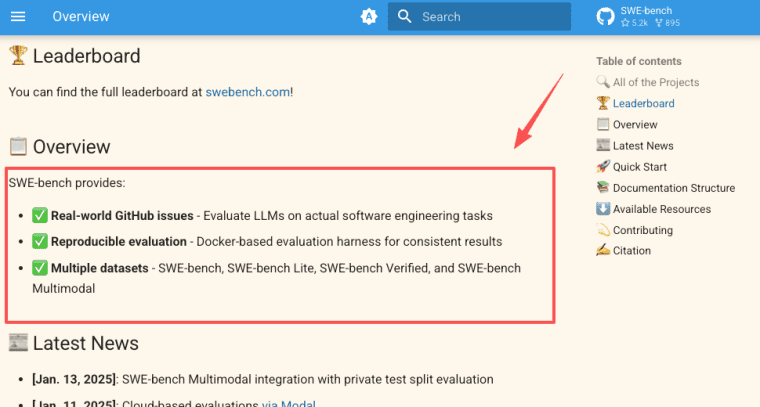
The version most people mean when they say "swe bench ai scores" is SWE-bench Verified — a human-validated subset of 500 instances that OpenAI's Preparedness team released in collaboration with the original Princeton SWE-bench authors in August 2024. Both run on real Python repositories, not toy problems.
Worth knowing: OpenAI deprecated SWE-bench Verified in February 2026 due to test flaws and training-data contamination — a live example of why benchmark numbers shouldn't anchor product decisions.

I'm deliberately not quoting specific model scores here. They move every time a new model drops, and a number I write today could be stale by the time you read this — check the official leaderboards directly if you need current figures. What matters for this article isn't the number. It's what the number is measuring: targeted bug-fixing inside an existing codebase. That's a real, hard skill. It's just not the same skill as building a product.
Why a high SWE-bench score doesn't mean a launch-ready app
Here's where I think people get tripped up. A high score signals the model is good at one slice of engineering — reading a repo, finding the broken thing, fixing it. Genuinely useful. But "can fix a bug in Django" and "can ship a product my customers can use" are separated by a lot of work that the benchmark never touches.
The benchmark starts with a codebase that already exists. Your app doesn't exist yet. That's not a detail — it's most of the job.
Fixing a repo vs shipping login, data, payments, and SEO
Think about what an actual product needs that a SWE-bench task assumes is already handled. Someone has to set up authentication so users can sign in. A database has to store real data and not lose it. Payments have to connect to a processor and actually charge cards. The thing has to deploy somewhere it stays up. It needs a domain, page titles search engines can read, a way to collect feedback after launch.
None of that shows up in a patch-the-repo test. The SWE-bench evaluation harness on GitHub runs each task inside a pre-built container with the environment already wired up — exactly the part that doesn't exist when you're starting from an idea. The benchmark is measuring the model after all the product scaffolding is done. You're standing at the point before it starts.
I learned this the embarrassing way, by the way. The first app I tried to ship, I had working code and zero idea how to get a payment flow live. The code was the easy part. The launch was where I stalled for two weeks.
The gap between AI coding tools and an AI app builder
This is the distinction I wish someone had drawn for my friend. AI coding tools — the category SWE-bench is built to rank — are very good at producing and fixing code. If your end goal is more code, that's the right thing to optimize for. The benchmark even keeps expanding into adjacent code skills; the SWE-bench FAQ describes spin-off splits for multimodal and multilingual coding tasks. Still all code-shaped problems.

An app builder is solving a wider problem. The code is one ingredient. The rest is the stuff above — auth, data, payments, hosting, the boring connective tissue that turns a working file into a product a stranger can pay for. A model topping a coding benchmark doesn't automatically do any of that, and I'd be careful with any tool that implies it does just by waving its benchmark rank at you.
Where build AI app workflows pick up after the model
Roughly, you can split it like this: the model writes and fixes code, and the build AI app layer on top handles everything between "code exists" and "product is live and growing." Planning what pages and flows the app needs. Connecting real data. Wiring payments. Publishing with a domain and basic SEO. Iterating after real users show up. The model's benchmark score tells you nothing about how well that second layer works, because the benchmark was never testing it.
What founders should evaluate instead of benchmark rank
If you're not building a developer tool, the SWE-bench leaderboard is mostly a distraction. Here's what I'd look at instead, in roughly this order.
Can it take you from rough idea to something on screen — not just a snippet, an actual flow? Does it handle the parts that stop non-engineers cold: login, stored data, payments, deployment? Can you publish to a real domain, and does the output have readable page titles and descriptions? Google's own guidance on helpful content is blunt that search rewards genuinely useful pages — and a beautiful app no one can find doesn't earn anything. And after launch, can you keep changing it without everything falling over?

That last one matters more than I expected. The apps I've broken usually broke on the second or third change, not the first build.
So when someone tells you to pick a tool by its SWE-bench score, it's worth asking what you're actually trying to build. If it's code, sure, the benchmark is your friend. If it's a product — the kind with a login screen and a payment button — the number on the leaderboard is answering a question you didn't ask. I'd rather know whether the thing can get me to launch than whether it can patch Django.
Explore more topics:
FAQ
Should I pick an AI tool based on its SWE-bench score?
For a product with login and payments, it's a weak signal. A more useful test: ask for a demo that goes from idea to a deployed flow — not just a code snippet. If the vendor can only show you the code part, you know what you're buying.
What usually happens when you try to turn a strong coding model into a full AI app?
You get working code fast, then hit a wall — usually auth or payments — where the model produces output that looks right but assumes infrastructure you haven't set up yet. The dangerous version is a payment form that submits to nowhere. You don't find out until a real user tries it.
How important are benchmarks when you're not building a pure coding tool?
Useful only as a first filter to rule out clearly incapable models. The tell that you're being sold a benchmark rather than a product: the pitch leads with a leaderboard number before showing you anything your actual users would touch.
Do non-technical founders need to look at coding benchmarks at all?
Just enough to know what SWE-bench measures — bug-fixing, not product shipping. When someone says "we're #1 on SWE-bench," your follow-up is: "can I see it handle login and payments?" That's the only translation that matters.


