

Replit vs Lovable: Different Tools for Different Dev Styles
Replit vs Lovable is not a simple winner-takes-all comparison. Replit is the better starting point when you want a browser-based development workspace with code, runtime, collaboration, and deployment close together. Lovable is the better starting point when you want prompt-to-app generation, visible app drafts, and a path toward editable full-stack web applications.
HappySeeds fits a different decision point: when the app itself needs to become a live product. If the goal is a commercial AI-native app with a user journey, AI-powered output, data thinking, payments, SEO basics, and launch support, the choice is less about the coding surface and more about whether the product can reach real users.
- Choose Replit when your workflow starts inside a development environment.
- Choose Lovable when your workflow starts with a natural-language app description and visual iteration.
- Choose HappySeeds when your blocker is turning the app idea into a launchable AI product.
| If your blocker is | Start with | Why |
|---|---|---|
| Building and running code in a cloud workspace | Replit | It keeps coding, runtime, collaboration, and deployment close together. |
| Turning a prompt into an editable app draft | Lovable | It is oriented around natural-language app generation and visible iteration. |
| Launching a commercial AI-native product | HappySeeds | It helps shape the user journey, AI output, payment path, SEO basics, and first launch version. |
Where Replit and Lovable Each Fit
Replit is a cloud development platform where users can build, run, collaborate on, and deploy software projects from the browser, with AI assistance inside the development workflow. It is strongest when you want a working development space rather than a separate local setup. For another builder comparison, V0 Vs Lovable shows how a similar tool choice changes the product launch path.
Lovable is a full-stack AI development platform for building, iterating on, and deploying web applications through natural language, with editable code and app lifecycle workflows. It fits builders who want to describe an app, inspect the draft, and iterate toward a web application.
The practical difference is the starting surface. Replit starts closer to a cloud coding workspace. Lovable starts closer to a prompt-led app builder. Both can help create software, but neither automatically replaces the product decisions behind a commercial AI app.
| Dimension | Replit | Lovable |
|---|---|---|
| Primary starting point | Browser-based development workspace | Natural-language app generation |
| Best fit | Builders who want code, runtime, collaboration, and deployment together | Builders who want visible drafts and prompt-led iteration |
| Review focus | Code behavior, runtime, deployment, and collaboration flow | Generated screens, full-stack logic, data flow, and app lifecycle fit |
Comparing AI Agent Quality: Replit Agent vs Lovable's Builder
The quality question is not only whether an AI agent can generate something impressive. The more useful question is how much review is needed before the result matches the intended user journey. Builders still need to check screens, logic, data flow, authentication, backend behavior, and whether the app actually serves the audience it was built for.
Replit can be useful when you want AI assistance inside a real development workflow and are comfortable reviewing how the app runs. Lovable can be useful when you want to move from description to visible app draft quickly and then refine the result. In both cases, the output still needs product judgment before it becomes something ready for users.
For an AI client intake app, the product is not just a generated screen or a coding task. It needs a user input loop, an AI-powered output, and a path toward launch.
- Check whether the generated app captures the right user inputs.
- Review whether the AI output is useful, understandable, and connected to the user's goal.
- Confirm that the draft supports the commercial flow, not just the interface.
| Step | What the Builder Has | What HappySeeds Helps Create |
|---|---|---|
| App idea | A prompt, draft, or coding task | A clearer user, promise, and workflow |
| Input flow | Forms or interface elements | A purposeful intake loop tied to the AI result |
| AI output | Generated behavior that needs review | A productized result users can understand and act on |
| Launch path | A draft or running project | A first usable version with commercial framing |
Project Output and Deployment: Replit vs Lovable Side-by-Side
Replit and Lovable both support paths toward working applications, but they are not the same kind of output. Replit should be judged on how well it supports building, running, collaborating on, and deploying projects from a cloud workspace. Lovable should be judged on how well it turns natural-language direction into editable full-stack web app drafts.
After a working draft exists, the remaining work often shifts from generation to launch readiness. Builders still need a clear offer, user inputs, AI-powered results, payment path, SEO basics, and a first version that real users can interact with.
| Dimension | Replit | Lovable | HappySeeds |
|---|---|---|---|
| Output style | Running software project in a cloud development environment | Prompt-generated web app draft with editable code | Live AI-native product shaped around a user journey |
| Deployment fit | Useful when development and deployment should stay close | Useful when the generated app needs an app lifecycle path | Useful when deployment must support a commercial launch flow |
| Main review question | Does the project run and behave correctly? | Does the generated app match the intended workflow? | Does the app deliver a useful AI-powered result to real users? |
| Best next step | Refine code, runtime, and deployment | Iterate screens, logic, and app behavior | Shape offer, input loop, AI output, payment path, and launch version |
Collaboration, Workspace, and Handoff Fit
Replit is especially relevant when collaboration belongs inside the development workspace: code, runtime, project execution, and deployment are close together in the browser. Lovable is more relevant when collaboration starts around a visible generated app and the team wants to refine what the product should become.
If you already have output from Replit or Lovable, the useful next step is not always to generate more. Bring the target user, current app idea, rough draft, code concept, workflow notes, and launch blocker into HappySeeds. That handoff is most valuable when the remaining gap is the AI-native value loop, payment path, real user journey, or first launch version.
- Bring the current draft or concept, not just the original prompt.
- Identify where the user submits data and where the AI-powered result appears.
- Clarify what blocks launch: product framing, workflow, payments, SEO, or usability.
Why HappySeeds Offers More Than Either Replit or Lovable
HappySeeds fits when you want to go from idea to live, monetizable AI app in one commercial workflow. Plan Mode is the starting point: it shapes the user journey, AI interactions, data needs, payment moments, SEO basics, and launch requirements. HappySeeds then helps build and launch the app, so the outcome is not just a plan or a draft. When you want more context around adjacent AI app builders, Replit Vs V0 gives you a useful next comparison.
This matters when your real goal is not to compare tools forever, but to create an app that users can interact with. HappySeeds is the better fit when the app idea needs a specific user, a clear promise, a practical workflow, an AI-powered output, and a launch path.
- Use HappySeeds if the app needs to become a commercial product, not just a prototype.
- Use Replit if you want a browser-based coding workspace with runtime and deployment close by.
- Use Lovable if you want to start from a natural-language app description and iterate visually.
| Use HappySeeds if | Use Replit if | Use Lovable if |
|---|---|---|
| You need product planning, AI workflow design, and launch framing together. | You want to build, run, collaborate on, and deploy from a cloud workspace. | You want prompt-to-app generation and visible app drafts. |
| You need to define the user journey, input loop, AI output, and payment path. | You are comfortable reviewing code and runtime behavior. | You want a faster path from description to editable web app concept. |
| You are coming from a draft and need a first usable launch version. | Your blocker is development environment setup or iteration. | Your blocker is getting an app shape visible quickly. |
Replit vs Lovable for an OPC Startup Evaluation Tool
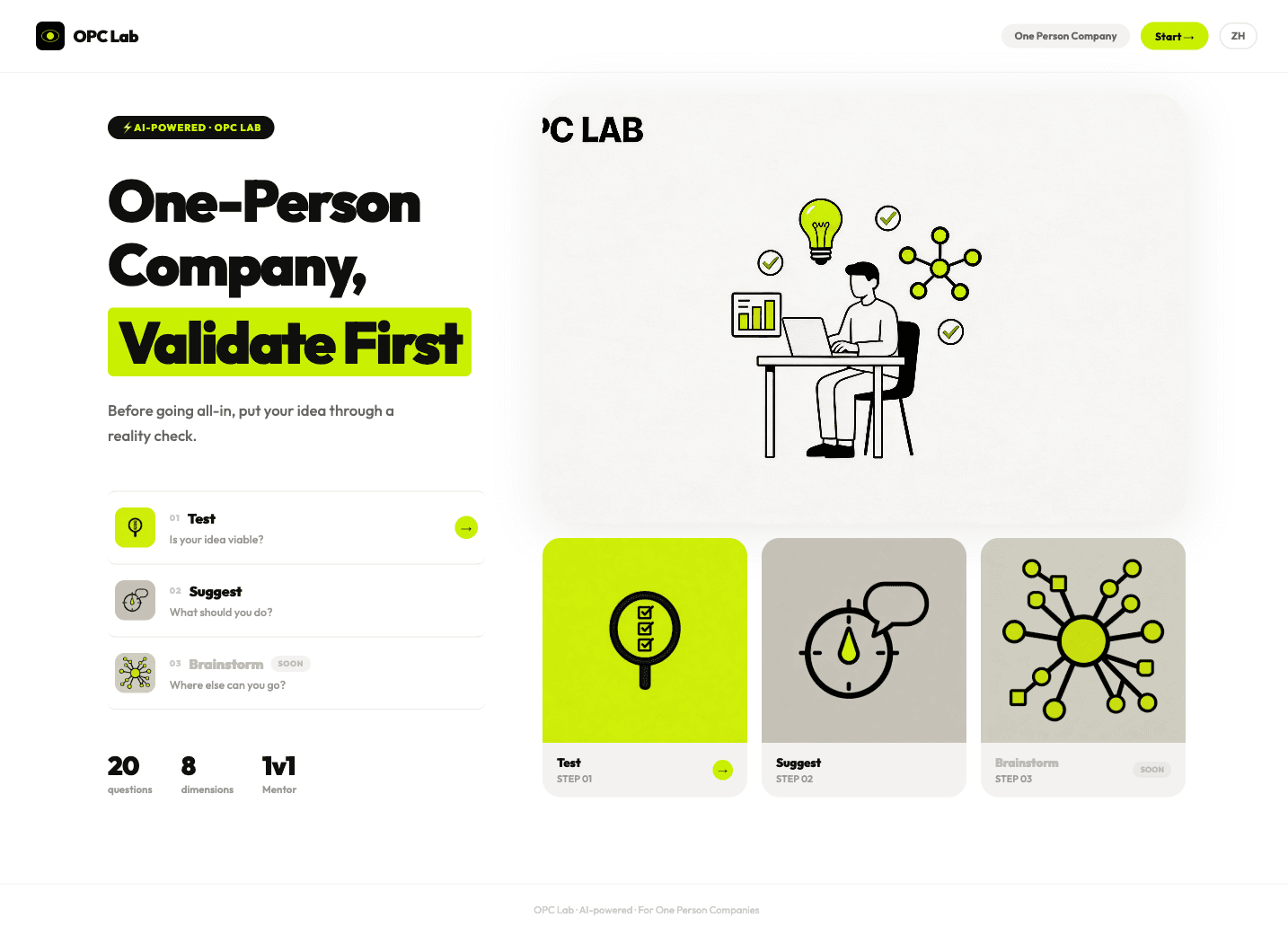
An OPC startup evaluation tool is a useful lens for Replit vs Lovable because the hard part is not only producing screens or code. Before choosing a cloud coding workspace or a prompt-to-app builder, HappySeeds helps clarify who the founder is assessing, what inputs matter, how the AI should weigh opportunity, problem, customer, and execution risk, and what output should feel useful enough to act on. OPC startup evaluator In this kind of product, Plan Mode turns a broad startup score idea into a clearer user journey: guided questions, structured evaluation logic, result language, data handling, and a launch path for real users. That makes the builder choice more practical, because Replit, Lovable, or another tool can be judged against the app’s actual workflow instead of a vague prototype goal.
Replit vs Lovable: Choose by How You Want the App to Take Shape
Replit is the stronger fit when the work starts inside a development environment: writing code, running the project, collaborating, managing secrets or databases, and preparing deployment from a browser workspace. Lovable is the stronger fit when the work starts as a product description and needs to become a visible app draft that can be refined through prompts, screens, backend setup, and ownership decisions. The practical choice is less about which tool is more advanced and more about whether you want to steer a cloud-coded project or iterate from generated app structure.
- Pick Replit if the main risk is implementation control, runtime behavior, collaboration, or deployment setup.
- Pick Lovable if the main risk is moving from app idea to editable full-stack draft quickly.
- Consider HappySeeds only when the open question is launch planning: user journey, AI output, payments, SEO basics, and first commercial version.
Evidence to Check Before Choosing Replit or Lovable
The strongest choice depends on the kind of work you need to inspect. Replit should be evaluated through code execution, collaboration, runtime setup, and deployment behavior. Lovable should be evaluated through generated app structure, screen quality, backend assumptions, and how easily the draft can be revised or owned.
Do not judge either tool only by the first impressive demo. Test the parts that usually break later: authentication, real data, permissions, integrations, payment flow, environment setup, and whether another person can maintain the project after the initial build.
| Tool | Use it when | Verify | Weak fit |
|---|---|---|---|
| Replit | Developers or technical founders who want to run, edit, debug, and deploy from a cloud IDE. | Check runtime limits, secrets handling, database setup, deployment behavior, package support, and ongoing maintenance workflow. | Weak fit when non-technical users need a polished app draft before touching code or project structure. |
| Lovable | Founders who want to turn a product idea into an inspectable web app before hiring engineering help. | Review auth logic, database schema, code ownership, export path, backend assumptions, and edge-case handling. | Weak fit when the project demands precise low-level control, unusual architecture, or heavy custom runtime work. |
| HappySeeds | Teams with a Replit build or Lovable draft that now needs monetization, positioning, and user-flow decisions. | Confirm the app concept, paid use case, AI interaction design, onboarding steps, and launch content requirements. | Not the first stop if you only need a disposable code sandbox or a quick visual mockup. |
Frequently Asked Questions
Build with HappySeeds
If your Replit vs Lovable comparison is really about launching a product, build and launch the app with HappySeeds.