

v0 vs Lovable: Scope and Capabilities at a Glance
v0 vs Lovable is mainly a workflow decision. v0 is commonly used when the blocker is interface generation, component drafts, front-end exploration, or turning a UI idea into a quick visual starting point. For another builder comparison, Replit Vs Lovable shows how a similar tool choice changes the product launch path.
Lovable fits a broader app-building workflow. It is better suited when you want to describe an app in natural language, iterate on visible app drafts, and move toward an editable full-stack web application.
HappySeeds enters the comparison when the real goal is not just a draft, but a live, monetizable AI-native app with a user journey, AI-powered output, data thinking, payments, SEO basics, and launch support.
- Start with v0 if the immediate need is fast UI generation or component exploration.
- Start with Lovable if the immediate need is prompt-to-app generation and visible iteration.
- Start with HappySeeds if the app itself needs to become a launched product.
v0 vs Lovable Feature Scope Compared
The most useful comparison is not which tool is universally better. It is what each tool helps the builder finish. v0 is strongest near the interface layer, Lovable reaches further into app creation, and HappySeeds is for the product-launch layer around an AI-native app.
| Dimension | v0 | Lovable | HappySeeds |
|---|---|---|---|
| Best fit | UI ideas, components, and front-end drafts | Prompt-to-app generation and visible app iteration | Planning, building, and launching a commercial AI app |
| Typical output | Interface or front-end structure to refine | Editable app draft with broader app workflow | Live AI-native product path with user journey and launch framing |
| Main handoff gap | Backend, auth, data, deployment, and product decisions may still need separate work | App output still needs review, refinement, and product judgment | Requires a clear target user, value loop, and first launch scope |
| Best user question | How do I quickly draft this interface? | How do I turn this app idea into a working draft? | How do I turn this AI app idea into something users can try and pay for? |
UI Components vs Full Applications: v0 vs Lovable Output Compared
v0 should be judged on how well it supports UI generation and front-end exploration, not on whether it replaces every other building workflow. It can be the better choice when you already understand the product structure and need clean visual drafts or components to refine inside a broader build process.
Lovable solves a different problem. It is closer to a prompt-to-app workflow, which can be useful when the builder wants a visible app draft and a path toward editable full-stack web applications.
The gap becomes clear with an AI client intake app. The product is not only a generated screen or coding task. It needs a user input loop, AI-powered output, and a path toward launch.
- A v0 draft may help define the intake screen, layout, and front-end direction.
- A Lovable draft may help assemble more of the app experience around that idea.
- HappySeeds focuses on shaping what users submit, what the AI returns, and how that becomes a usable product flow.
Design Quality and Code Accuracy: v0 vs Lovable Review
Design and code quality should be evaluated against the workflow. v0 is often useful when visual speed, UI direction, and front-end structure matter most. Lovable is more useful when the builder wants to see a broader app take shape and continue refining it through natural-language iteration.
Neither workflow removes the need for review. Generated output still needs product judgment, code inspection, data-flow decisions, and launch thinking before it becomes something real users should depend on.
| Step | v0 | Lovable | HappySeeds |
|---|---|---|---|
| Early idea | Quickly explores interface direction | Turns a prompt into a visible app draft | Clarifies user, use case, AI value loop, and launch goal |
| Build refinement | Useful for front-end drafts and components | Useful for app-level iteration and editable code workflows | Connects product logic, AI interactions, data needs, and commercial flow |
| Launch readiness | Usually needs separate backend, deployment, and product work | May get closer to a deployable app but still needs review and refinement | Focuses on moving from plan to build to a first live version |
Usage Limits and Pricing Paths
Pricing, plan names, credits, and usage limits change frequently, so this page should treat cost as a decision factor rather than a fixed promise. Before choosing v0 or Lovable, verify the current official pricing pages and check how each tool charges for active generation, team use, and higher-volume work.
The practical pricing question is scope. A lower starting price can still become expensive if you need many iterations, and a broader app-building tool may still require extra review, integration, or launch work. Compare the cost of the tool with the amount of unfinished product work left after generation.
- Check whether the plan supports the amount of prompting, iteration, and export or deployment workflow you expect.
- Look beyond monthly price and consider credits, usage caps, team access, and the work still required after output.
- Use current official pricing pages before making a final decision because public comparisons can become outdated.
HappySeeds: Building Beyond the Limits of v0 and Lovable
HappySeeds fits when you want to go from idea to live, monetizable AI app in one commercial workflow. Plan Mode shapes the user journey, AI interactions, data needs, payment moments, SEO basics, and launch requirements before the app moves toward build and launch. When you want more context around adjacent AI app builders, Lovable Vs Cursor gives you a useful next comparison.
If you already have output from v0 or Lovable, you can bring the target user, rough draft, code concept, workflow notes, and launch blocker into HappySeeds. That is useful when something has been generated, but the AI-native value loop, payment path, real user journey, or first launch version still needs to become a live product users can interact with.
- Use HappySeeds when the app idea needs a product journey, not only a generated interface.
- Use it to clarify what users submit, what the app returns, and why the result is valuable.
- Use it when launch framing, payment thinking, SEO basics, and first-version scope matter as much as the generated screens.
Which Builder Should You Use?
Choose v0 when your main blocker is interface generation, front-end exploration, or turning a UI idea into a quick draft. Choose Lovable when you want prompt-to-app generation, visible app drafts, and a path toward editable full-stack web applications.
Choose HappySeeds when your real goal is a live AI-native product with a user journey, AI-powered output, data thinking, payments, SEO, and launch support. In that case, the comparison is less about which generator is nicer and more about which workflow gets the product in front of users.
| Use HappySeeds if | Use v0 if | Use Lovable if |
|---|---|---|
| You need to plan, build, and launch a monetizable AI app | You need clean UI drafts or components quickly | You want a broader prompt-to-app workflow |
| You need a user input loop, AI output, and commercial flow | You already know the product structure and need front-end exploration | You want to iterate on a visible app draft |
| You are stuck on launch scope, payment path, or AI value loop | You are not trying to solve the whole product lifecycle inside one tool | You want editable app output that still receives review and refinement |
Online Teleprompter Example for V0 vs Lovable Decisions
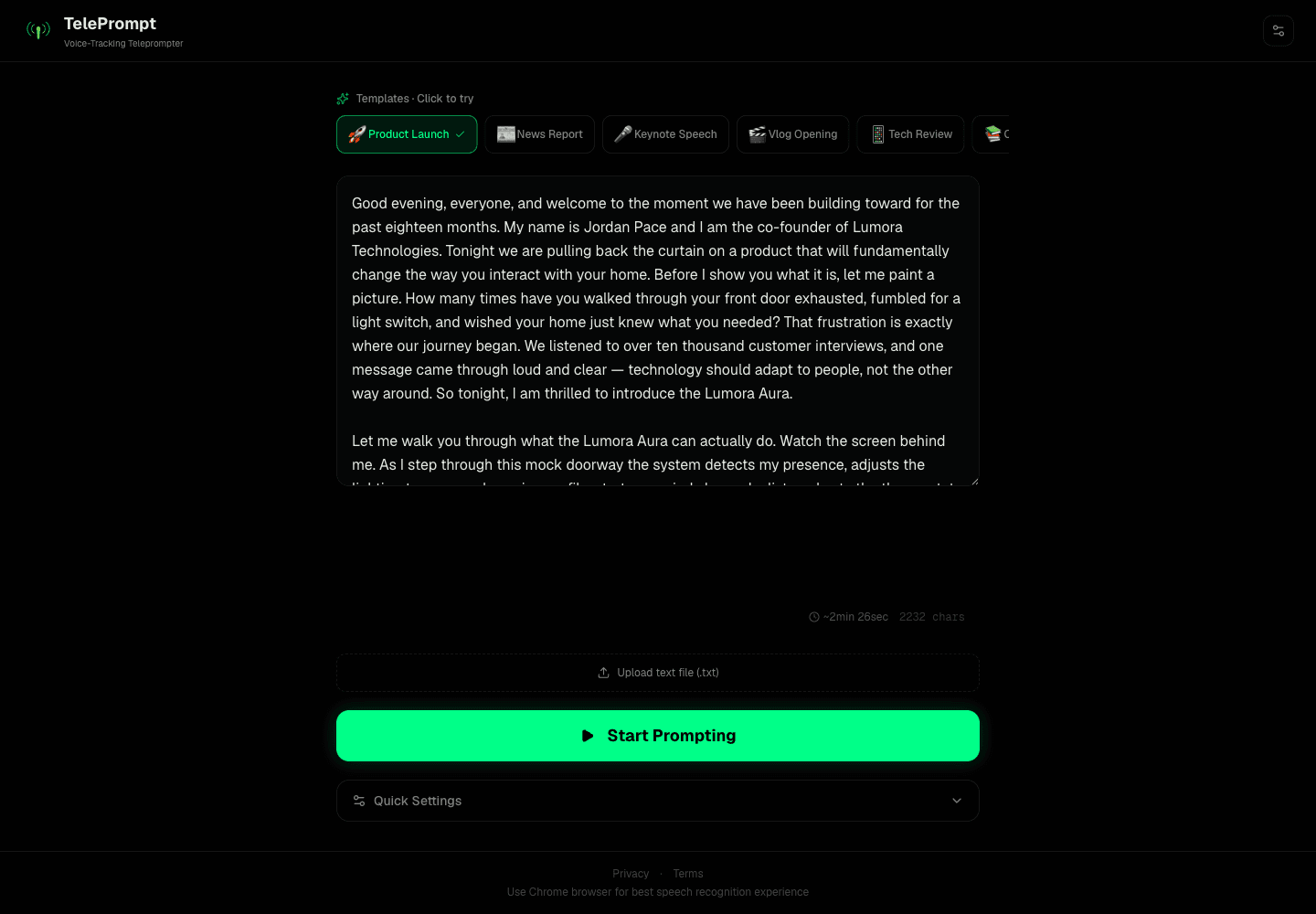
An online teleprompter is a useful way to compare v0 vs Lovable because the first visible screen is only part of the product. A builder needs scrolling controls, readable script formatting, speed settings, session behavior, mobile usability, and a clear path for someone preparing a recording or presentation. HappySeeds helps clarify those practical requirements before the choice becomes only about which tool can generate a polished interface fastest. online teleprompter shows why that matters: the app idea depends on a focused workflow, not just a nice layout. HappySeeds can help define the user journey, core controls, data needs, and launch version first, so v0, Lovable, or any coding tool is evaluated against the product that actually needs to exist.
When v0 Stops at the Interface and Lovable Keeps Shaping the App
For a v0 vs Lovable decision, start with the handoff point. v0 is a stronger fit when the immediate job is turning an interface idea into usable front-end direction, while Lovable is more useful when the builder wants a broader prompt-led app draft that can keep evolving toward a full-stack project. The right choice depends on whether the unfinished work is mostly UI structure or the larger app flow around data, auth, deployment, and product review.
- Choose v0 when the next useful artifact is a clearer screen, component, or React-oriented front-end draft.
- Choose Lovable when the next useful artifact is a more complete app shape with visible flows and iterative changes.
- Use HappySeeds as the planning boundary when the missing piece is the launch model for an AI-native product, not another generated draft.
v0 vs Lovable Buyer Questions
Keep the comparison neutral: v0 is usually the stronger fit for interface-first React work, while Lovable is usually the stronger fit when the buyer wants a broader prompt-to-app draft. The right choice depends on what must be owned after the first draft.
| Question | v0 answer | Lovable answer | What to verify |
|---|---|---|---|
| Better for beginners? | Better when the beginner is design-minded and has someone to review React, Vercel, and frontend output. | Better when the beginner wants a broader app draft and can iterate through prompts. | Credit burn, learning curve, export, and who fixes production issues. |
| Better for production? | Strong for UI and component direction, but backend, auth, data, and payments may need separate implementation. | Stronger for app-flow drafting, but production readiness still depends on backend choices, integrations, and QA. | Deployment path, database, auth, custom domain, payments, and ownership terms. |
| Better for code ownership? | More natural when the team wants React-oriented output to inspect and adapt. | Depends on export path, backend setup, and how much of the app stays inside the platform workflow. | Repository access, export rules, generated code quality, and maintenance owner. |
| Cheaper to test? | Compare monthly credits, message limits, and Vercel hosting costs against the amount of UI iteration required. | Compare build credits, Cloud credits, AI feature credits, and collaboration needs. | Official pricing page, credit reset rules, team seats, and overage behavior. |
What Each Tool Leaves You Holding After the First Prompt
A useful v0 vs Lovable decision is less about broad feature lists and more about the artifact you need next. One tool may give you a stronger interface starting point, while the other may give you a wider application draft that still needs technical and product review.
Use these checks to decide whether your next constraint is visual implementation, prompt-led app shaping, or the commercial planning around an AI product. The right choice depends on what your team must own, edit, deploy, and monetize after generation.
| Tool | Use it when | Verify | Weak fit |
|---|---|---|---|
| v0 | Teams with an existing app plan that need faster interface exploration or component scaffolding. | Check framework assumptions, styling approach, component cleanup, and how output fits your current repo. | Weak choice if you expect complete auth, data flows, payments, and deployment from one prompt. |
| Lovable | Founders or small teams that need a clickable app direction before involving deeper engineering. | Check export rights, deployment path, generated logic, database assumptions, and correction workflow. | Risky if you cannot review architecture, security-sensitive logic, or generated full-stack decisions. |
| HappySeeds | Commercial AI app ideas needing scoped journeys, payments, AI behavior, and SEO considerations together. | Confirm required integrations, AI interaction boundaries, payment model, content needs, and launch timeline. | Not the fastest route if you only need a single interface component or quick visual mockup. |
Frequently Asked Questions
Build with HappySeeds
If your v0 vs Lovable comparison is really about launching a product, build and launch the app with HappySeeds.