
I kept seeing TripoSplat show up in my feeds for about two weeks before I actually sat down to figure out why founders — not just 3D hobbyists — were paying attention. The short version: it's a free, MIT-licensed way to turn one image into a 3D object, and that license is the part most people skim past. It shouldn't be skimmed.
Quick reality check before we go further. I'm Elin. This isn't a benchmark post, and it's not a "how to run it locally" tutorial. I've already written about building image-to-3D apps on top of Hunyuan, and the lesson there was about the gap between a demo and a product. This one's different. Here I want to talk about the thing that actually trips founders up once they decide to build on an open model: who's allowed to use the output, and under what terms. That's the angle. Let's go.
Source note: I checked the linked official repository, documentation, and platform terms while preparing this article. Licenses, pricing, and service terms can change, so verify the current source before integration. This article is for product and SEO research, not legal advice.
Why TripoSplat is getting founder attention right now
Two things happened close together. The model dropped from VAST AI Research, and then ComfyUI added native day-zero support — meaning you could drop one image in and get a 3D Gaussian out without stitching a pipeline together yourself.
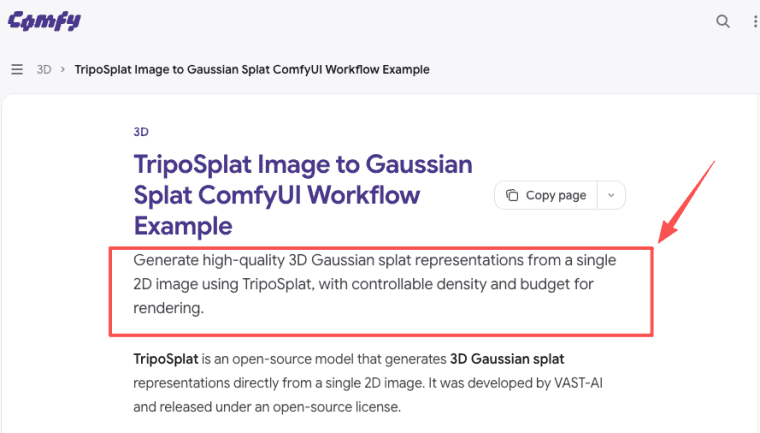
For a non-technical founder, that combination is a signal, not just a tool. It says: people want a 3D thing from a single photo, fast, and the tooling ecosystem is rushing to make it one click. The question stops being "can this be done" and becomes "what would I have to add to charge money for it."
What TripoSplat is — and what it is not
Here's where I made myself read the actual repo instead of guessing, because the naming gets confusing fast.
An open source model, not a finished product
TripoSplat is an open source 3D model — code and weights, published by VAST AI Research and, per the official GitHub repository, released under the MIT License. You feed it one image. You get back a 3D Gaussian splat. That's roughly the whole interface. Developers who stay in the editor can follow the Codex in VS Code setup. The detail I would not skip is scope: when a founder says "TripoSplat is MIT-licensed," they should confirm that the license applies to the exact code, weights, release, or commit they plan to use. A GitHub repository page is a good starting point, but for a real product decision I would pin the version I tested and save the license file that shipped with that version.
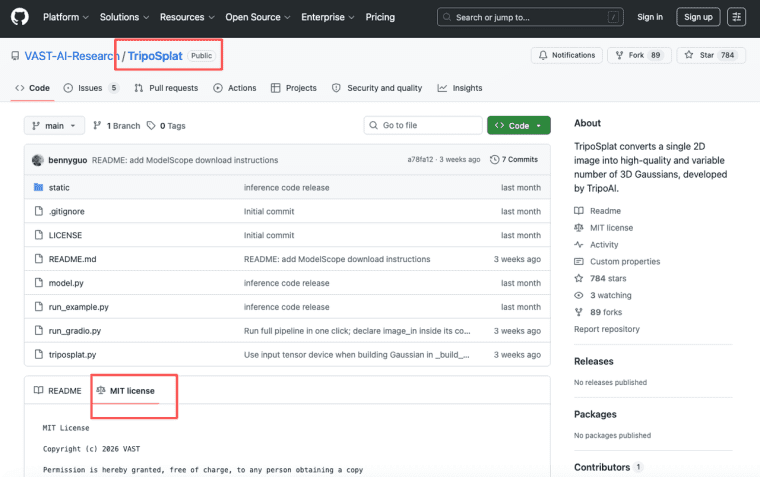
What it is not is an app. There's no login, no storage, no billing, no way for your customer to find it. It's an engine, and an engine is not a car. I think this is the single most expensive misunderstanding for first-time builders: you run the demo, it works, and your brain quietly files it under "done." It is not done. It's the easiest 10% done.
How it differs from a platform like TripoAI
This naming overlap got me, so I'll save you the confusion. TripoSplat (the open model) is not the same thing as TripoAI — also called Tripo, the larger 3D platform with Studio, text-to-3D, image-to-3D, rigging, texturing, and the 3.0 generation of its models.
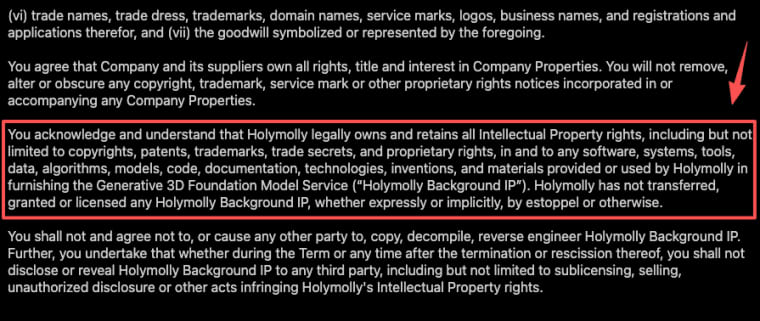
The difference that matters to a founder is commercial terms. With the open model, your rights come from the MIT license on the weights and code. With the hosted platform, your rights come from Tripo's service agreement — and those are genuinely different documents with different rules about what you can do with what gets generated. Tripo's own terms of service spell out that the company retains its background IP and governs output use through that agreement, and details like commercial rights and pricing sit on its official pricing page, which can change. Don't assume one set of rules covers both. I almost did. The practical difference is that an open-source license usually governs what you can do with the model files, while a hosted platform's terms govern your use of the service. Those are not interchangeable. A service agreement may define account limits, prohibited uses, payment rules, output rights, suspension rights, and changes to pricing or access. That is why I would read TripoSplat's repository license and TripoA's service terms as two separate legal layers, even if the names sound related.
| Option | Best For | Commercial Terms | Main Risk |
| TripoSplat self-hosted | Founders who want control and permissive licensing | MIT License on code and weights | You own infrastructure, UX, storage, and support |
| TripoAI hosted platform | Teams that want finished 3D tools and faster workflows | Governed by TripoAI service terms and pricing | Terms, limits, output rights, and pricing may change |
| Hunyuan3D-style open releases | Research, testing, and model comparison | Version-specific custom or community licenses | Commercial ambiguity and regional restrictions may apply |
This table is not a legal conclusion; it is the decision map I would use before choosing a build path. The next step would be to verify the exact license file, model card, hosted terms, and pricing page attached to the version or service I actually plan to ship.
Turning image-to-3D output into a real app
Okay. Say the model output is good enough for your use case. What stands between that and an image to 3d app someone pays for?
Uploads, 3D preview, export formats, and asset rights
The output is a 3D Gaussian splat, exportable as .ply or .splat — not a polygon mesh. That distinction decides a lot. Splats render beautifully in web viewers and real-time tools, but they're not what game engine rigging and collision systems were built around. Before you promise anyone anything: does your customer need a spinnable browser preview (splats work great) or a game-ready mesh (different tool, different day)?
Then the unglamorous list every real app needs: a real file handler with size limits and failure states, a 3D preview in the browser, export in the format the user actually needs, and asset rights spelled out somewhere they can find. I haven't shipped a splat-based product myself, so the "test it before you trust it" caveat applies — I can describe the formats but can't tell you how splat export behaves under real customer load.
Login, data, payments, and a path to users
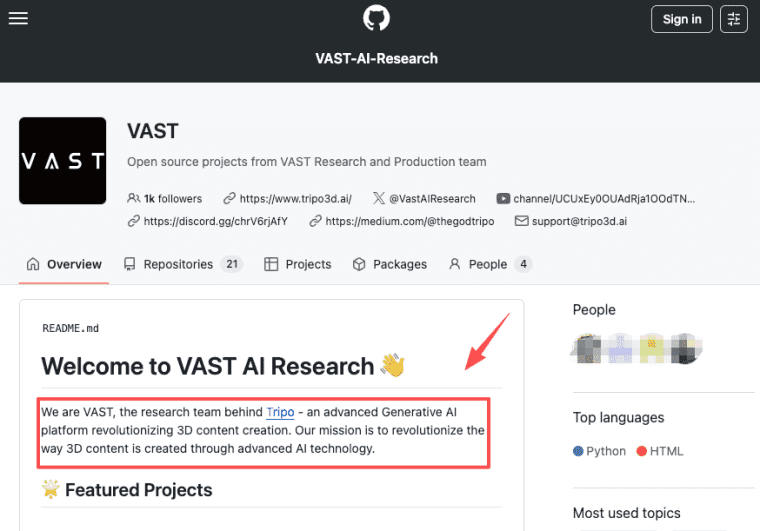
This is the part founders underestimate every single time, me included. An app needs accounts, somewhere to store what people make, a way to take payment, and — the one everyone forgets — an actual route by which strangers arrive. The model gives you zero of these. Not because it's deficient; because that was never its job. VAST AI Research publishes a range of open 3D models as research building blocks. The product layer is yours to build, every time.
TripoSplat vs other open image-to-3D models on licensing
Here's the differentiator I'd actually build a pitch around, and the reason I keep harping on the license.
TripoSplat's MIT license is unusually permissive — it broadly allows commercial use of both the code and the weights. Compare that to other popular open releases. Tencent's Hunyuan3D line, for instance, has shipped under custom community/non-commercial terms rather than a standard permissive license, and builders have openly argued in the repo over whether commercial use is even allowed, with some 2.x releases carrying regional restrictions on top.
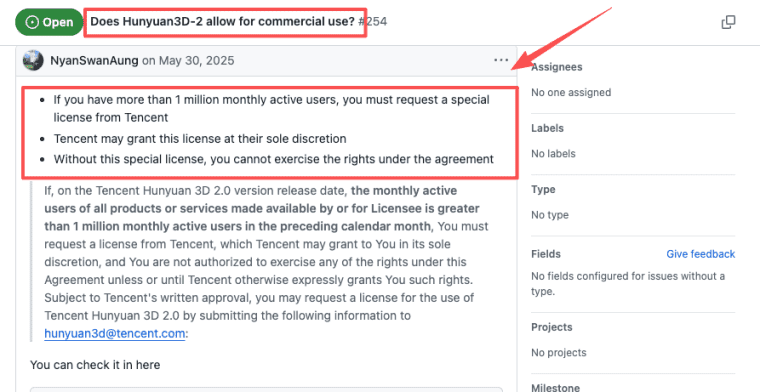
That ambiguity is a real cost. If you can't say with confidence whether you're allowed to sell what your app produces, you've built on sand. MIT removes most of that anxiety — which, for a founder, can be worth more than a few points of output quality.
Two honest caveats. First, "MIT on the model" doesn't settle everything: if you reach TripoSplat through a hosted API instead of running it yourself, that host's separate terms also apply. Second, license text gets updated. Read it at integration time, not planning time, and confirm against the source rather than a blog (including this one).
A few things worth sitting with
If you take one idea from this: the model is the cheap part now. The expensive part — accounts, payments, rights, a path to users — is exactly the part open models don't hand you, and exactly the part customers are paying for.
Pick your customer's real need before you pick a format. Read the license before you build the pitch. And test the boring middle — uploads, exports, edge cases — before you promise anyone a launch date. That's the order I'd go in if I were starting this today. Then I'd probably break it once and do the second build better.
Explore More Topics:
FAQ
Do I own the 3D models a user generates in my app?
Ownership of generated output is governed by the license of whatever model you used plus your own terms of service with your users — they're two separate layers. The MIT license covers your right to use and ship the model; it does not automatically write your customer agreement for you. Spell out in your own terms who holds rights to generated assets, and confirm the specifics against the official model documentation rather than assuming. When in doubt, get a quick legal read before launch.
Can users freely use the 3D models my app generates?
That depends on the access path, and it's worth pinning down early. If you self-host an MIT-licensed model, the permissive terms generally flow through — but if you reach the model via a hosted API, that provider's terms also apply and may differ. Always defer to the official, current documentation of whichever path you ship on; these terms get revised, and the latest version is the one that binds you.
Is it risky to build a product on a model I don't control?
There's real risk, but it's manageable if you name it. You don't control the model's roadmap, so a future version could change behavior or terms. Mitigate by pinning to a specific version you've tested, keeping your app layer (accounts, payments, data) cleanly separated from the model so you can swap engines, and re-reading the license at each upgrade rather than once at the start.
When does using an open-source model create more problems than using a hosted platform?
Roughly when the operational burden outweighs the control you gain. Self-hosting an open model means you own infrastructure, uptime, scaling, and security — work a hosted platform absorbs for you. If you lack the engineering bandwidth to run and maintain that yourself, a hosted option may be simpler despite less flexibility. Compare the actual obligations of each path against your team's capacity before deciding, and check current platform terms and policies on the provider's official documentation.


