
Elin here. A lot of founders are stuck in the same loop: reading model news, refreshing launch rumors, and wondering if they should delay their AI app until GPT-5.6 becomes broadly available. I get it. A stronger model feels like it might save the product. But most early AI apps do not fail because the model was one release behind. They fail because the user job was fuzzy, the data flow was weak, onboarding was confusing, or nobody proved the app was worth using twice. So the better question is not "Will GPT-5.6 be better?" It is: "What can I validate before the model changes?"
The Short Answer for Founders
If your app idea is waiting in a notes file because of GPT-5.6, do not wait by default. Launch the smallest version that can test the user workflow now.
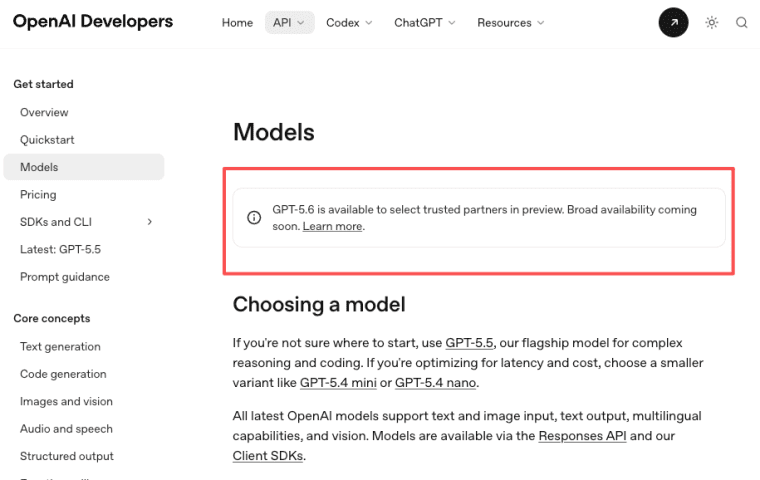
I checked OpenAI's official model page before writing this because model-status content gets stale fast. As of July 3, 2026, OpenAI lists GPT-5.6 as available to select trusted partners in preview, with broader availability coming soon. That is a useful signal. It is not a launch date. For founders, the important part is this: preview access is not the same thing as a model you can safely build a public roadmap, pricing page, or customer promise around. For a non-technical founder, the first bottleneck is usually not the model. It is the product shape: who the app is for, what real data users bring, what useful output they expect, whether they will pay, and whether the product survives when the AI is slow, expensive, or wrong.
Do not wait unless the app depends on a specific unavailable model capability
Waiting makes sense only when your app cannot work without a capability that current broadly available models do not provide.
Do not wait just because GPT-5.6 sounds stronger. Do not wait because people are posting screenshots. Do not wait because you imagine the next model will fix positioning, support, payments, onboarding, SEO, retention, or trust. A founder should wait only when the core experience is truly capability-gated. Maybe the app requires reasoning quality that current models consistently miss. Maybe the workflow depends on latency that current models cannot reach. Maybe the product needs a specific multimodal behavior that cannot be mocked, narrowed, or routed around.
If you cannot name the exact unavailable capability, you are probably not waiting for GPT-5.6. You are delaying AI app validation.
What GPT-5.6 Preview Status Changes
Preview status changes the risk level. It does not create a product strategy by itself. The official model page lists GPT-5.6 as preview-limited, while still directing builders who need to choose today toward GPT-5.5 for complex reasoning and coding, or smaller GPT-5.4 variants for latency and cost-sensitive workloads. That means founders should avoid writing roadmaps, pricing pages, customer promises, or launch plans around capabilities they cannot verify in their own account.
Access, pricing, latency, and capability claims cannot be treated as stable
Before you make GPT-5.6 part of your business plan, verify access, public pricing, latency, and actual task quality from official sources and your own tests.
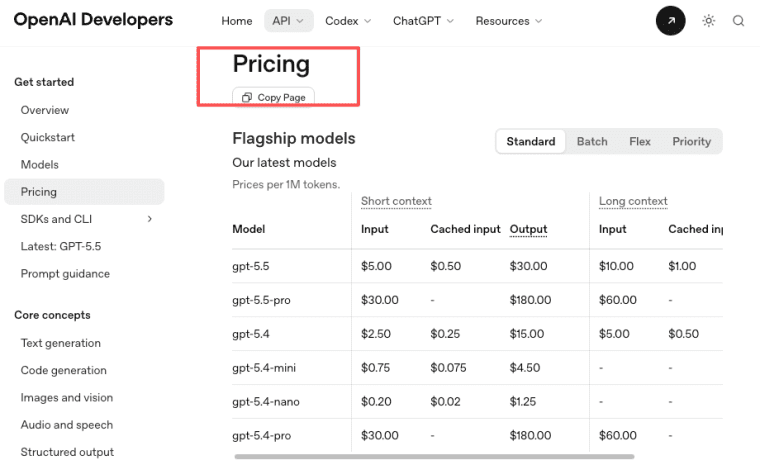
For pricing, use the official OpenAI pricing page, not social posts or secondhand spreadsheets. For speed-sensitive workflows, OpenAI's latency optimization guide is a better reference than assuming the newest model will feel faster in your app.
Capability claims need the same caution. A model can look impressive in a demo and still be the wrong fit for your product. Your app has its own inputs, edge cases, tone requirements, user expectations, and failure modes.
The uncomfortable part is simple: even when a better model arrives, your app still needs a working business loop.
The Product Validation Work You Can Do Now
You can validate a lot before GPT-5.6 is broadly available.
You can test whether users care about the problem, whether they provide real inputs, whether the output is useful enough to save or pay for, where people drop off, and whether the app has a repeat use case.
If you want to move from "I am waiting for the next model" to "I am testing whether this app should exist," start with an AI app builder like HappySeeds and build a launchable version around the user workflow first. The model can change later. Learning should start now.
Define the user job, input data, output value, and repeat use case
Start with one sentence: users come here to turn a specific input into a specific output so they can get a specific business result. If that sentence is hard to write, the model is not your main issue yet.
Then look at the input data. Is the user typing a prompt, uploading a file, pasting notes, connecting a spreadsheet, answering onboarding questions, or bringing customer history into the app? AI products break when founders imagine clean inputs and real users bring messy ones.
Next, define the output value. "A better answer" is too vague. "A client-ready summary they can send in five minutes" is testable. "A weekly action plan based on store data" is testable. "A draft investor update created from raw notes" is testable.
Finally, define repeat use. One impressive generation is not a product. A repeat use case happens every new client, campaign, class, report, support ticket, or planning cycle.
Build login, data flow, onboarding, payments, SEO, domain, and analytics foundations
A serious validation build needs more than a prompt box. It needs a login so users can return to saved work. It needs a data flow so users can add, edit, and reuse real inputs. It needs onboarding that gets a cold user to value without the founder explaining every step. It needs payments or at least a pricing test. It needs SEO and a domain, so users understand the product before signing up. It needs analytics so you can see activation, conversion, drop-off, and repeat use.
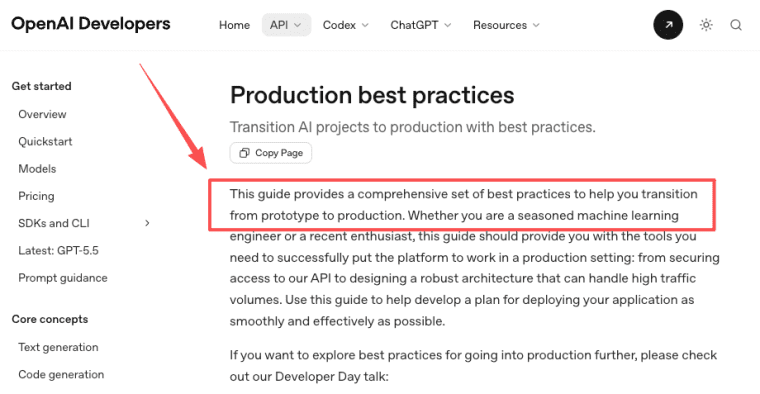
OpenAI's production best practices are a useful reminder that going live is not just calling a model. Reliability, monitoring, safety, and operational habits matter before users trust the product.
| Layer | What it proves |
| User job | The app solves a real problem. |
| Real data | Users will bring the inputs the app needs. |
| Login and saved state | The app is useful beyond a one-time demo. |
| Payments | The value is strong enough to test willingness to pay. |
| SEO and domain | The product can explain itself to cold traffic. |
| Analytics | You can see where users activate, convert, or leave. |
| Fallback and usage control | The app can handle model failure, cost, and limits. |
| Rollback plan | You can change models without breaking the product. |
This is why waiting for GPT-5.6 can become a trap. You can do most of this work now.
A Decision Framework: Wait, Launch, or De-risk
Do not ask, "Will GPT-5.6 be better?" Ask, "Which decision reduces the most risk this week?"
Wait only for capability-gated use cases
Wait if your app is genuinely capability-gated. That means current models cannot deliver the core promise even after you narrow the workflow, improve the input structure, and add human review where appropriate.
A high-stakes decision-support product may need a stricter threshold. A voice workflow may depend on latency. A coding or agentic workflow may require reliability that current models cannot reach for your exact task.
The gate should be written down and measurable. "Current models fail expert review on the core task" is a real gate. "GPT-5.6 might be smarter" is not.
Launch when value can be tested with current models
Launch when the user value can be tested today, even if the model layer may change later. If current models can create a useful draft, summary, recommendation, workflow step, analysis, or personalized experience, ship a narrow version. Make the promise smaller if needed. Add review steps. Set expectations clearly.
The first job is not to prove your model stack is final. The first job is to prove someone wants the result.
De-risk when cost, quality, or fallback logic is still unknown
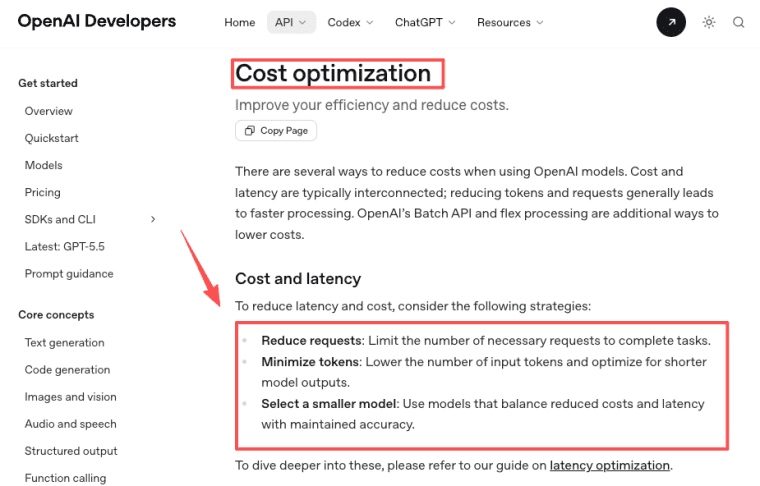
De-risk when the app might work, but the economics or reliability are unclear. This is the middle path: private beta, capped usage, manual review, limited workflow scope, paid pilot, or founder-assisted onboarding. OpenAI's cost optimization guide is useful here because token price is only one part of the cost. Long prompts, retries, failed generations, unnecessary context, and support time can quietly eat your margin. De-risking is not procrastination when it produces evidence.
How to Build a Replaceable Model Layer
A replaceable model layer means your app can switch models without rebuilding the product. This is where founders should pay more attention. Not predicting GPT-5.6. Preparing for model change.
Prompt boundaries, eval checks, fallback models, usage limits, and cost alerts
Start by separating the model layer from the product layer. Keep system instructions, task prompts, user data, output format, and post-processing rules separate enough that you can swap one piece without breaking everything else.
Then create a quality baseline. Use real user inputs, expected outputs, and clear notes on what counts as acceptable, weak, or unsafe. As the workflow grows, you can make the evaluation process more formal. But even a small founder-run eval set is better than judging results by vibes.
A model fallback should exist before launch. It is not only an error handler. It is the plan for what happens when the primary model is unavailable, too slow, too expensive, or producing weak outputs. Sometimes the fallback is another model. Sometimes it is a simpler response, a human-review queue, or a clear message that the task cannot be completed right now.
Usage limits matter too. Free trials without limits can destroy your test budget. Paid plans without limits can destroy your margins.
Cost alerts are the founder's sanity check. If you cannot see the model spend per successful user task, you do not know whether the app can make money.
Founder Checklist Before Replacing the Model
Replacing the model should feel boring. If it feels dramatic, the product is too dependent on one model's quirks. Before switching to GPT-5.6 later, use this checklist as a decision table.
Quality baseline, user feedback, pricing impact, support risk, and rollback plan
| Area | What must be true before replacing the model |
| Quality baseline | Real user inputs, reviewed outputs, known failure patterns, and acceptable quality are documented. |
| User feedback | The team knows whether users complain about correctness, speed, tone, missing context, or workflow fit. |
| Pricing impact | Official pricing has been checked, and cost per completed task is understood. |
| Support risk | The team knows whether the new model changes output style, saved workflows, expectations, or safety behavior. |
| Rollback plan | The app can return to the previous model quickly if quality, cost, or latency gets worse. |
A model replacement should not be judged by one impressive demo. Compare it against your real baseline. Run it on actual user tasks. Watch cost, support issues, and workflow completion.
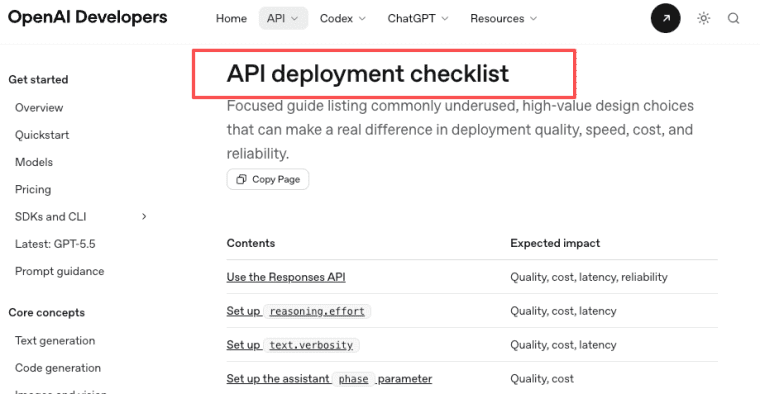
For production readiness, OpenAI's deployment checklist is a better anchor than launch excitement. I say this as someone who has shipped things on excitement. The second build is usually less embarrassing when there is a checklist to slow you down in the right places.
Explore More Topics:
FAQ
When should a founder wait for GPT-5.6?
A founder should wait when the app's core value depends on a capability current broadly available models cannot deliver. The key is specificity. If the blocker is measurable, such as unacceptable accuracy on expert-reviewed tasks or latency that breaks the workflow, waiting may be justified. If the blocker is general excitement about GPT-5.6, launch a smaller validation test instead.
What can be validated before a new model is broadly available?
You can validate the user job, input flow, output format, onboarding path, payment intent, SEO positioning, domain trust, analytics, support burden, and repeat-use behavior. These signals tell you whether the app deserves a stronger model later.
How should an AI app prepare for model replacement?
An AI app should prepare by keeping prompts modular, logging outputs responsibly, building eval checks, setting usage limits, designing fallback behavior, and creating a rollback path. If you use an AI app builder, make sure the workflow is not trapped inside one fixed model assumption.
What risks matter more than model choice before launch?
The biggest pre-launch risks are weak demand, unclear output value, poor onboarding, missing payments, no analytics, uncontrolled usage cost, no fallback path, and no support plan. A better model can improve answer quality. It cannot fix a product that never proved users wanted the result.


