I was mid-build on a client assessment tool when the Anthropic Opus 4.8 announcement dropped. The first thing I did wasn't read the benchmark numbers — I went straight to the pricing section. Because that's the thing that actually decides whether a model belongs in a live, monetized app or stays in the prototype drawer.
Hi, I'm Elin — a non-technical founder who's been building and shipping AI-powered tools while constantly wrestling with the real economics behind them.
If you're a non-technical founder, consultant, or indie builder trying to figure out what claude opus 4.8 pricing means for the AI app you want to charge real money for, here's the honest version.
Why Opus 4.8 Pricing Matters for AI App Builders
Choosing a model isn't just a technical question. It's a unit economics question. Every AI call in a live app is a cost. Those costs stack against your subscription price, your margins, and whether the product is sustainable after the first 50 paying users.
Most tutorials cover what a model can do. What they skip is what happens to your cost structure when users actually start using it — running queries, submitting documents, looping through workflows.
Opus 4.8 is Anthropic's flagship. That generally means the most capable — and the most expensive at the base rate. Before you wire it into your app's core feature, the question isn't "is it good?" It's "can I afford every user to use it, at my price point, at my usage assumptions?"
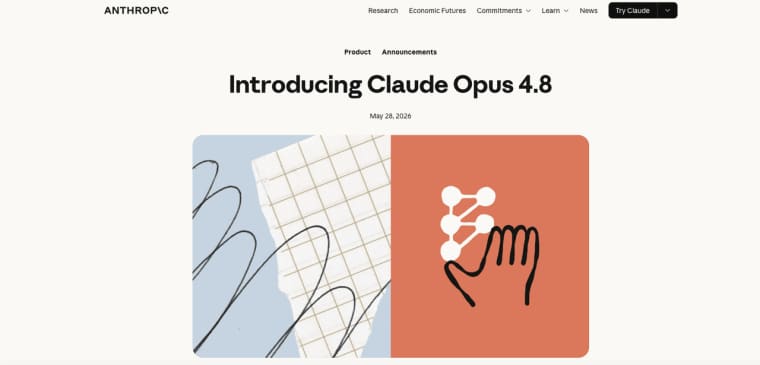
What Is Confirmed About Claude Opus 4.8
Anthropic Opus 4.8 Release and API Availability
Claude Opus 4.8 pricing starts at $5 per million input tokens and $25 per million output tokens — unchanged from Opus 4.7, per Anthropic's May 28, 2026 launch announcement. Up to 90% cost savings are available with prompt caching; 50% with batch processing. Founders often wire identity through Codex + Kinde. The model is accessible to Pro, Max, Team, and Enterprise users on claude.ai, and to developers via the Claude API using the model ID claude-opus-4-8.
Fast Mode runs at approximately 2.5x speed at $10/$50 per million tokens — optional, and three times cheaper than the previous Opus fast tier which ran at $30/$150. Note: as of launch, Fast Mode access requires contacting your Anthropic account manager to join the research preview. Verify current access terms at the official Anthropic pricing page.
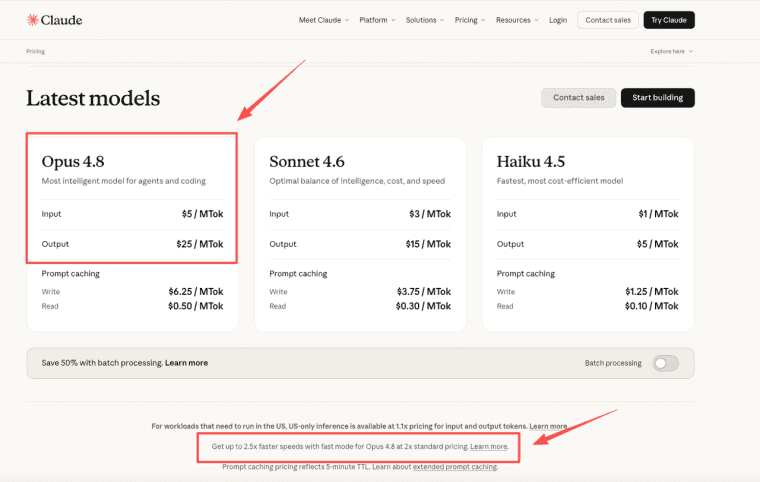
One small but useful detail for cost modeling: Opus 4.8 lowers the minimum cacheable prompt length to 1,024 tokens (down from a higher minimum on 4.7). Shorter prompts that previously couldn't be cached can now create cache entries with no code changes — worth knowing if your app has lots of short, repeated context.
A note on token efficiency: Independent testing by Artificial Analysis (May 28, 2026) found Opus 4.8 used 35% fewer output tokens and 15% fewer turns than Opus 4.7 on agentic tasks — meaning effective cost per completed task can run lower than the rate card suggests. That said, the same evaluation found the model more verbose on output-heavy workloads overall. Token efficiency is task-dependent, not guaranteed. Set output-token caps for output-heavy features and test on representative prompts before projecting lower costs.
How Founders Should Think About Anthropic API Pricing
Prototype Cost vs Live App Cost
There's a version of building where you spin up a demo, send it to a few friends, costs $2, everything looks fine. Then real users arrive.
The math that matters for a live app: one user interaction cost × expected monthly usage per user × number of users at target scale. Not what you spent in testing.
A document-analysis app where each user submits a 20-page PDF might consume 8,000–15,000 tokens per request. At $5 input / $25 output, that's roughly $0.15–$0.45 per call. A $29/month subscriber using it 30 times costs $4.50–$13.50 in model costs alone. That can work — but it has to be modeled before you ship.
Usage, Margins, and Model Routing
The pattern most experienced AI app builders use isn't "pick one model and apply it everywhere." It's routing: use the cheapest model that handles a task acceptably, and reserve Opus for calls where capability actually matters.
Running all subagents on Opus 4.8 in a complex pipeline can multiply costs 3–5x versus a tiered architecture where Opus orchestrates and cheaper models execute. Which features actually require frontier reasoning? A client intake form probably doesn't. A synthesis step across uploaded documents probably does.
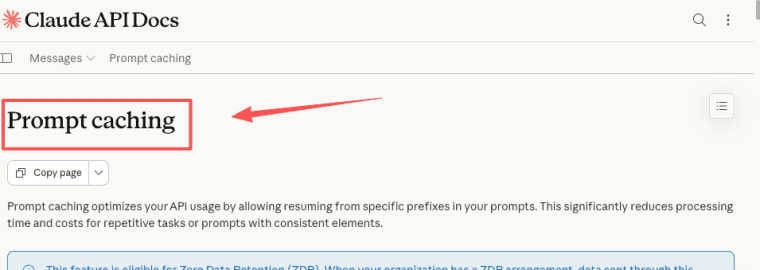
The Anthropic API docs on prompt caching are worth a read before you finalize any architecture — even if you're building on an app platform rather than raw API code.
When Opus 4.8 May Fit an AI App
Opus 4.8 earns its cost in specific scenarios — when reasoning quality, not just generation speed, is your app's core value:
- Low-volume, high-margin professional tools. A consultant charging $500/month can absorb higher model costs. The per-call cost is a small fraction of the value delivered.
- Workflows where errors are expensive. Anthropic says Opus 4.8 is around four times less likely than Opus 4.7 to let flaws in its own generated code pass without comment. If a wrong output costs a refund or a client relationship, the quality premium can pay for itself.
- Long-context document work. The 1M-token context window matters when your app processes substantial files. Smaller models have shorter context limits — chunking workarounds tend to hurt quality.
- Async or batch workflows. Batch processing carries a 50% discount for workloads that don't need real-time responses, covering more use cases than most builders realize.
When a Cheaper Model May Be Better
When you're building on Opus 4.8, not every feature in your app needs to run on it. A lot of AI app features don't need Opus-level capability. Defaulting to the flagship is one of the most common ways builders end up with unit economics that don't hold.
Consider Claude Sonnet 4.6 ($3/$15 per million tokens) or Haiku 4.5 ($1/$5) when:
- The task is structured and bounded. Field extraction, request classification, templated responses — no frontier reasoning required.
- Volume is high and per-interaction value is low. A $9/month plan with hundreds of AI calls per user needs tight cost discipline.
- You're still validating. Before confirmed retention, build on the cheapest model that gets acceptable outputs. Upgrade when you understand the real usage pattern.
- Latency matters more than depth. A lighter model can be better UX for certain features even with Fast Mode available on Opus.
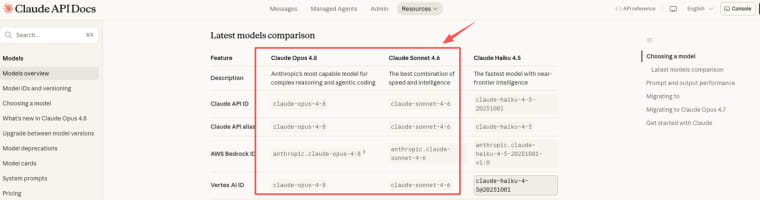
The Anthropic models overview has current specs for all available models — useful for a side-by-side before committing.
I'll keep updating this site as Anthropic's model lineup evolves — pricing changes, new releases, and the practical tradeoffs that matter for builders.
FAQ
What is Claude Opus 4.8?
Anthropic's newest Opus model, released May 28, 2026. Built for advanced coding, AI agents, long-context reasoning, and professional knowledge work. API model ID: claude-opus-4-8, with a 1M-token context window.
How does prompt caching and batch processing impact real-world costs?
These two features are among the most important cost-control tools for Opus 4.8. Prompt caching can deliver up to 90% savings on repeated context, while batch processing offers 50% discounts for non-real-time workloads. Builders who implement them properly often see materially lower effective costs than headline pricing suggests.
What’s the smartest way to use Opus 4.8 without blowing up your unit economics?
Use intelligent model routing: reserve Opus 4.8 for high-value, complex reasoning steps (synthesis, critical analysis, agent orchestration) and route simpler tasks to Sonnet or Haiku. This hybrid approach is currently the most common pattern among profitable AI app builders.
Is "Opus 4.8 Max" the same as Anthropic API pricing?
No. "Max" refers to Anthropic's Max subscription plan on claude.ai — a flat monthly fee for higher personal usage limits. That's separate from the Claude API, which charges per token. If you're building an app through the API, you're on token-based pricing regardless. For claude.ai personal access, see claude.com/pricing/max. The two systems don't interact.