I'm Elin. A founder friend texted me the day Fable 5 dropped asking how to build his app on Claude Mythos 5. He'd seen the benchmarks, watched it top nearly every chart, and figured that was obviously the one to build on. I almost said "yeah, go for it" — and then I stopped and actually went and read the docs. Good thing I did, because most builders can't touch Mythos 5 at all.
So before you sketch your product around it, here's what I found: what Mythos 5 really is, who can actually use it, and why Fable 5 is the model you probably want instead. I checked the official sources for this one — I didn't want to send you down the same wrong path I almost took.
30-second answer: Claude Mythos 5 is real, it's powerful, and it's not generally available — it only goes to vetted partners in Anthropic's Project Glasswing. If you're a regular builder, the model you'll actually use is Claude Fable 5, which shares the same capabilities but ships with safety guardrails. Open workflows can start from OpenCodex. Build your product around Fable 5. Don't build it around something you can't get.
Why Founders Are Asking About Claude Mythos 5
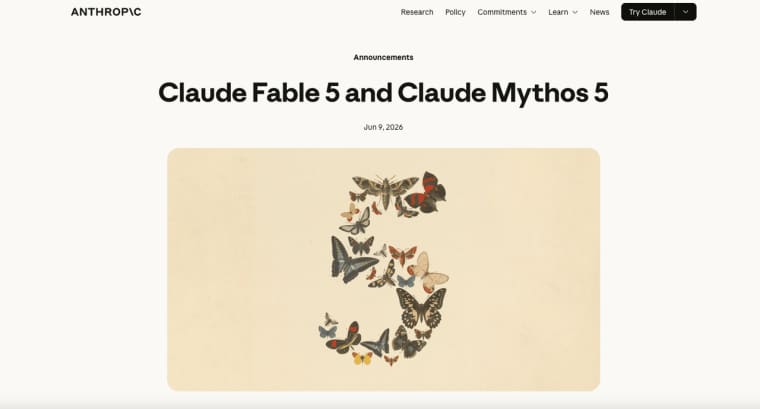
The hype cycle did its thing. When Anthropic announced Fable 5 and Mythos 5 on June 9, the headlines were all about benchmarks — Mythos-class models smashing software engineering and science scores, Mythos 5 sitting at the very top.
So naturally, every non-technical founder I know saw "most powerful model" and thought: that's the one for my app.
I get the instinct. I used to do the same thing — chase the shiniest number, assume bigger model equals better product. But here's the thing I keep relearning the hard way: the model on top of the leaderboard is rarely the model you can actually ship on. And in this case, that gap isn't subtle. It's a wall.
What Mythos 5 Is and Who Can Access It
Mythos 5 is the less-restricted, more-locked-down sibling. Same underlying capabilities as Fable 5, but without the safety classifiers — and that's exactly why Anthropic keeps it on a short leash. A model that powerful, with the guardrails off, isn't something they hand out to anyone with a credit card.
It's the successor to the older Mythos Preview, and it's aimed at things like cybersecurity research and critical infrastructure work, where the people using it have been vetted first.
API ID, Project Glasswing, and limited availability
Here's the part I had to look up because I couldn't remember it cleanly. The API model ID is claude-mythos-5 — so yes, it technically exists as a callable model. But "exists" and "you can use it" are not the same sentence.
Mythos 5 is not generally available. It's offered in limited release only to approved customers inside Project Glasswing, Anthropic's restricted program that started a couple of months back with a small group of organizations — the kind that run critical infrastructure. To get access, you have to go through an Anthropic, AWS, or Google Cloud account team. There's no self-serve signup. No "upgrade to Mythos" button.
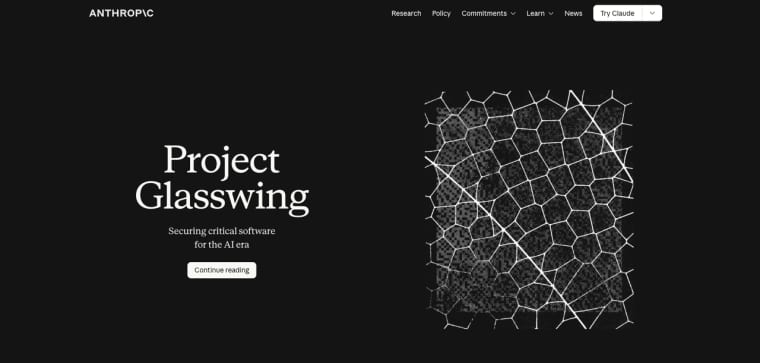
Anthropic plans to expand access through two separate tracks: a systematic application process for cybersecurity organizations, and a separate life sciences program that will allow some researchers to use a version with biological and chemical restrictions relaxed while cybersecurity restrictions remain in place. If you're in either of those fields and serious about applying, that's the path to watch — but it's a waiting game, not a product decision you should block on today.
If you're a solo founder building a quiz app or a client portal, you are not the customer Glasswing was built for. And that's fine — you don't need to be.
Mythos 5 vs Fable 5: The Practical Comparison
| Claude Mythos 5 | Claude Fable 5 | |
| API model ID | claude-mythos-5 | claude-fable-5 |
| Pricing | $10 / $50 per 1M tokens | $10 / $50 per 1M tokens |
| Context window | 1M tokens | 1M tokens |
| Max output tokens | 128K | 128K |
| Safety classifiers | Lifted in cybersecurity domain | Cyber / bio / chem / distillation → falls back to Opus 4.8 |
| Fallback to Opus 4.8 | No | Yes — in under 5% of sessions |
| General availability | ❌ Project Glasswing only | ✅ Claude API, AWS, Vertex AI, Azure Foundry |
| Self-serve access | ❌ Account team required | ✅ Available now |
| Data retention | 30 days mandatory, no ZDR | 30 days mandatory, no ZDR |
| Who it's for | Vetted cyber defenders, critical infrastructure, select researchers | Everyone else |
Specs as of June 9, 2026. Verify current availability on Anthropic's official documentation.
Why Most Builders Should Look at Fable 5 Instead
This is the actual answer to my friend's question, and probably yours.
Claude Fable 5 is the publicly available version. Per the official model docs, Fable 5 and Mythos 5 share the same specs and the same capabilities — the difference is that Fable 5 adds safety classifiers that let Anthropic open it up to everyone. So you're not getting a watered-down model. You're getting the same engine with a seatbelt.
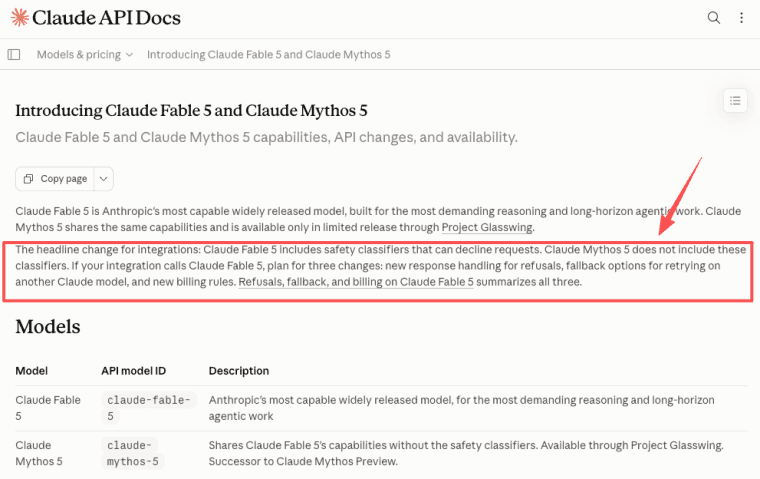
For a normal AI app builder, that's the whole game. Fable 5 is available through the Claude API, on AWS, Bedrock, Vertex AI, and Microsoft Foundry. You call it as claude-fable-5. No account team, no vetting program, no waiting list. If your app needs frontier-level reasoning or long, multi-step agentic tasks, this is the thing you build on — and the Anthropic Fable 5 release is what made that level of capability publicly buildable in the first place.
I'll be honest about what I didn't test: I haven't run a production app on Fable 5 myself yet — it's days old as I write this. So I'm speaking to what's documented and available, not to six weeks of battle scars. When I have those, I'll update this.
Safety classifiers, fallback, and product planning
This is where model safety stops being abstract and starts affecting your code.
Fable 5's safety classifiers cover four domains: cybersecurity, biology, chemistry, and model distillation. When a request trips one of those classifiers, the model doesn't crash. According to Anthropic's refusals and fallback guide, a refusal comes back as a normal successful response with a refusal stop reason, and many of those queries quietly fall back to Claude Opus 4.8 instead. Anthropic reports this triggers in fewer than 5% of sessions on average.
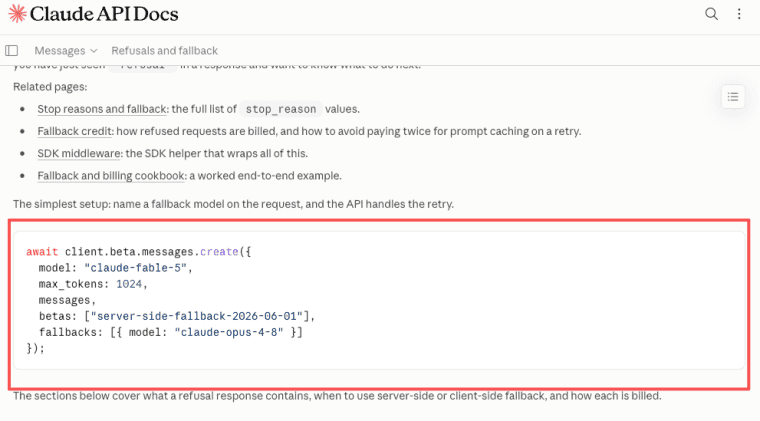
For product planning, that means three things you need to handle if you build on Fable 5: response handling for refusals, a fallback path to retry on another model, and slightly different billing (you're not charged for a request that's refused before any output). None of this is scary. But if you don't plan for it, your app will do something weird the first time a user trips a classifier — and you'll be debugging it at 11pm wondering why one prompt returns empty. Ask me how I know that kind of surprise feels.
Model Power Is Not the Same as Product Success
Here's the part I actually believe, leaderboard or not.
I've shipped enough broken things to know that the model was almost never the reason my stuff failed. My apps broke because onboarding was confusing, because I never set up payments properly, because the thing did one job badly instead of nothing well. Not because GPT-whatever scored two points lower on a benchmark I'd never run myself.
Chasing the most powerful restricted model is a really comfortable way to procrastinate. It feels like progress — researching frontier specs, reading API IDs, comparing token limits. But none of that ships a product. A founder waiting on Mythos 5 access is a founder who isn't launching.
The boring truth: a live app on Fable 5 — or honestly on a cheaper model that's good enough — beats a perfect plan built around a model you'll never get approved for. The second build is always better than the first idea. You don't get to a second build by waiting for the perfect engine. You get there by shipping the rough one.
So if you took one thing from this: stop planning around Claude Mythos 5. Build the thing on what you can actually call today, find out what's actually broken, and fix that. That's the part that moves you forward.
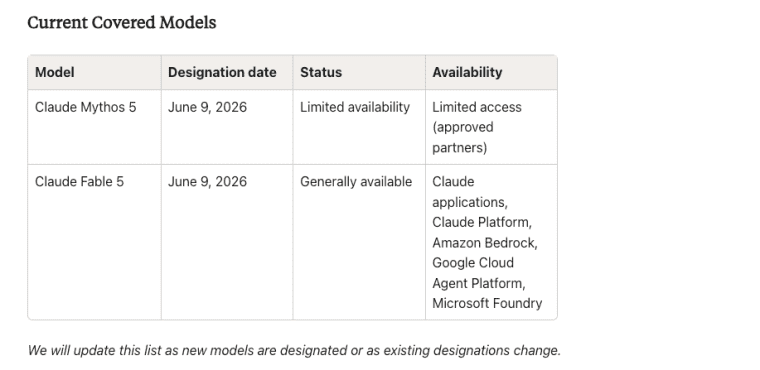
This was accurate as of June 2026, based on Anthropic's official announcement and API documentation. Model availability, pricing, and data policies change — worth double-checking the docs if you're reading this later.
Explore More Topics:
FAQ
Is Claude Mythos 5 available to regular app builders?
No, not yet. Mythos 5 is currently restricted to a small number of vetted organizations through Anthropic’s Project Glasswing program. Regular developers and most startups cannot access it via self-serve API or subscription. If you’re building a commercial product right now, you should plan around Fable 5 instead.
How is Mythos 5 different from Fable 5?
They share the same core model weights and capabilities. The main difference is safety architecture: Mythos 5 has the guardrails mostly removed (intended for high-trust research and enterprise partners), while Fable 5 includes active safety classifiers that can refuse certain high-risk prompts and fallback gracefully. This makes Fable 5 suitable for broad public use, while Mythos 5 remains limited-access.
Why should founders avoid planning a product around restricted models?
Because you can't ship on a model you can't access. Designing your roadmap, pricing, or core feature around Mythos 5 means waiting on an approval that most builders will never get. Build on what's generally available today, validate it, and revisit advanced access later if your use case ever genuinely needs it.
What data retention rules should builders check before using Mythos-class models?
Fable 5 and Mythos 5 are both designated Covered Models, which carry specific data handling rules and are not offered under zero-data-retention terms. Retention and policy details change, so don't take my summary as gospel — check Anthropic's official documentation for the current rules before you process real user data.
When should founders focus on app launch instead of frontier models?
Almost always at the start. If you don't have a launched product yet, the bottleneck is shipping, not model choice. Pick a generally available model that's good enough, get something live, learn from real users, and only upgrade your model when you've hit a wall the current one genuinely can't clear.