Elin here. I almost wired Fable 5 into a paid side project last week before I'd read the rate card. Classic me — click first, math later. So before writing any of this, I pulled up Anthropic's official pricing page, noted the date, and did the boring arithmetic. Because claude fable 5 pricing is exactly the kind of thing I've gotten wrong in a post before, and someone always catches it in the comments.
Here's the short version if you're pricing an AI app: Fable 5 is the most expensive model Anthropic ships to the general public right now. If you don't design around that number, your margins quietly evaporate. This post is the actual cost, the billing edge cases that surprised me, and where I'd send work to a cheaper model instead.
The 30-second answer
- API rate: $10 per million input tokens, $50 per million output tokens.
- Context: 1M-token window by default, up to 128k output tokens per request.
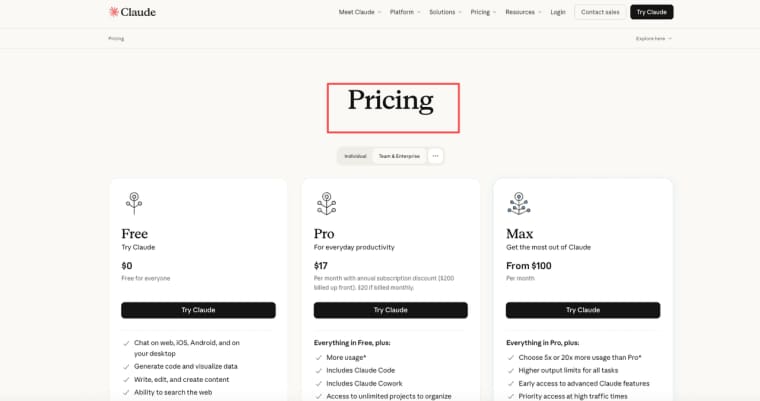
- Subscriptions: included on Pro / Max / Team / seat-based Enterprise at no extra cost through June 22, 2026 — then it moves to usage credits. Schema and branch workflows fit Codex + PlanetScale well.
- Refused requests with no output: not billed.
- Don't make it your default model. Route the easy stuff elsewhere.
If that's all you needed, great. The rest is the detail I'd want before putting it on a real invoice.
Why Fable 5 Pricing Matters for AI App Builders
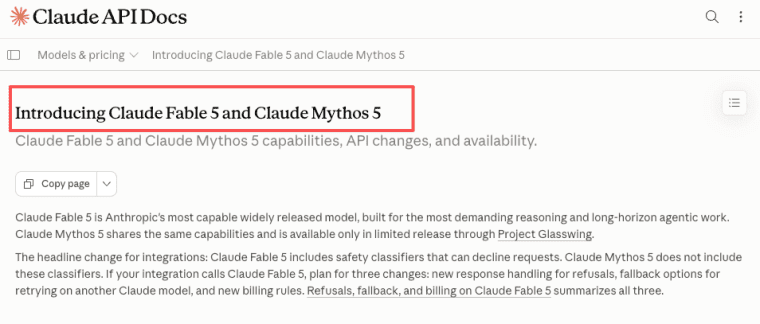
Anthropic Fable 5 — officially Claude Fable 5 — is the publicly released version of Anthropic's Mythos-class tier, the most capable model they've made generally available. It's built for hard, long-horizon, multi-step work. Which is also the reason it costs what it costs.
The thing I keep telling people: the model price isn't your real problem. Your real problem is how many tokens your app burns per user action, multiplied by how many users you have. A chatty agent that re-sends a 200k-token context on every turn will hurt at $10/M input. A tool that outputs long reports will hurt even more at $50/M output. The sticker rate is just the starting number — your architecture decides the bill.
So if you're charging users a flat monthly fee and routing all of it through Fable 5 without caps, you're one power user away from negative margin. I've watched that math go bad on smaller models. On this one it goes bad faster.
Official Claude Fable 5 API Pricing
I'm going to anchor every number here, because claude API pricing changes and I don't want to hand you a stale figure.
Input tokens, output tokens, and 128k output limits
Straight from the official Fable 5 introduction docs, as of mid-June 2026:
| Item | Value |
| Input tokens | $10 / million |
| Output tokens | $50 / million |
| Context window | 1M tokens (default) |
| Max output | 128k tokens per request |
| API model ID | claude-fable-5 |
That output side is the one that bites. Output tokens cost five times what input tokens do, and Fable 5 will happily generate a long response if you let it. A single uncapped 30k-token answer is $1.50 of output. One answer. Set max_tokens to the smallest value that keeps quality, and do it before you launch, not after the first bill.
Worth knowing: that 1M context window is billed at the standard per-token rate across the whole window — a near-full context request isn't a different price tier, it's just a lot of input tokens. So "I'll just stuff everything into context" is a spending decision, not a free convenience.
Two more numbers before you build a cost model. First, prompt caching: cached input tokens cost $1/M — a 90% discount off the standard input rate — which makes caching the difference between viable and expensive at long context. If your app sends a large system prompt on every request, enabling prompt caching is probably the single highest-ROI configuration change you can make.
Second, the tokenizer tax most comparisons skip: Fable 5 uses the tokenizer introduced with Opus 4.7, which may produce up to 35% more tokens from the same fixed text compared to older models. This matters if you're migrating from Opus 4.6 or earlier, or benchmarking against other providers on a per-token basis — your real cost increase from older models may be closer to 2.7× than the headline 2× suggests. Re-measure your prompts with the token counting API using model: "claude-fable-5" before finalizing any budget.
How Fable 5 Cost Affects AI App Monetization
This is the unglamorous bit. Not model capabilities — just what happens to your bill once real people start using the thing.
Credits, free tiers, paid plans, and model routing
If you or your users are on Claude Pro, Max, Team, or seat-based Enterprise, Fable 5 is included at no extra cost from June 9 through June 22, 2026. Starting June 23, Anthropic removes it from those plan limits and continued use is metered through usage credits billed at API rates. I haven't personally run a high-volume app across that switch yet — so I'm taking the dates from Anthropic's announcement, not from my own billing history. Mark June 22 on a calendar if your cost model assumes "it's included."
On the build side, the model is available on the Claude API, Claude Code, consumption-based Enterprise, plus AWS, Google Cloud's Vertex AI, and Microsoft Foundry. If you're doing agentic work, Claude Code Fable 5 sessions draw on the same rates, and they can run up tokens quietly because the agent keeps reasoning across steps.
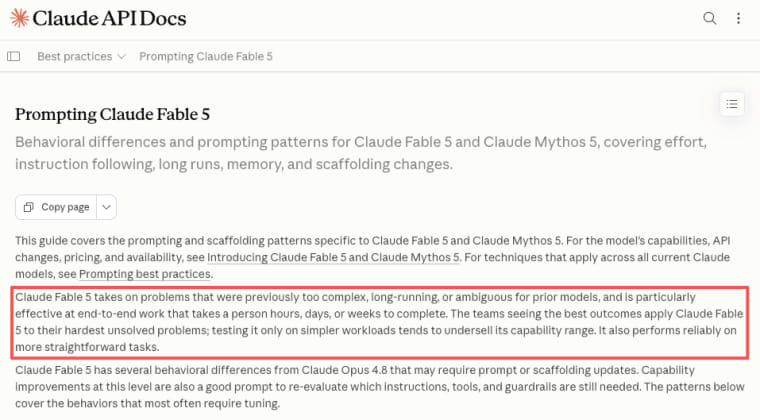
The single biggest lever for monetization is routing. You do not need your most expensive model for everything. Anthropic's own guidance on prompting Fable 5 basically says: save it for your hardest problems. So a sane setup looks like — cheap model for classification, formatting, and short replies; Fable 5 only for the genuinely difficult reasoning your product charges a premium for. If a task would run fine on Opus 4.8, that's where it should go. Your gross margin is mostly a routing table.
Safeguards, Fallback, and Billing Questions
Here's where Fable 5 behaves differently from older models, and where I'd have gotten tripped up if I hadn't read the docs.
Refusals, no-output billing, fallback credit, and prompt-cache cost
Fable 5 runs safety classifiers, and when one declines a request, the Messages API returns stop_reason: "refusal" as a normal HTTP 200 response — not an error. If your handler only allow-lists end_turn, max_tokens, and tool_use, a refusal becomes a silent dropped request. That's a real bug waiting to happen in production agent code. Treat refusal as a first-class response path.
On billing: prompt-stage refusals (blocked before inference begins) are not billed; mid-stream refusals (blocked after partial output) are billed for tokens generated before the block.
There's also an opt-in fallbacks parameter (in beta) that re-runs a refused request on another model. One critical caveat before you build on it: server-side fallback is available on the Claude API and Claude Platform on AWS only — it's rejected on the Message Batches API and not available on Amazon Bedrock, Vertex AI, or Microsoft Foundry. If you're on Bedrock or Vertex, you use the SDK middleware instead (available for Python, TypeScript, Go, Java, and C#), which does the same job client-side. On billing, fallback credit refunds the prompt-cache cost when you retry on another model, so you don't pay for that cache twice.
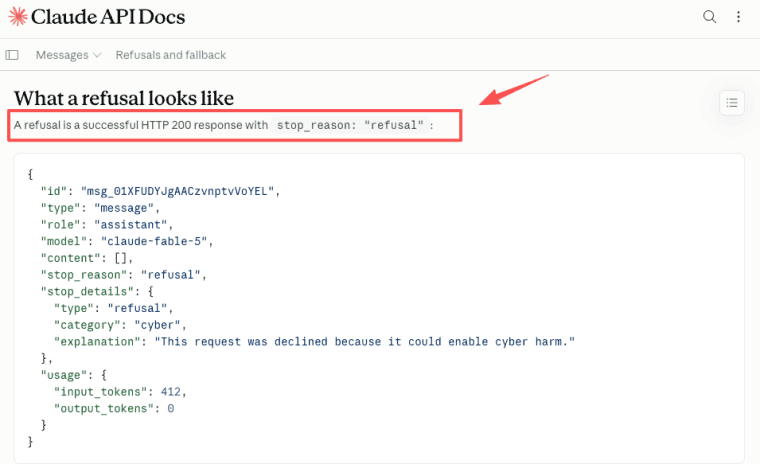
One caveat on all of this: classifier behavior and billing rules are exactly the kind of thing that gets tuned over time. Treat the specifics here as accurate when I wrote them, and check the official refusals and fallback docs for current behavior before you rely on it in production.
Bottom line
The honest takeaway on claude fable 5 pricing: it's a premium tool, and it earns its price only on hard problems. For everything else, it's an expensive habit. Before you ship, do four things — read the current pricing page yourself (it changes), set max_tokens caps, build a routing table that sends easy work somewhere cheaper, and recalculate your token counts under the new tokenizer before committing to a budget.
Figures verified against Anthropic's official pricing and Fable 5 documentation as of mid-June 2026. If you're reading this later, double-check the live docs before relying on the numbers.
Explore More Topics:
FAQ
How should founders estimate Fable 5 API cost for an app?
Estimate per user action, not per month. Take your average input tokens + average output tokens for one typical request, price them at $10/M and $50/M, then multiply by expected requests per user per billing cycle. Two adjustments before you finalize the number: enable prompt caching (cached reads are $1/M, a 90% discount) if you have a large repeating system prompt, and recalculate your token counts under the new tokenizer — the same text produces up to 35% more tokens than with pre-Opus-4.7 models. Then pressure-test against your heaviest user, not your average one.
Do refused Fable 5 requests cost money?
Prompt-stage refusals (blocked before any output is generated) are not billed. Mid-stream refusals (blocked after partial output) are billed for the input tokens and output already generated at normal rates. For the exact current behavior, check Anthropic's official documentation — refusal and billing rules can be updated.
How can fallback affect billing in an AI app?
If you enable the fallbacks parameter, a refused request is retried on the fallback model (Opus 4.8 is the only permitted target at launch) and billed at that model's rate. Fallback credit refunds the prompt-cache cost of switching. One catch worth knowing: the fallbacks parameter works only on the Claude API and Claude Platform on AWS — it's not available on Bedrock, Vertex AI, or Foundry, where you use the SDK middleware instead. Also, the response's model field reports the model that actually answered — so your analytics need to read the real serving model, not the one you requested.
When should founders route tasks to cheaper models?
Route anything that isn't genuinely hard — classification, formatting, short Q&A, summaries — to a cheaper model, and reserve Fable 5 for complex, multi-step reasoning where fewer iterations actually save you money. If a smaller model gets the job done at acceptable quality, paying frontier rates is just lost margin.