Elin here. I cloned the moneyprinterturbo github repo on a Sunday because I'd seen it on three different feeds and got curious. The repo has been accumulating attention since 2024 — it's not a new project, just one that keeps resurfacing when people rediscover it. Two hours later I had a faceless short video generating on my own machine. I felt great for about ten minutes. Then I tried to imagine charging someone money for it, and the whole thing fell apart in my head.
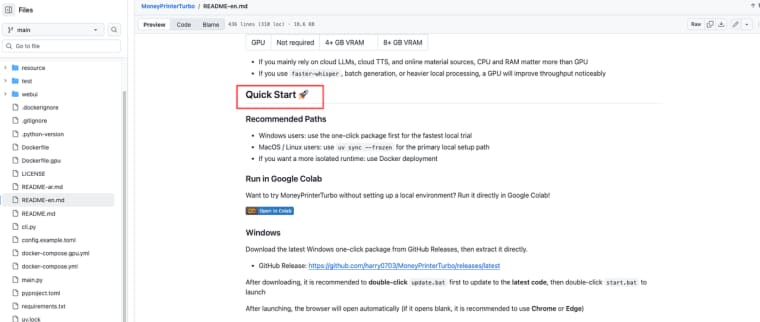
That gap — between "it works on my laptop" and "strangers pay me for this" — is the actual subject of this post. Not how to install it. If you want the install steps, the official README walks through Docker and the config file better than I could. I want to talk about everything that demo doesn't give you, and what it would take to close that distance.
Why GitHub Demos Are Not Finished Products
Here's the thing that took me an embarrassingly long time to internalize: a GitHub star count measures developer interest, not product readiness. MoneyPrinterTurbo has accumulated over 75,000 GitHub stars as of early June 2026 — the exact number keeps moving, so check the repo directly if the count matters to you. For VPS-style hosting, see Dokploy with Codex. That number tells you a lot of engineers thought it was cool. It tells you nothing about whether a non-technical buyer can use it.
A demo assumes you are the operator. You have a terminal open. You know what an API key is. You can read an error message and not panic. A product assumes the opposite — that the person using it has none of those things and shouldn't need them.
So when people search the moneyprinterturbo github page hoping to "launch a business," they're usually staring at the wrong artifact. The repo is the engine. A product is the car, the dashboard, the seat, the insurance, and the person who handles it when the engine light comes on.
What MoneyPrinterTurbo Shows Builders
I'll give the project real credit — it's a clean illustration of an automation pipeline. You give it a topic. It uses a large language model to write a script, pulls matching stock clips, generates a voiceover, burns in subtitles, and stitches everything into a finished short.
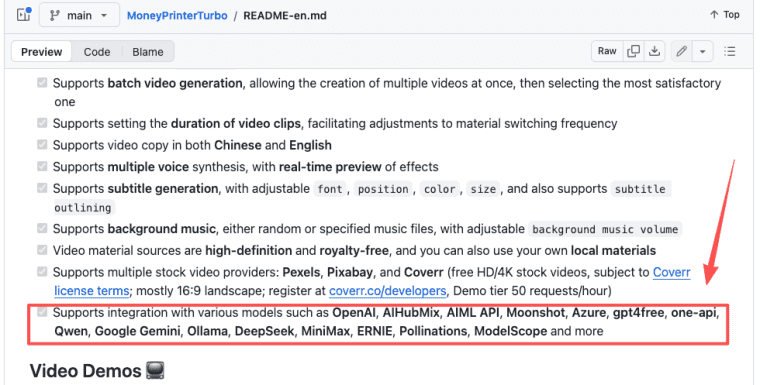
What makes it interesting for builders is the provider flexibility. It doesn't lock you into one vendor. The README lists integrations with OpenAI, Google Gemini, DeepSeek, Moonshot, and others, so you can swap model backends depending on cost or quality.
Automation pipeline vs commercial user workflow
It also supports running a model locally through Ollama — which matters if you care about keeping costs down or not sending scripts to a third-party API. That's a genuinely thoughtful design choice for a developer.
But notice what that flexibility actually is: a configuration decision. Someone has to choose the provider, hold the key, and pay the bill. In a real product, your user never sees any of that. They click a button. The provider choice, the openai key, the rate limits, the fallback when a model is down — that's your problem now, invisible to them. The pipeline is the easy 30%. The invisibility is the hard 70%.
What You Need to Productize an Open-Source Demo
Okay, so here's where I went and made an actual list, because waving my hands at "you need more" wasn't helping anyone. If you want to turn a video automation app like this from a script into something sellable, here's the stuff the GitHub repo quietly leaves to you.
Demo vs Product: What the Repo Gives You and What It Doesn't
| Layer | What the GitHub repo provides | What a sellable product needs |
| Core pipeline | ✅ Script → clips → voice → subtitles → render | ✅ Same, but running reliably at scale |
| Hosting | ❌ Runs on your machine or Colab | Servers that work when you're asleep |
| User accounts | ❌ Not included | Login, password reset, session history |
| Templates | ❌ Config files only | Pre-built starting points users can click |
| Usage metering | ❌ Not included | Credits or caps so heavy users don't kill your margin |
| Payments | ❌ Not included | Checkout, subscriptions, failed-card handling |
| Model provider management | ❌ You configure your own keys | Your problem, invisible to users |
| Asset licensing | ⚠️ Pexels/Pixabay (verify terms) | Confirmed rights for commercial use at scale |
| Support | ❌ GitHub issues only | Real customers emailing you at 11pm |
As of June 2026. Always verify current licensing terms before building commercially.
Hosting, accounts, templates, credits, payments, and support
Hosting that isn't your laptop. The demo runs locally or in a Colab notebook. A product needs to run when you're asleep, for hundreds of people, without falling over. That's infrastructure, monitoring, and a bill.
Accounts and identity. Login, password resets, "who am I and what did I make last week." None of this exists in the repo.
Templates instead of config files. Your user can't edit a config.toml. They need pre-built starting points — "make a finance short," "make a motivational clip" — that hide every setting.
A credits or usage system. Every generation costs you real money in model calls and compute. If you charge a flat monthly fee and someone generates 4,000 videos, you lose. You need metering before pricing.
Payments. Checkout, subscriptions, failed-card handling, refunds. This is its own engineering project, and it's the literal thing standing between "demo" and "monetizable."
Support and trust. When generation #51 produces a video with the wrong audio, someone emails you. There's no GitHub issue tracker for paying customers — there's just you, at 11pm, owning it.
The most underestimated item on that whole list, in my experience, is the licensing and rights piece — which deserves its own paragraph.
The Part Everyone Skips: Asset Rights and Commercial Use
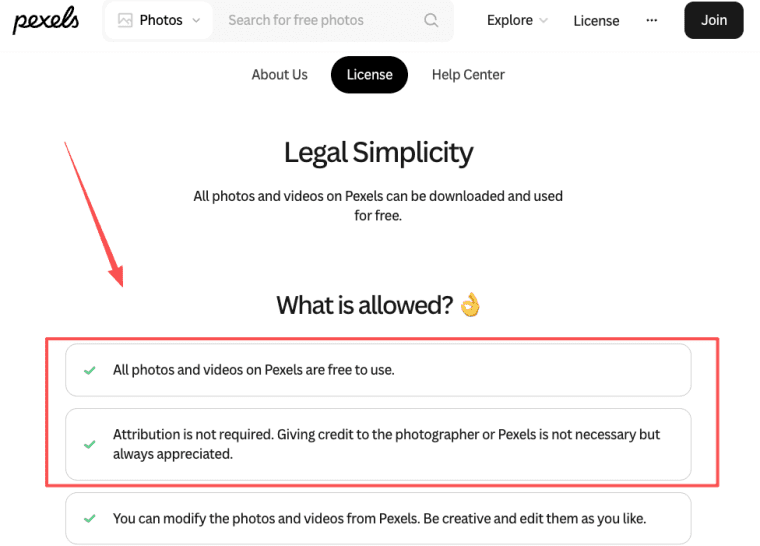
MoneyPrinterTurbo pulls clips from stock sources including Pexels and Pixabay. The good news, and I checked this directly because I didn't want to guess: the Pexels License explicitly permits commercial use without attribution, as of when I'm writing this in 2026.
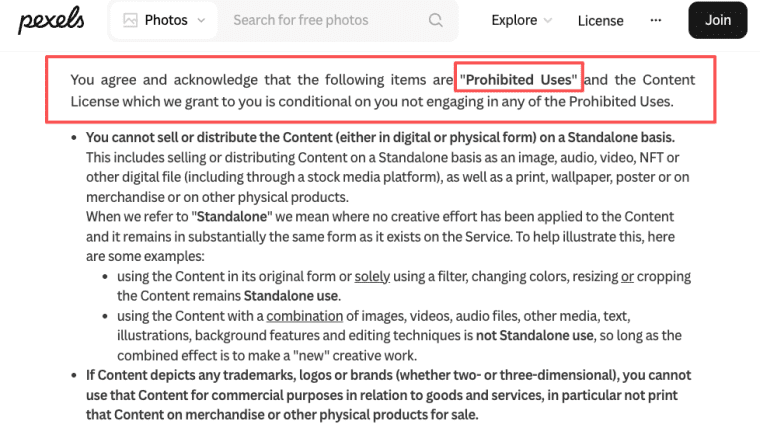
The catch — and there's always a catch — is buried in the same terms. You can't sell unmodified clips on a standalone basis, and footage with identifiable people or visible brands may carry separate rights that the stock license doesn't cover. The Pexels Terms of Service spell out these prohibited uses in detail. For a one-off TikTok this rarely matters. For a paid product generating thousands of videos for customers you've never met, it absolutely can.
The code itself is permissive — MoneyPrinterTurbo ships under the MIT license, which you can read in the repo's LICENSE file. MIT lets you build a commercial product on top of it. But the code license and the asset license are two different things, and the model providers you plug in have their own terms on top of both. I'm not a lawyer and this isn't legal advice — please verify the current terms yourself before you charge anyone.
When to Rebuild the Workflow as an App
So when do you stop bolting features onto a fork and just rebuild it as a real ai app builder project?
My honest read, based on watching myself avoid this decision for too long: rebuild when the demo's assumptions stop matching your users' reality. The repo assumes a technical operator, local config, and one person's API keys. The moment you have a second user who can't open a terminal, every one of those assumptions becomes a wall.
You don't have to throw the pipeline away. The idea — topic in, finished short out — is sound and worth keeping. What you rebuild is the layer around it: the accounts, the templates, the metering, the payments, the support surface. Open-source demos are fantastic for proving a workflow is possible. They are a terrible foundation for proving people will pay. Those are different experiments, and the second one is the only one that pays rent.
If I were starting today, I'd treat the repo as a one-week feasibility test, not a product. Generate ten videos. Show them to ten people in your target audience. If even three say "I'd pay for that without touching code," then you have a productization problem worth solving — and that's a good problem to have.
Everything here was accurate as of early 2026 when I checked the repo, the Pexels license, and the MIT license directly. Licenses and provider terms change — verify the current versions before you build anything commercial on them.
Explore More Topics:
FAQ
What is the MoneyPrinterTurbo GitHub project?
An open-source Python tool, created in 2024, that generates short videos automatically from a topic — using an LLM to write the script, stock footage for visuals, and text-to-speech for narration. It's published under the MIT license, self-hosted, and designed for developers, not end users. As of June 2026 it has over 85,000 GitHub stars.
What risks come with open-source video automation?
Three main ones: asset licensing (stock and brand rights may not cover all commercial uses), model-provider terms and costs, and quality control at scale. Always confirm the current license terms for each component — please refer to the official documentation of the repo, the stock sources, and your model provider for the latest rules.
Is GitHub code enough to launch a paid product?
No. Code is the engine, not the product. A paid product needs reliability, identity, billing, and support that a repo doesn't provide. Launching is mostly the non-code work.
What's the fastest way to test whether this pipeline is worth productizing?
Generate ten videos, show them to ten people in your actual target audience without explaining the tech, and watch their reactions. If three or more say "I'd pay for this if I didn't have to touch a terminal," you have a real productization problem worth solving. If nobody says that, the pipeline works but the market doesn't. Better to find that out in a week than after six months of building.